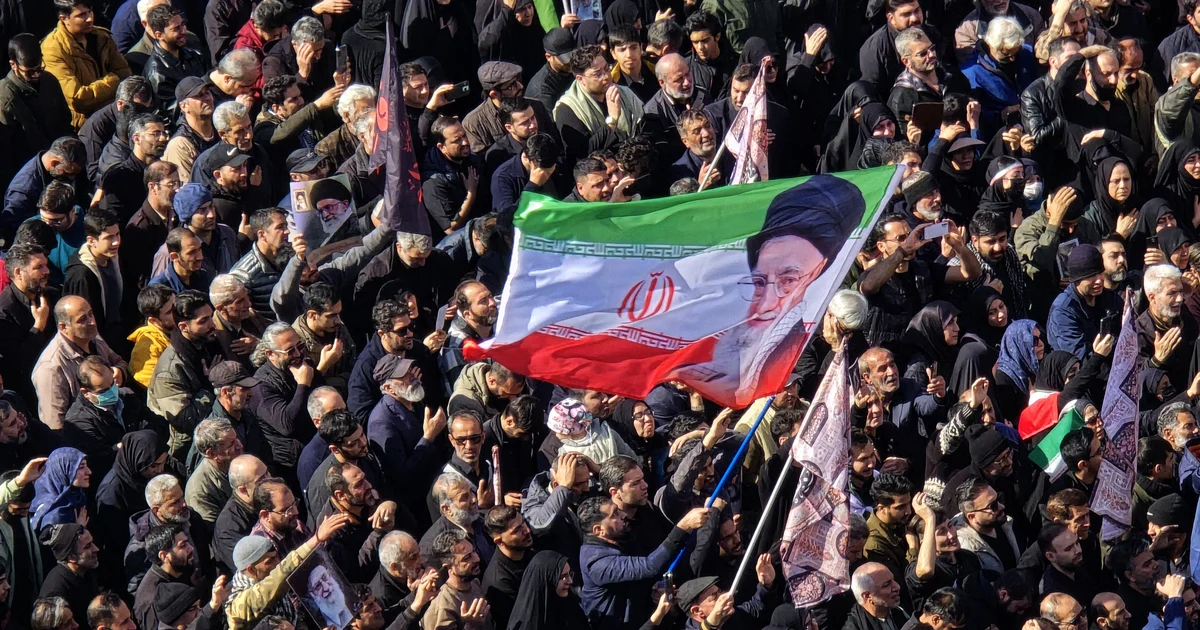
Iran held a national funeral for Ali Khamenei on the second day of the war with the United States and Israel, as officials confirmed interim leadership arrangements. Large crowds gathered for the ceremony while security forces maintained heightened alerts across major cities. The funeral followed reports that Khamenei and dozens of senior officials were killed in coordinated strikes. Consequently, the country entered a critical phase of political transition during active conflict.
At the same time, remaining leaders announced an interim governing structure to manage state affairs during the emergency period. Authorities named President Masoud Pezeshkian among key figures responsible for overseeing temporary arrangements. Officials stated that the leadership framework aims to ensure continuity of government functions under constitutional guidelines. Therefore, institutions continue operating while preparations advance for long-term succession decisions.
Read more : Iran begins historic succession process after Khamenei –
Meanwhile, the United States and Israel continued military operations against Iranian targets as part of ongoing strikes that began earlier in the week. Reports confirmed continued missile exchanges, with Iran launching retaliatory attacks on US bases across the Middle East. Although officials reported no American casualties within the first 24 hours, tensions remained high. As a result, regional military installations stayed on maximum alert.
Read more : Iranian president Pezeshkian calls Khamenei martyred a historic …
According to state media, at least 200 people died inside Iran during the initial phase of the conflict, highlighting the intensity of the strikes. In contrast, Iranian retaliatory attacks reportedly killed at least one person in Israel and one in Abu Dhabi, while injuring dozens more. Emergency services in affected countries responded quickly to manage casualties and damage. Consequently, governments across the region increased security coordination and defensive readiness.
The war has triggered both public celebrations and protests inside Iran, reflecting deep divisions over the country’s political future. While some citizens expressed support for regime change, others opposed foreign military intervention and demanded national unity. International observers warned that continued escalation could widen the conflict further across the Middle East. Ultimately, the coming days will determine whether diplomacy resumes or fighting expands beyond current borders.