 Hezbollah movement rejected a new ceasefire in Lebanon on Thursday and Israel said it would not withdraw troops from the country, undermining US President Donald Trump’s efforts to halt fighting there to forge peace with Tehran.
Iran has made a ceasefire in Lebanon a condition for any peace deal with Washington, and has suggested in recent days that it could intervene directly in support of its proxy Hezbollah if Israel keeps up or escalates attacks there.
Lebanese President Joseph Aoun said the ceasefire would come into force within 24 hours of all concerned parties approving it. However, Hezbollah leader Naim Qassem rejected the Washington declaration, insisting “resistance will continue”.
There was no immediate response from Israel, Lebanon or the US to Qassem’s remarks. Hezbollah is not a party to the US-brokered agreement reached between Israel and the Lebanese government on Wednesday, but would be required to halt attacks.
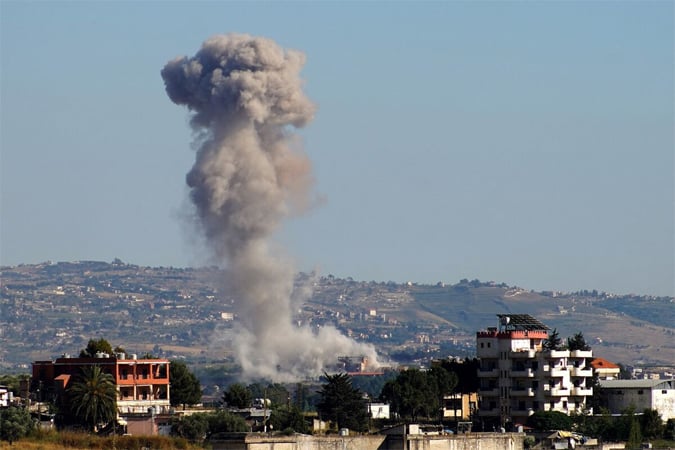
Israel kept up strikes in southern Lebanon on Thursday and Defence Minister Israel Katz said Israeli forces would not be withdrawing from the area or halting operations in the country, which they invaded in March in parallel with the war in Iran.
The commander of Iran’s Revolutionary Guards Quds Force – which established Hezbollah in 1982 – said “the minimum demand of the resistance” was Israel’s withdrawal to positions it held before the war began.
“Our initial condition for accepting a ceasefire in the regional war was a ceasefire on all fronts, including Lebanon,” a separate statement from the Guards said.
Israel must stop its attacks in Lebanon, evacuate the areas it occupies and retreat behind international borders, said the statement, carried by state media on Thursday.
Hostilities between Hezbollah and Israel reignited on March 2, when the group opened fire in support of Tehran as it came under US-Israeli attack. The war has continued despite several ceasefires declared from Washington since April.
The attempt to reach a ceasefire in Lebanon comes after a flare-up in violence across the region that put Trump’s efforts to end the war in new jeopardy. Iranian and US forces traded attacks in the Gulf on Wednesday in one of the most intense bouts of fighting since a separate ceasefire halted large-scale US-Israeli bombing of Iran in early April.
Meanwhile, Iran’s supreme leader said Thursday that the United States and Israel had been dealt a “decisive blow” in the Middle East war, after the government reported “no tangible progress” in negotiations on ending the conflict.
Ayatollah Mojtaba Khamenei’s message, read out by a prayer leader at a ceremony marking the anniversary of the death of the Islamic republic’s founderIn his message, Khamenei said his country’s enemies, after “facing a decisive blow”, were now “experiencing a deeply meaningful and profound humiliation”.
He went on to accuse them of seeking to “plant the seeds of doubt, despair, fear, mistrust and division” among the public, calling for unity to “neutralise their sinister plot”.
Meanwhile, President Donald Trump on Thursday slammed a vote in the US House seeking to order the withdrawal of American troops from the Iran war, suggesting the “unpatriotic” move disrupted negotiations with Tehran.