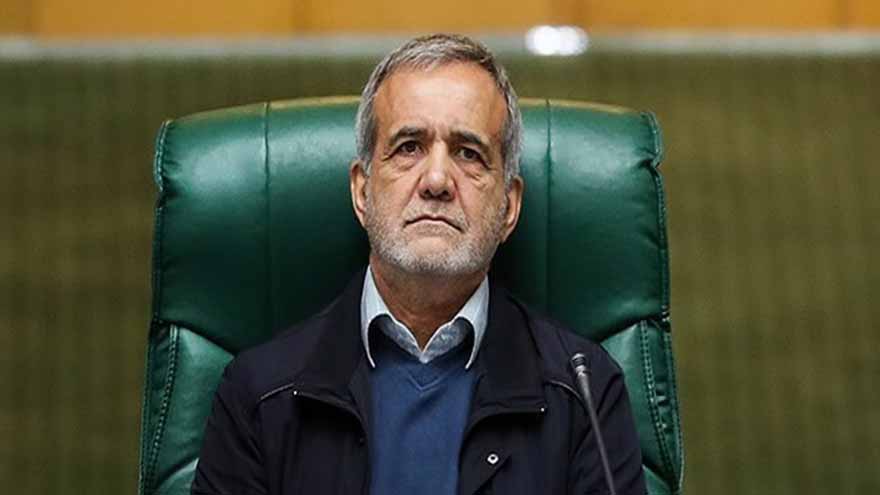
Iranian President Masoud Pezeshkian delivered his first official response after the reported martyred of Ali Khamenei, describing the event as a historic turning point for the Islamic world. He stated that those responsible would face a strong and decisive response. His remarks came amid widespread national mourning and rising regional tensions. Consequently, Iran signaled both political unity and readiness for further action.
According to state reports, authorities said Khamenei was martyred during a coordinated US-Israel strike while performing official duties at his office. Media outlets also claimed that several members of his family were killed in the same attack. The strikes formed part of a broader military campaign involving missile operations across multiple locations. Therefore, officials announced seven days of national holiday and a 40-day mourning period.
Read more : Iranian president vows resilience amid nuke talks, US pressure
Pezeshkian described the incident as a “great crime” and emphasized that the blood of the Supreme Leader would not go unanswered. He pledged that Iran would respond firmly to protect national dignity and sovereignty. Furthermore, he framed the event as a defining moment in regional history, urging unity among citizens. As a result, government institutions reinforced public messaging centered on resilience and national solidarity.
Following the strikes, Iran reportedly launched retaliatory attacks targeting Israeli territory and US military installations in the Gulf region. Explosions were reported in major cities, and air defense systems activated across several countries, including the United Arab Emirates, Bahrain, and Qatar. Security forces in the region increased readiness levels to monitor possible further escalation. Consequently, regional authorities urged caution and close surveillance of developments.
Read more : Iran warns attack on supreme leader would be declaration of war
The unfolding situation has intensified diplomatic and military tensions across the Middle East, drawing global attention to potential consequences. Analysts warn that continued exchanges could expand the conflict beyond its current boundaries. Meanwhile, international actors call for restraint and renewed diplomatic engagement to prevent further escalation. Ultimately, the leadership transition and retaliatory actions mark a critical and uncertain phase in regional politics.