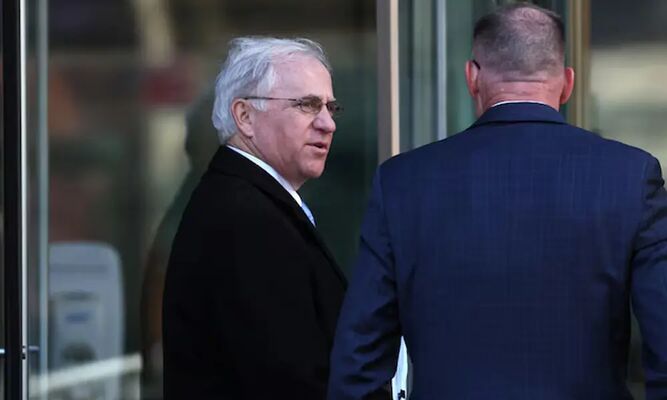
President Donald Trump has pardoned former Republican congressman Stephen Buyer, who was convicted of securities fraud in a high-profile insider trading case. The decision is significant because it removes federal penalties linked to the conviction and revives debate over presidential clemency powers. The pardon directly affects Buyer, whose legal appeals had been exhausted after years of court proceedings.
The White House announced the pardon on Friday through an official proclamation signed by Trump. The document granted Buyer a full, complete, and unconditional pardon. It praised his service as a U.S. Army judge advocate general and congressman. Moreover, the proclamation stated that Trump acted on recommendations from 52 current and former members of the Senate and House of Representatives.
Read more: US Democratic congressmen demand Trump administration break
Buyer represented Indiana in the U.S. House of Representatives from 1993 to 2011. After leaving office, he worked as a corporate consultant. Federal prosecutors accused him of using confidential business information for personal financial gain. In March 2023, a jury found him guilty on four counts of securities fraud. Later that year, a federal judge sentenced him to 22 months in prison.
According to prosecutors, Buyer purchased Sprint shares after learning about merger discussions between T-Mobile and Sprint in 2018. Authorities also alleged that he bought stock in Navigant Consulting before its acquisition by Guidehouse in 2019. Prosecutors said the transactions generated more than $300,000 in combined profits. They argued that Buyer abused trusted professional relationships to obtain valuable non-public information.
Read more: Cracks in Republican dam as frustration with Trump mounts
Buyer consistently denied wrongdoing and testified in his own defense during the trial. He maintained that his investment decisions were lawful and not based on inside information. However, prosecutors challenged his testimony and sought a longer prison sentence. Most recently, the U.S. Supreme Court declined to hear his appeal in May 2026. As a result, his conviction remained in place until Trump exercised his constitutional authority to grant a presidential pardon.