US aerospace company Vast has announced the first crewed mission to its planned Haven-1 space station, intensifying the race to replace the International Space Station. The mission marks a major step toward commercial space operations as the ISS approaches retirement. Space agencies, private companies and future astronauts could be affected by the shift to privately operated stations.
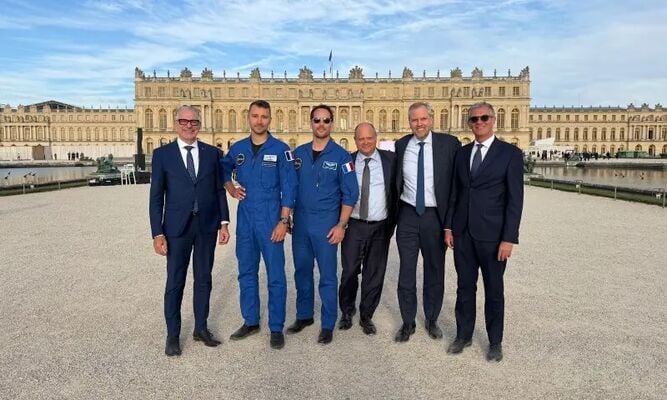
Vast said European astronaut Arnaud Prost will join the inaugural crew of Haven-1 after its planned launch in early 2027. If deployed on schedule, Haven-1 would become the world’s first operational commercial space station. The station will host scientific research and technology testing similar to activities currently conducted aboard the ISS. Officials view the project as a milestone in the transition to a new era of human spaceflight.
Read more: NASA crew-11 returns safely after rare ISS emergency
The announcement comes as the International Space Station nears the end of its operational life. The ISS has maintained continuous human habitation for more than 25 years and is scheduled for deorbiting in 2030. Western nations are also seeking greater independence from Russian space operations following geopolitical tensions linked to the war in Ukraine. Commercial platforms are expected to play a larger role in maintaining a human presence in orbit.
Vast plans to begin with the single-module Haven-1 station before expanding to the larger Haven-2 project. The company aims to gradually deploy nine modules while significantly reducing construction costs. Executives said lower costs could increase the number of crewed missions and make access to space more affordable. The company hopes to have four modules operating in orbit by 2030 to support longer-duration missions.
Read more: Meet the two Boeing mission astronauts stuck aboard the ISS
Meanwhile, competition in the commercial space sector continues to grow. Companies including Axiom Space and Blue Origin are developing their own space station projects. Vast also announced plans to send French astronaut Thomas Pesquet to the ISS next year and establish its European headquarters in Paris. Both upcoming missions will use SpaceX Falcon 9 rockets and Dragon spacecraft for transportation.