
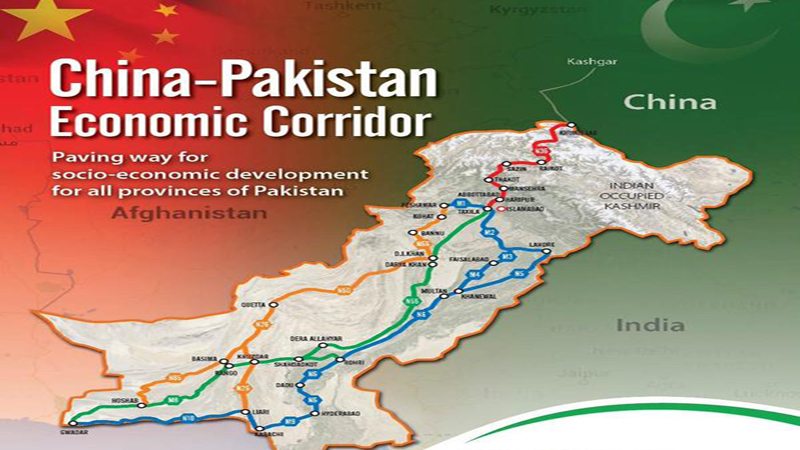
 Under the CPEC, China has taken care of Pakistan’s electricity requirements. Road network has expanded and continues to expand. Free Trade Agreement got underway on December 1. The CPEC second phase i.e. planning and execution for industrialization has commenced. The flagship venture under Belt and Road Initiative (BRI) did encounter some hiccups but it is fully back on track as far as Beijing is concerned. Early November, the ground-breaking for the Gwadar airport and the power plant there also took place. Technical financial discussions for the ML-1 rail project are also underway. Despite skepticism in the west, more projects worth 100s of millions are also in the pipeline.
That is the China part, unfolding gradually with unflinching commitment.
But is Pakistan reciprocating? It is a fledgling and discomforting story, exemplified by a sad case study; since January, the Asian Infrastructure Investment Bank (AIIB) has approved and been ready to extend nearly one billion dollar extremely low-cost loan. But inefficiency within governance structures – and perhaps systemic , status quo opposition to the PTI government – has stonewalled the disbursement these funds to the backdrop of Pakistan’s urgent needs for hard currency.
Secondly, with the launch of the CPEC fie years ago, China had projected a demand for 800,000 semi-skilled Pakistani labour with knowledge of robotics and functional Chinese language. This meant initiation of vocational and language training facilities at Gwadar and elsewhere on a war-footing. Hardly any Pakistan government-led efforts in this direction. Some of the manpower should have been ready with the initiation of the second CPEC phase. It is about time to ponder why should Chinese industries relocate to Pakistan if there is no skilled labour? And how does the government and bureaucracy expect to create employment if skilled labour is absent.
Thirdly, the pace of work on nine special economic zones (SEZs) has been tardy and split between provinces and the center, and thus not a single one has gone up. For its special zones, the Chinese government provided everything – from land to utility services – before inviting industrialists to set up production units.
In our case, the federal government signed agreements for SEZs express-speed projects but literally left the entire implementation plan to the vultures within the system i.e. provincial bureaucracy, land revenue authorities and the corrupt lower courts where the “stay order” rules the roost.
It amounted to saying: the Chinese friends should bring money, purchase land, and deal with local departments, courts, and utility services – all by themselves.
Urgently needed services even for Gwadar – water, electricity, airport, vocational training centres – were left to the discretion of NEPRA and slow and corrupt provincial bureaucracy, resulting in criminal delay.
They must avoid burdening friends in Beijing with their own inefficiency and bureaucratic lethargy. It is our job to fix systemic complexities – through a real window operation – instead of letting them frustrate Chinese business.
Fourth, China has acceded the Free Trade Agreement (FTA) but one wonders how much work has gone into identifying exportable items and potential buyers in China?
Fifth, how much advanced planning is currently underway to guide Chinese investors into areas where Pakistan needs quick foreign investment the most?
At the moment, Chinese frustration over lack of pro-active, advance planning in Pakistan , is boiling over. But this is not a cause for disengagement or scaling down of CPEC related activities, underline officials. Our leaders stand committed and are bent on turning CPEC into a roaring, exemplary success. But, say officials in Beijing, it takes two to tango. A lot would depend on the will and clarity of Pakistani civil-military leaders and bureaucracy , as to whether they can put their act together, they argued.
Based on conversations, and the hospitality one gets here, it is quite clear that it is all in the hands of Pakistani leadership to preserve its unique strategic relationship with China by preventing unnecessary irritants and suspicions in the business transactions. Top tier civil-military leadership must guard against elements trying to drive wedge between the two countries. These relations, insist Chinese academics and officials, transcends issues such as a few billion dollars worth of loans, or the investments made under CPEC thus far.
Lack of understanding of the nature of this relationship and ministerial inexperience did lead to big misunderstandings in the initial phase of the PTI government. Even otherwise, most Pakistanis tend to overlook the fact that the concept of peace and security has now assumed a much more comprehensive meaning; troubled neighbourhood is as much a threat to the affected country as to China itself, so goes the Chinese philosophy of peaceful horizontal development within and around it.
Hence, China remains committed to Pakistan even beyond the CPEC goals. Expansion of CPEC cooperation and preservation of these time-tested relations , nevertheless, will largely depend on how Pakistani stake-holders play it out to reciprocate the Chinese expectations of quick fixes for effective and speedy implementation of projects.