 Pakistan’s foreign policy posture regarding the Palestine cause is not a contemporary political reaction to regional crises, nor is it merely a product of Islamic solidarity. It is a foundational pillar of the state’s identity, meticulously structured long before 1947. Pakistan’s support for Palestine is rooted in the ideological foundation provided by the founding fathers of Pakistan which outlines the modern-day constitutional and diplomatic manifestations of this stance at the United Nations and other global forums.
Foundational Pillar of Pakistan’s Foreign Policy
Pakistan’s position on the Palestine issue has always remained firmly anchored in principles of international law, justice, and the explicit resolutions of the United Nations Security Council. The state’s commitment to the legitimate rights of the Palestinian people is unwavering, prioritizing legality, morality, and the collective conscience of the international community over temporary, transactional geopolitical alignments. Successive Pakistani governments, completely independent of their domestic political orientations or civilian-military configurations, have maintained absolute continuity in backing Palestinian self-determination and vehemently opposed illegal occupation, settlement expansion, and systemic violations of international humanitarian law.
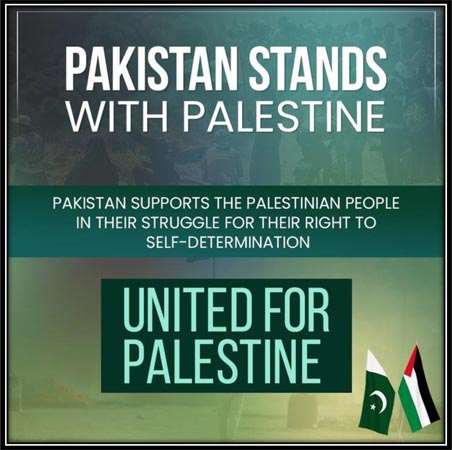
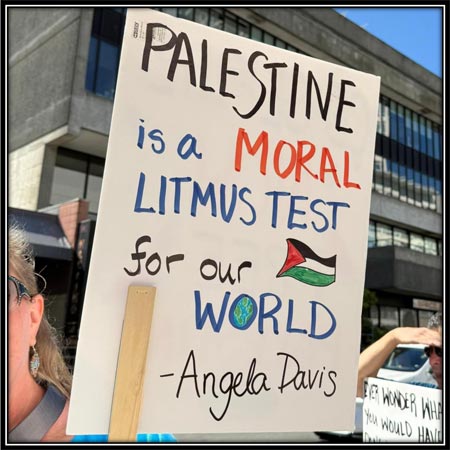
This enduring commitment has given Pakistan immense moral authority within the global arena. The Pakistani state operates on a rigorous national consensus: the refusal to establish diplomatic ties with Israel whom I call Occupied Palestine until a viable, contiguous, and independent Palestinian state is realized. This stance reflects a policy approach that treats the Palestinian struggle as an unalterable red line. We view the conflict not as an isolated regional dispute, but as a foundational test of global judicial structures and human rights. For Pakistan, a durable peace in the Middle East cannot be separated from a just, legally grounded resolution of the Palestine issue.
Fall of the Ottoman Empire & Creation of Mandatory Palestine
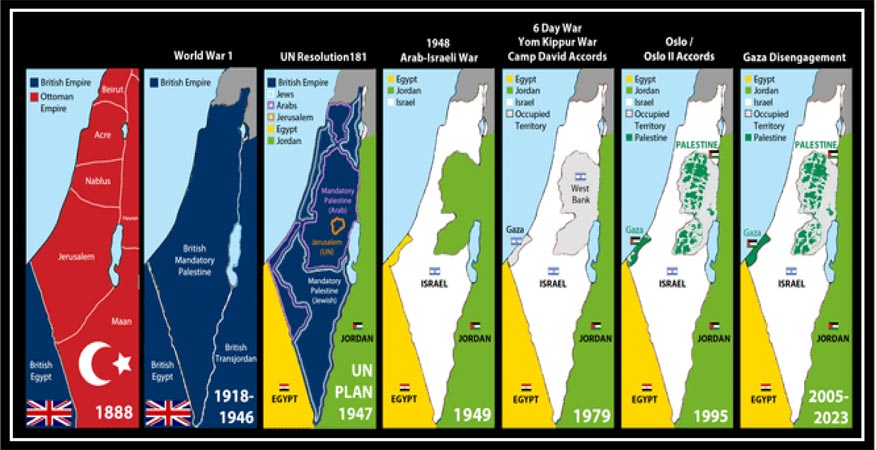
To understand the depth of Pakistan’s historical opposition to the fake state of Israel (Occupied Palestine), the conflict must be studied within its correct historical perspective.
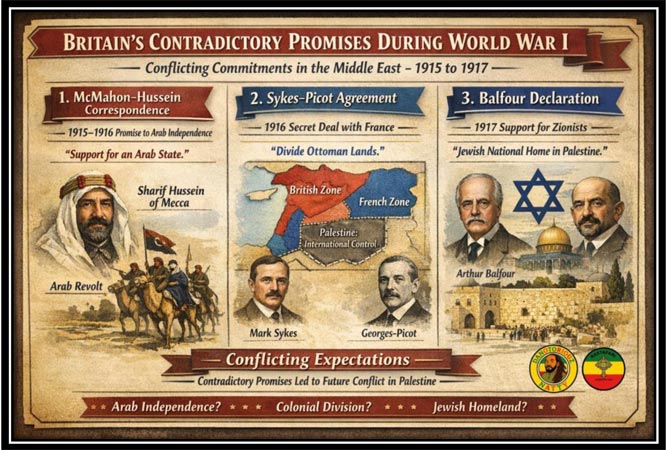
The roots of the crisis trace back to World War I and the dismantling of the Ottoman Caliphate, which had historically safeguarded the territories of Palestine. During the war, Great Britain actively engaged in duplicitous diplomacy. To secure Arab military support against the Ottoman forces, the British made explicit promises to the Sharif of Makkah, (which caused Arab Revolt) guaranteeing backing for a unified, sovereign pan-Arabic state extending across the core Arab lands.
However, concurrently and clandestinely, Britain and France signed the Sykes-Picot Agreement, partition planning and dividing the weaker Muslim territories among themselves. The ultimate manifestation of this betrayal came in November 1917 with the Balfour Declaration.
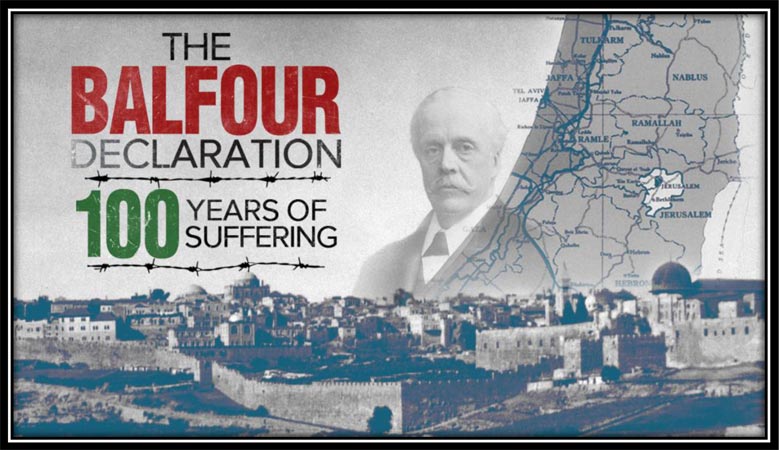
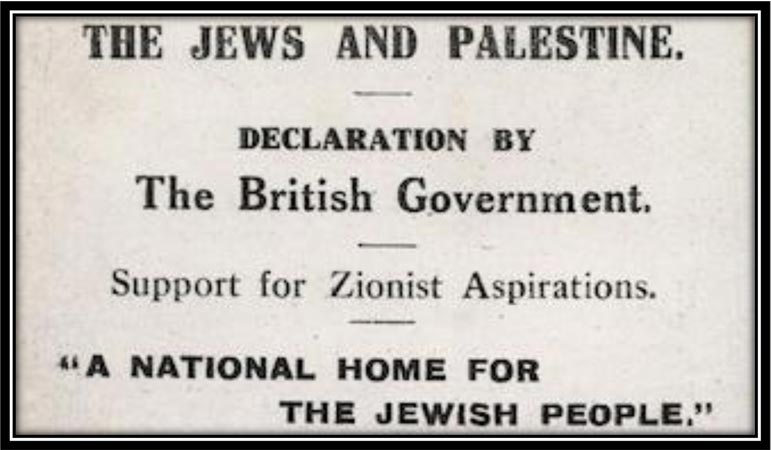
This unilateral correspondence, sent by British Foreign Secretary Arthur Balfour to Lord Walter Rothschild, promised British imperial support for the establishment of a national home for the Jewish people on Palestinian soil-a land that Britain did not own and whose population was overwhelmingly Arab.
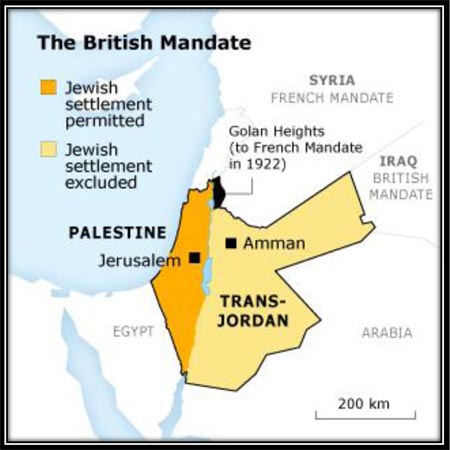
Following the war, the League of Nations formalized this colonial arrangement under the guise of Mandatory Palestine (1920-1948). This era triggered catastrophic demographic shifts, as British administrators permitted massive, unregulated waves of Jewish immigration during successive Aliyahs, culminating in the displacement of indigenous Palestinians and the systemic acquisition of their lands.
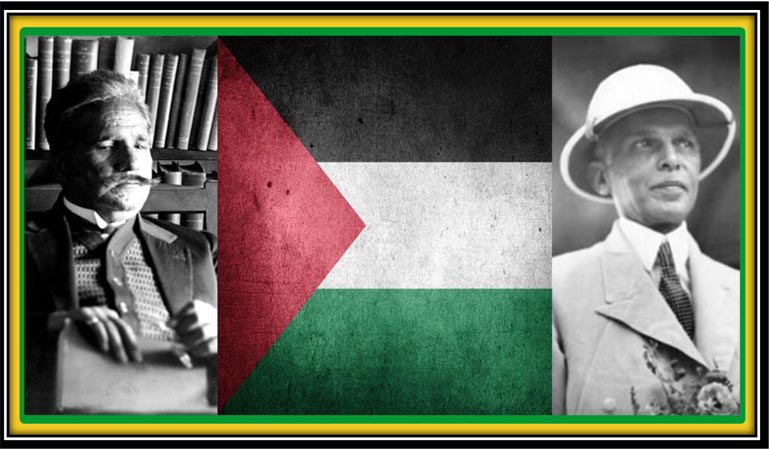
Ideological Guardians of the Cause
The Muslim leadership of the Indian subcontinent recognized these geopolitical machinations with profound clarity. The All-India Muslim League (AIML) progressively evolved its political scope in the 1920s and 1930s to lead global Muslim struggles, explicitly placing the Palestine question at the center of its agenda.
Allama Muhammad Iqbal
Dr. Allama Muhammad Iqbal, the spiritual father of Pakistan, rejected any legal or historical basis for a Zionist state. When the British Peel Commission of 1937 recommended the partitioning of Palestine, Dr. Iqbal sharply rebuffed the proposal in a letter to the National League of England:
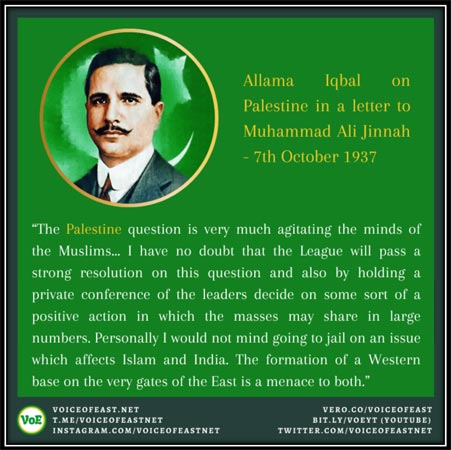
“We must not forget that Palestine does not belong to England. She is holding it under a mandate from the League of Nations, which Muslim Asia is now learning to regard as an Anglo-French institution invented for the purpose of dividing the territories of weaker Muslim peoples. Nor does Palestine belong to the Jews who abandoned it of their own free will long before its possession by the Arabs.”
— Dr. Allama Muhammad Iqbal (1937)
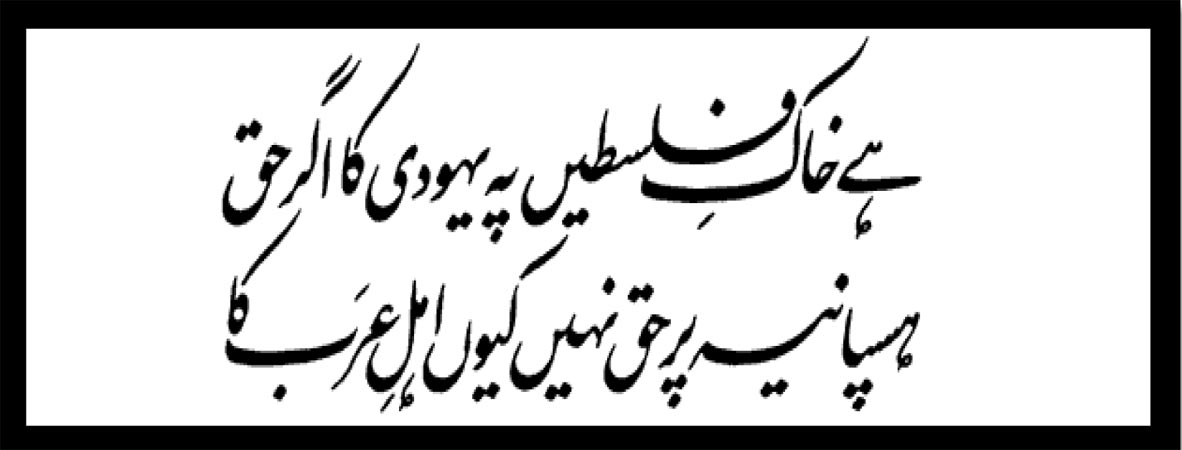
Dr. Iqbal framed the issue as purely a Muslim and Eastern concern, noting that the voluntary dispersion of the Jewish people centuries prior meant that Palestine had ceased to be a Jewish problem long before the Hazrat Umar (R.A) entered Jerusalem. He immortalized this geopolitical stance in his poetry, particularly in Sham-o-Falasteen (Syria and Palestine), where he utilized a powerful historical analogy: if an ancient historical presence gave Jews a contemporary right to Palestine, then by that same logic, Arab Muslims possessed an undeniable right to reclaim Spain, where they had ruled gloriously for eight centuries.
Quaid-e-Azam Muhammad Ali Jinnah
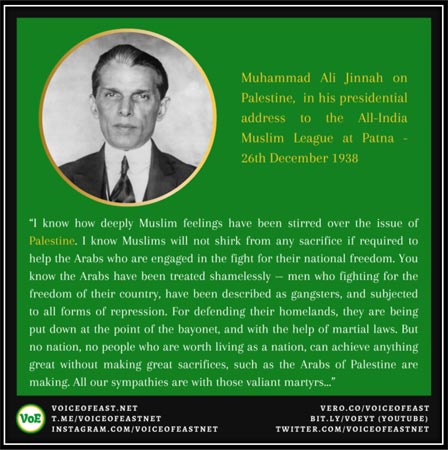
The father of the nation, Quaid-e-Azam Muhammad Ali Jinnah, was unrelenting in his institutional and diplomatic support for the Palestinians. In his 1937 presidential address to the All-India Muslim League, Mr. Jinnah issued a prophetic warning regarding British policy:
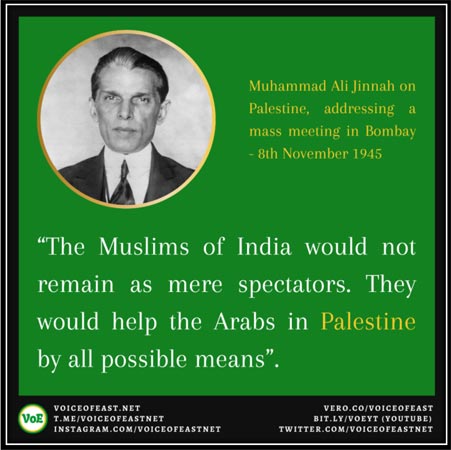
“Great Britain has dishonored her proclamation to the Arabs – which had guaranteed to them complete independence of the Arab homelands… After having utilized them by giving them false promises, they installed themselves as the mandatory power with that infamous Balfour Declaration… fair-minded people will agree when I say that Great Britain will be digging its grave if she fails to honor her original proclamation…”
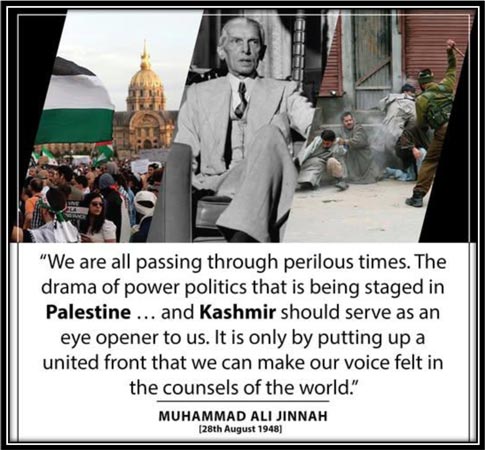
—Quaid-e-Azam Muhammad Ali Jinnah (1937)
Mr. Jinnah consistently countered British propaganda that painted Palestinian freedom fighters as criminals or gangsters, asserting that they were brave men defending their ancestral homelands against imperial bayonets:
“You know the Arabs have been treated shamelessly-men who, fighting for the freedom of their country, have been described as gangsters, and subjected to all forms of repression. For defending their homelands, they are being put down at the point of the bayonet, and with the help of martial laws. But no nation, no people who are worth living as a nation, can achieve anything great without making great sacrifice such as the Arabs of Palestine are making.”
—Quaid-e-Azam Muhammad Ali Jinnah (1937)
Mr. Jinnah established a dedicated Palestine Fund to dispatch financial relief to Palestinian families, mobilized nationwide Palestine Days, and sent senior delegations to coordinate directly with the Grand Mufti of Palestine, Muhammad Amin-el-Hussaini.

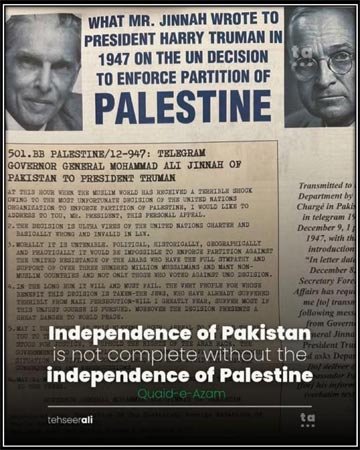
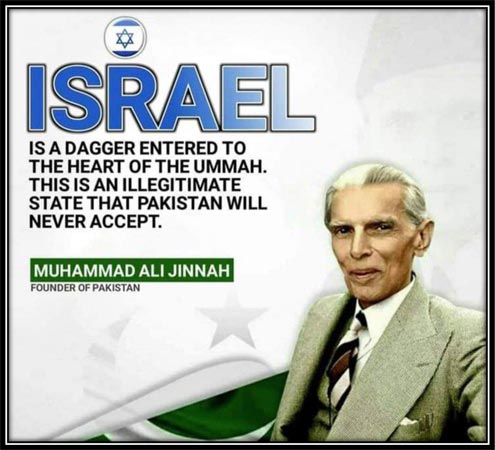
Even as the subcontinent approached its own critical partition in 1946-1947, demanding the absolute energy of the Muslim League, Mr. Jinnah refused to compromise on Palestine. When the United Nations passed its highly controversial Partition Plan for Palestine in November 1947, Mr. Jinnah, serving as the first Governor-General of Pakistan, sent an official telegram to US President Harry Truman, declaring the decision:
“…ultra vires of the United Nations charter and basically wrong and invalid in law… The very people for whose benefit this decision is taken- the Jews, who have already suffered terribly from Nazi persecution-will I greatly fear, suffer most if this unjust course is pursued…”
— Quaid-e-Azam Muhammad Ali Jinnah (November 1947)
He forewarned that the forced creation of an artificial and fake state would inflict immense suffering upon the region and vowed to the BBC that Pakistan would support the Arab cause in every possible way.
Pakistan’s Contemporary Stance at Global Forums
Following its independence, Pakistan translated the vision of its founders into active state policy, emerging as a leading diplomatic voice for Palestine on the international stage. Pakistan’s state apparatus has consistently maintained that an independent, sovereign, and contiguous Palestinian state must be established based on the pre-1967 borders, with Al Quds Al-Sharif (Jerusalem) as its capital.
Rigorous Efforts at the United Nations (UNGA & UNSC)
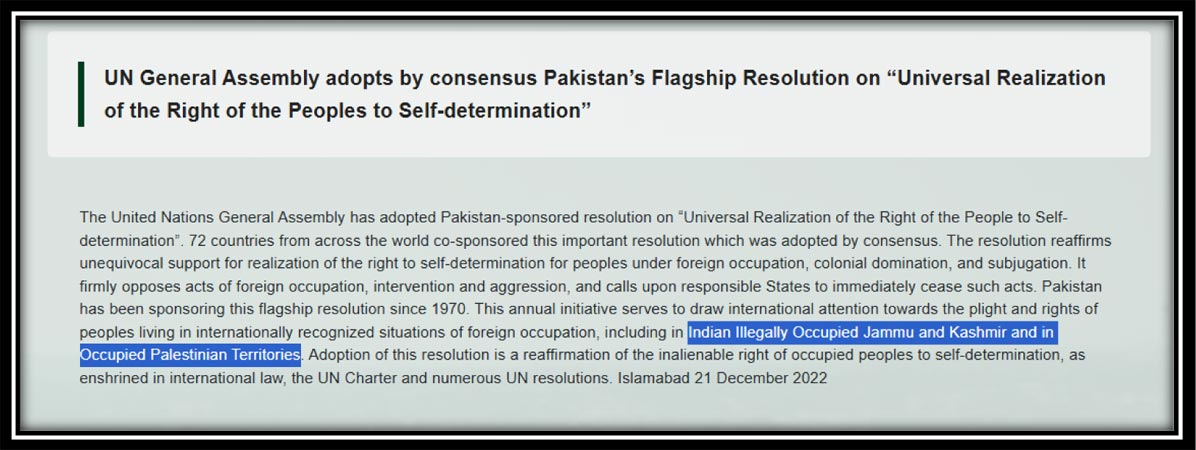
At the United Nations, Pakistan has historically engineered and sustained institutional backing for Palestine. It regularly authors, sponsors, and guides the core resolution at the UN General Assembly titled Universal Realization of the Right of the Peoples to Self determination. This resolution provides vital universal legal validity to the Palestinian resistance against foreign occupation.
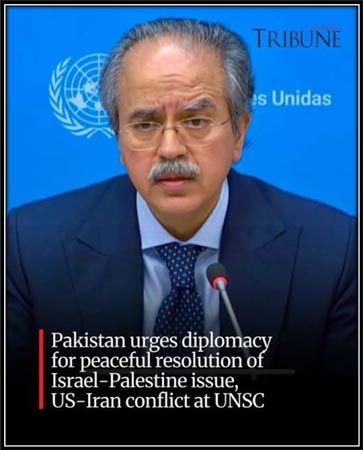
During major escalations and humanitarian crises in Gaza, Pakistan’s Permanent Mission to the UN has aggressively pushed the UN Security Council to enforce permanent, unconditional ceasefires under Resolutions 2735 and 2803, actively rejecting temporary truces as substitutes for total liberation. Furthermore, Pakistan utilizes its diplomatic tenure at the UN to sound alarms against the de jure and de facto annexation of the West Bank, demanding strict international adherence to the Fourth Geneva Convention and UNSC Resolution 2334. Pakistan has also championed economic justice, condemning (Occupied Palestine) Israel’s illegal withholding of Palestinian tax revenues as a form of deliberate fiscal strangulation designed to cripple the Palestinian Authority.
Resisting Pressures
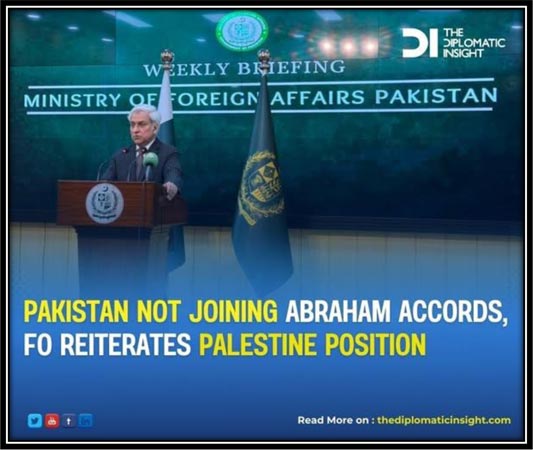
In the contemporary era, Pakistan faces immense exogenous and endogenous pressures to alter its historic stance. The shifting alignment of the Middle East, catalyzed by the Abraham Accords and severe domestic macroeconomic vulnerabilities, has led external actors to leverage economic aid, debt waivers, and political access to pressure Pakistan into recognizing Israel (Occupied Palestine).
Israeli leadership has openly acknowledged Pakistan’s formidable status, noting that its advanced military apparatus and nuclear arsenal represent a significant strategic check on unilateral Western-Zionist designs in the region. Nevertheless, the state of Pakistan recognizes that to compromise on this issue would be an absolute moral, spiritual, and constitutional failure. Pakistan’s credibility stems entirely from its consistency, relying on international legality rather than coercion. The nation remains well-positioned to leverage its rising diplomatic standing to mobilize global opinion, foster Islamic solidarity, and demand an enduring settlement that guarantees the rights, dignity, and security of the Palestinian people.