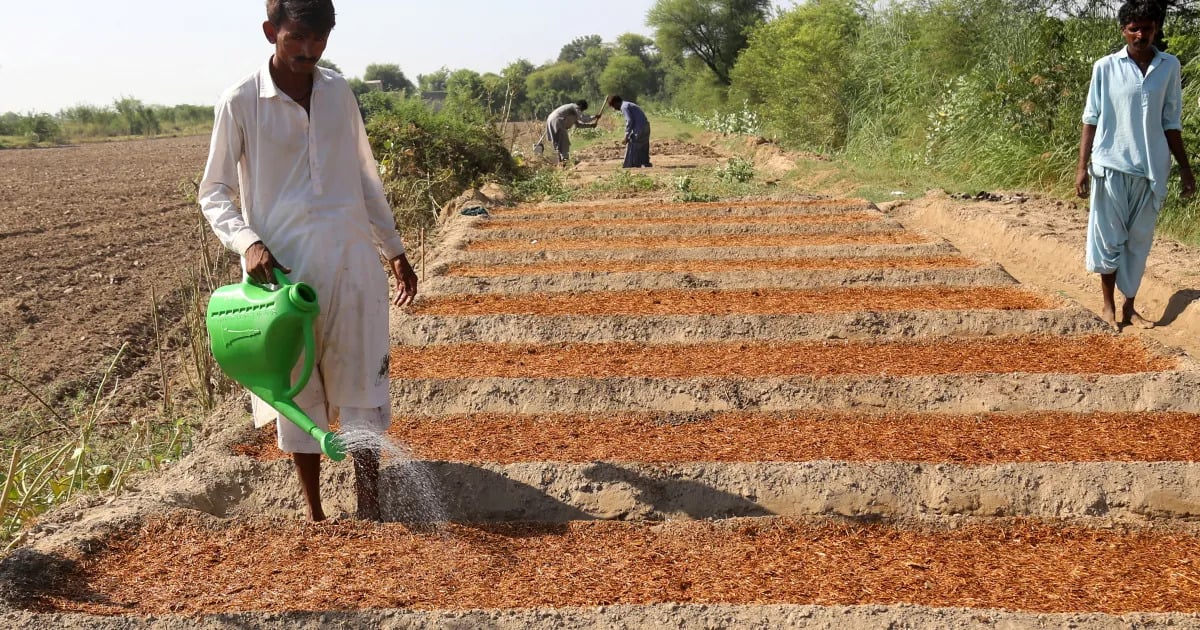
Pakistan’s agriculture sector grew by 2.89% in fiscal year 2025-26 despite severe flood damage. The recovery matters because agriculture supports food security and rural incomes nationwide. Farmers, consumers, and the broader economy are directly affected by this rebound.
According to the Economic Survey, the sector recovered from slower growth last year to stronger performance this year. Agriculture contributes 23.4% to GDP and employs over one-third of the workforce. Authorities credited timely interventions and support measures for stabilising output after monsoon floods. The sector’s performance also reflects improved policy coordination and planning.
The crop sector showed notable recovery, rising 1.44% after a contraction of 1.01% last year. Major crops including wheat, rice and sugarcane led the rebound in production. Sugarcane output increased by 6.2% while wheat rose by 4.3%. Rice production also grew steadily despite reduced cultivated area. However, cotton and maize recorded declines due to shifting farming patterns and flood impacts.
Livestock remained the strongest contributor, growing 3.75% and accounting for 14.6% of GDP. The sector expanded despite a decline in green fodder availability. Milk and meat production both increased, driven by improved farming practices. Poultry continued to lead growth and remains a key employment source across rural areas.
Meanwhile, forestry and fishing also recorded positive growth during the fiscal year. Fertiliser use increased overall, reflecting stronger farmer activity and confidence. However, phosphate use declined due to higher input costs. Officials said efforts are underway to expand exports and strengthen livestock-led growth in coming years.