Pakistan is set to present a federal budget exceeding Rs17.5 trillion for fiscal year 2026-27, focusing on revenue growth and fiscal discipline nationwide tomorrow, aiming to stabilize economy. Preparations have been completed after National Economic Council approval of key targets development priorities and macroeconomic framework guiding next fiscal year’s policy direction ahead of presentation process. The government has aligned the budget with long-term stabilization goals while balancing growth needs and fiscal constraints across major sectors of the economy. Officials emphasize disciplined spending and improved financial management as core elements of the upcoming economic strategy.
According to budget proposals, the government has set tax revenue at Rs15,267 billion, non-tax revenue at Rs2,768 billion, and petroleum levy collection at Rs1,727 billion for next fiscal year. Government aims to strengthen revenue base through improved tax compliance and broader collection measures to reduce fiscal pressure and support economic stability during coming year. Authorities expect these measures to help reduce dependence on borrowing while improving fiscal space for development spending and maintaining balance in external and internal accounts. This structure is designed to support long-term economic stability while aligning with growth targets set for fiscal year 2026-27 across all sectors of the economy.
A significant share of spending will go to debt servicing at Rs7,824 billion while defence allocation is expected to reach nearly Rs3,000 billion under budget plan. Rising debt obligations continue to consume large portion of national expenditure limiting fiscal flexibility and increasing pressure on government to manage resources efficiently effectively over time. Defence spending reflects security priorities and operational requirements while remaining a key component of overall fiscal planning for national stability and defense preparedness strategy framework. Overall allocation demonstrates balancing debt pressures with security needs while attempting to maintain fiscal discipline across all major expenditure heads in coming fiscal year framework.
Government has set 4% growth target and 8.2% inflation projection for fiscal year 2026-27 aiming macro stability and controlled expansion under policy direction for economy. Sectoral targets include agriculture 3.8 percent, industry 4 percent, large-scale manufacturing 4.5 percent, and services 4.2 percent for balanced economic growth nationwide across sectors framework. These projections aim to support steady expansion across major economic sectors while improving productivity and investment confidence in coming fiscal period national economy growth framework. Overall targets reflect efforts to balance inflation control with sustainable growth across key productive areas of the economy.
Government has reiterated plan to create two million jobs across services, industry, and agriculture sectors during next fiscal year as employment priority initiative program strategy. According to projections, exports are expected at $32.8 billion while imports may reach $70 billion, creating trade deficit exceeding $37 billion for fiscal outlook analysis. Development spending adjustments include Rs146 billion savings across federation and provinces, with reduced allocations for Punjab, Sindh, and Khyber Pakhtunkhwa under fiscal framework plan strategy. Government restricts new development projects except defence and interior ministries, aiming to control expenditure growth and redirect resources toward priority sectors and financial stability framework.
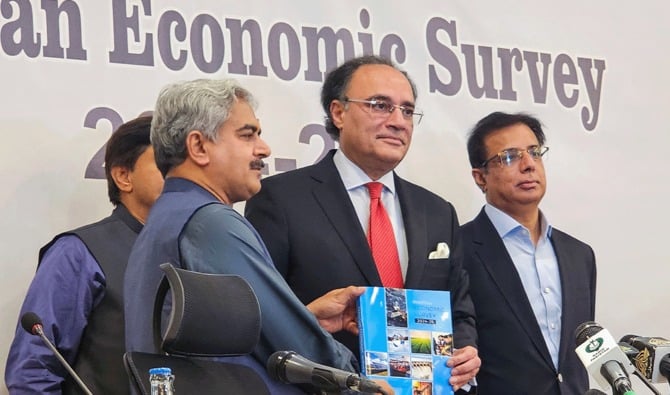
Economic survey shows GDP growth at 3.7 percent, below 4.2 percent target, reflecting slower-than-expected performance across major economic sectors during fiscal year analysis outcomes report. International institutions including IMF, World Bank, and Asian Development Bank also projected lower growth and highlighted structural challenges in Pakistan economy framework analysis report outlook. Survey notes positive developments including rise in workers remittances and improved performance of services sector supporting economic stability outlook overall macroeconomic assessment framework report update. The overall assessment highlights mixed economic signals with challenges in growth performance but some resilience in key external inflows.