Saudi Arabia has announced a major archaeological breakthrough after discovering hundreds of historical artifacts in the Madinah region. The findings highlight the importance of the Saudi archaeological discoveries project, which revealed 1,774 significant remains during the second phase of a large-scale heritage survey.
The survey was carried out by the Saudi Heritage Commission in the Al-Mahd Governorate. Researchers explored three areas, Al-Suwairiqiyah, Al-Muwaihiyah, and Hazzah, where they identified 156 previously unknown archaeological sites. The discoveries provide valuable information about the region’s long history and cultural development.
According to the Saudi Press Agency, experts documented 461 Islamic inscriptions, 34 Thamudic inscriptions, and 1,259 rock carvings during the fieldwork. The team also found 11 stone structures, three historic palaces, two caravan routes, and four ancient wells, offering new insights into life in the Arabian Peninsula across different periods.
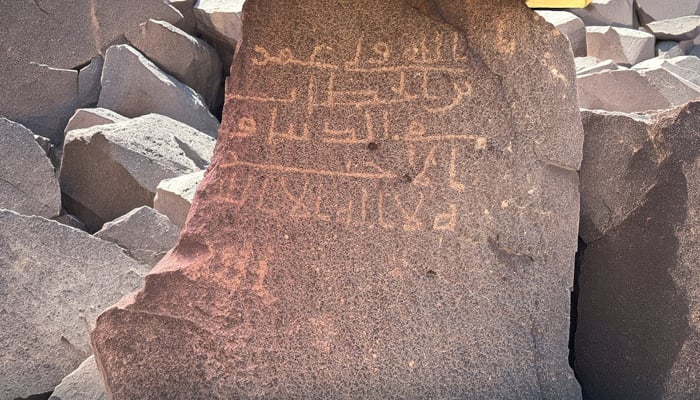
One of the most notable discoveries is an inscription bearing the name of Umar ibn al-Khattab. Archaeologists also uncovered rock inscriptions containing Arabic poetry, which further demonstrate the historical, cultural, and literary significance of the area.
The Saudi Heritage Commission reaffirmed its commitment to preserving the Kingdom’s historical treasures under the framework of Saudi Vision 2030. Officials said conservation and research efforts will continue across the country to protect cultural heritage and expand knowledge gained through these important Saudi archaeological discoveries.