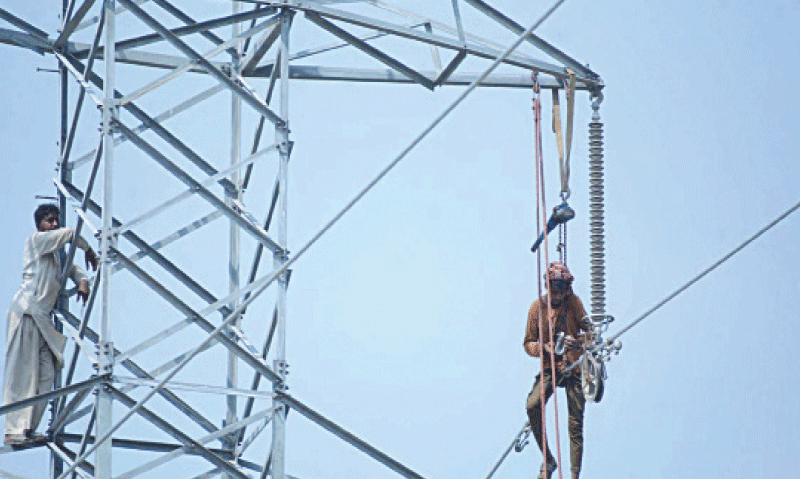
ISLAMABAD: Pakistan’s vast potential for solar and wind energy gives it a strong foundation to move towards low-cost, carbon-free electricity, but outdated and fragile grid infrastructure poses a major challenge, according to a new United Nations report.
The 2025 Review of Climate Ambition in Asia and the Pacific, released by the UN Economic and Social Commission for Asia and the Pacific (UN-ESCAP), highlights that Pakistan must invest heavily in upgrading and expanding its power grid. Without these upgrades, the country will struggle to integrate large-scale renewable energy sources while maintaining system stability.
Read More: Pakistan’s Future and Population Growth
The report emphasizes that phasing down coal will require a comprehensive energy transition plan — one that includes clear targets, robust policies, and the engagement of all stakeholders. It further notes that the transition must be “just,” ensuring that workers, households, and industries are not disproportionately affected.
According to the UN, solar and wind energy have now become cost-competitive with coal, providing Pakistan with a viable path to cleaner, more affordable power. However, experts warn that achieving this transition will depend on long-term policy consistency, institutional reform, and increased private investment in renewables.
Read More: Naval Power and Pakistan’s Future Defence Policy
At a regional level, the Asia-Pacific remains a global leader in renewable expansion, accounting for 70 percent of new energy capacity in 2024. Yet, despite this progress, the region continues to rely heavily on coal. The UN urges stronger political will, elimination of fossil fuel subsidies, and adoption of carbon pricing to accelerate the shift toward sustainable energy systems.