
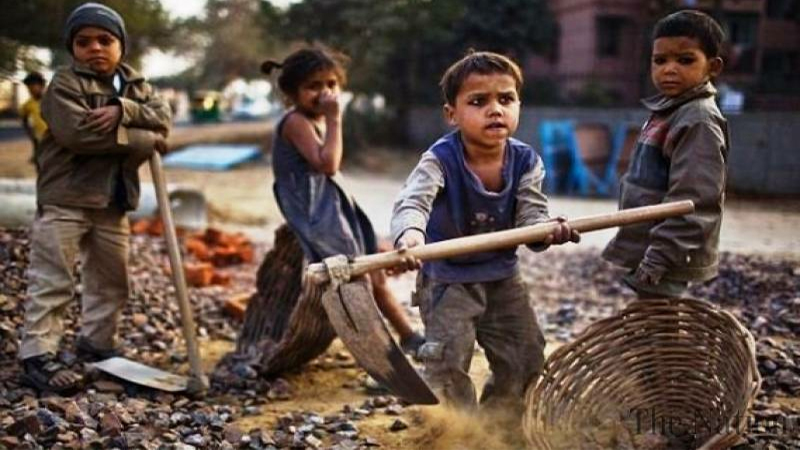
A fundamental issue that PM Khan identified in his maiden address was the existence of over 22 million out of school children (OOSC). Contrasting this with the recent identification of Pakistan as one of the youngest nations in the world raises worrying questions. That being said, the chessboard could not be set more promisingly; a developing country on the cusp of engaging in an incredibly ambitious international economic program has a large number of citizens entering the workforce.
Children are sent to school for functional literacy, employability, and possibly for the eventual pursuit of higher education. In light of CPEC, and the rate of urbanization, these purposes are critical for the operationalization of certain economic goals. The government, in the long-term, will face an insurmountable task of matching demand of skilled labor with a virtually non-existent supply that doesn’t have vocational training.
Sadly, education has a well-credentialed history of taking the backseat with most public educational institutions shrouded in incompetency, and mismanagement that increase the number of OOSC. Past efforts have been more rallying cries than well thought out campaigns, evidenced by infrastructure budgets consistently outstripping educational budgets.
That being said, one of the hallmark excuses often begins at ‘we are a resource-starved country’ and end at ‘the backward nature in some regions is problematic’. While that may hold partial truth, it is the lack of institutional capacity, vision, and management that has decayed much of the educational structure.
This is the part of analysis where educational reforms are pitched, while targeting past approaches and mismanagement that leads to ghost teachers and schools that don’t have appropriate facilities. It would be unwise to hope for a radical overhaul of the entire educational system within PM Khan’s tenure. It is very important to have one’s feet firmly planted within the realm of reality by setting goals that are feasible, specific, and attainable.
Under a targeted paradigm, the newfound objective is to build functional literacy amongst the OOSCs through a medium that can be launched in months, leaving a footprint in a 5-year period. In 1981, UNESCO printed a study entitled ‘Impact of educational television on young children’ which outlined the methods by which television can be a powerful tool to quickly deliver educational lessons. Since the release of this report, many countries near and far from Pakistan have launched TV channels to either complement or, in some cases, be the de-facto educational tool.
Let’s face it, even an optimist would falter if made to envision a robust national network of well-managed schools that cater to every child by 2023. Schools are critical importance but merely waiting on that network is not a sustainable solution. Television is a medium that has an incredible amount of penetration across the country and a satellite TV network that delivers the school experience to OOSC could be a game-changer.
This ability to control education from one source can help deliver lessons in multiple dialects, and contexts, eradicating language and social barriers without employing and training an army of teachers. In this digital age, it would not be very challenging to build in avenues of collecting feedback and identifying key performance indicators to gauge the impact the TV network is driving. With blossoming network penetration rates, the optimal balance between these technologies could assure that no child is left behind.
Marrying this TV network with NADRA, local educational boards, and examinations will slowly begin converting the 22 million OOSC into children with certifications on top which they could pursue advanced schooling. This move would be the first step in the right direction, future steps potentially leading to mobile applications that are engineered to work alongside the TV lessons.
This solution requires a host of instructors (Virtual University Faculty) and experts of digital media to build human-centric, powerful and contextualized education for the children who can draw massive relative gains from this concept. Alongside this, reducing import duties on paper would help grow a publication industry, loosening the grip of Indian publishers in Pakistan.
This idea can be one of many but at the core of the idea, sits urgency and a desire to begin walking on the road to prosperity rather than waiting for the road to be paved. PM Khan and his cabinet have made promises that reverberate through the nation. While some promises may seem idealistic, it never hurts to relentlessly push conventional boundaries that bind institutions to a legacy that has historically failed.