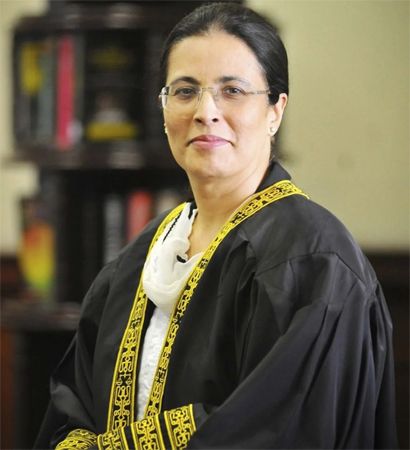
 Justice Ayesha Malik has said that enacting laws alone is not sufficient to eradicate child labour, stressing that effective implementation is essential to ensure that children’s rights become a practical reality rather than merely a constitutional promise.
Addressing an event on children’s rights, Justice Ayesha Malik, Judge, Supreme Court of Pakistan, said that Pakistan’s Constitution guarantees the rights of children, including access to education, dignity and protection, while national laws and international commitments also prohibit child labour. However, various reports indicate that a large number of children remain out of school and are compelled to work.
She said the real challenge lies not in legislation but in the enforcement of laws. “The success of any legal system is measured not by its promises but by the outcomes it delivers in people’s lives,” she remarked, adding that the continued prevalence of child labour reflects a gap between legal commitments and their implementation.
Justice Malik emphasized that child labour is a complex issue that cannot be addressed by a single institution or department. She called for a coordinated strategy at both federal and provincial levels, supported by strong partnerships and effective communication mechanisms. Differences in laws and minimum age limits across provinces, she noted, indicate that the protection of children’s rights is not uniform throughout the country.
Highlighting the importance of reliable data, she said that effective policymaking requires transparent, credible and consistent statistics. A significant portion of child labour, particularly domestic work performed by girls, remains undocumented and often goes unnoticed, she added.
The judge expressed concern that Pakistan’s last comprehensive child labour survey was conducted in 1996, describing it as a reflection of the priority accorded to the issue. She urged the state to allocate greater resources toward children’s education, health and welfare.
Justice Malik further said that efforts to combat child labour should move beyond rescue and relief measures and focus on prevention and long-term structural change. She stressed the importance of involving children, parents-especially mothers-and affected communities in decision-making processes so that their experiences and needs can inform policy formulation.
She also pointed to societal attitudes that contribute to the persistence of child labour, saying that child work should not be accepted as a social norm. Every child, she said, has the right to attend school, play and enjoy a safe and fulfilling childhood.
Concluding her address, Justice Malik said that the true measure of law lies not in the rights it proclaims but in the realities it creates in people’s lives. She called for collective action by the government, institutions and society to eliminate child labour and secure a better future for coming generations.