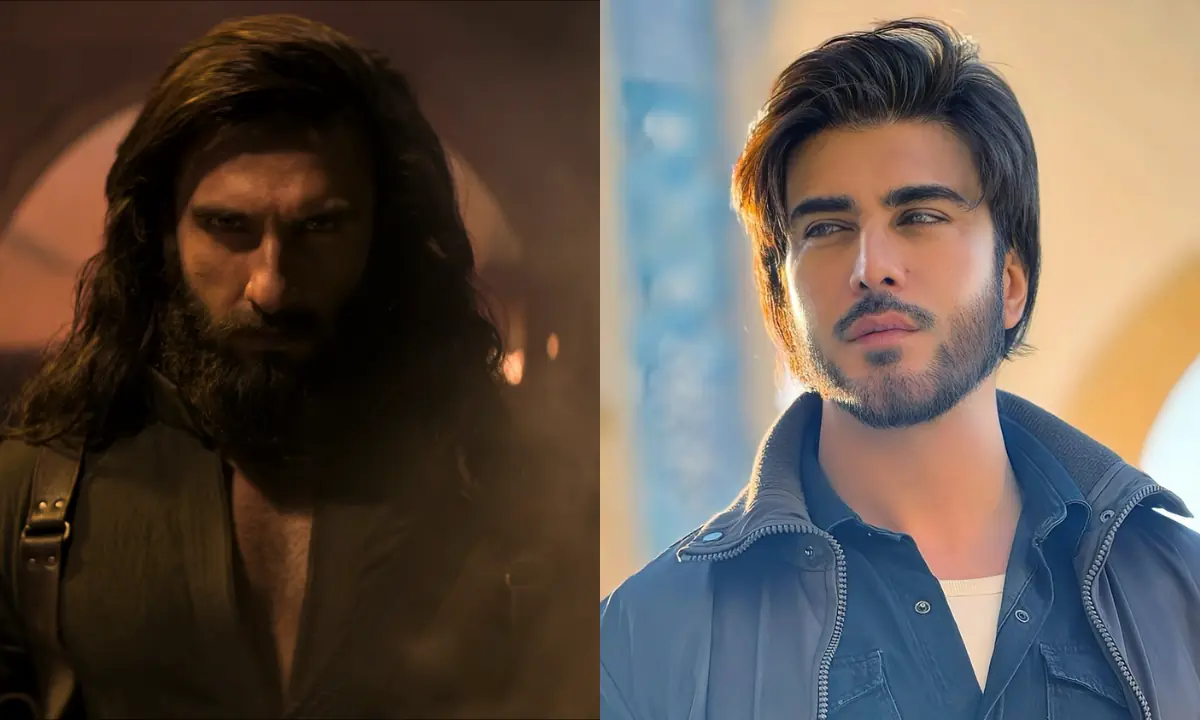
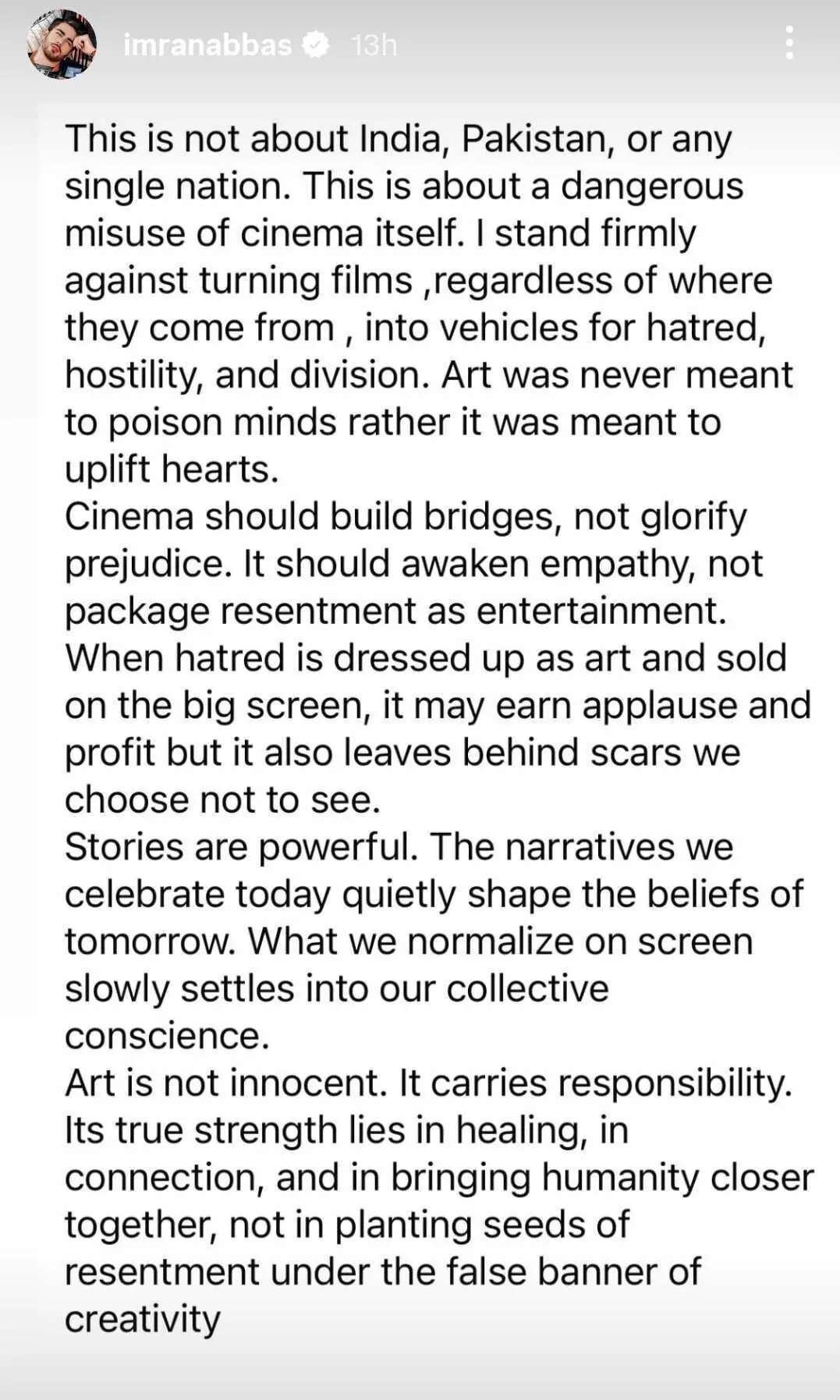
Pakistani actor Imran Abbas joined the debate on Wednesday, sharing a message on Instagram that strongly criticised the filmmakers. He accused them of turning cinema into “vehicles of hatred, hostility and division” instead of a medium meant to unite people.
Reactions to Bollywood’s latest film Dhurandhar have been mixed on both sides of the border, with many viewers questioning its political messaging. While the film has been acknowledged for its production quality, critics argue it continues a pattern of portraying Pakistan in a negative and hostile light.
Read More: Imran Abbas and Neelam Muneer to star together in new drama
Abbas clarified that his criticism was not about India or Pakistan specifically, but about what he described as a dangerous misuse of cinema. He said art is meant to “uplift hearts” and should never be used to “poison minds” or normalise prejudice.

View this post on Instagram
“Cinema should build bridges, not glorify prejudice,” Abbas wrote, adding that true art should awaken empathy. He warned that hatred disguised as art may earn profits and applause, but ultimately leaves lasting emotional and social scars.
The actor, who has previously worked in Bollywood productions, acknowledged the powerful role narratives play in shaping public perception. He stressed that what audiences consume on screen slowly becomes part of the collective conscience, and therefore carries responsibility.
A day earlier, Abbas also posted his views on Facebook, criticising Pakistanis who watched and praised the film. He described such reactions as “truly shameful” and said applauding content that demeans one’s own country is not open-mindedness, but a loss of dignity and self-respect.
Read More: PTI names Achakzai, Raja Nasir Abbas as Opp leaders in NA, Senate
He argued that if a similar film had been made in Pakistan about India, Indian society would have strongly rejected it, a response he called justified. According to Abbas, Dhurandhar “slaps us in the face and calls it entertainment.”
His remarks have reignited discussion around the politicisation of cinema and media in the region. Many agree that artists carry a responsibility to bring people together, rather than deepen divisions through distorted narratives presented as entertainment.