
The recent US president Donald Trump’s measure of increasing tariffs on aluminium and steel imports is going to have economic repercussions across the globe. This protectionist measure may escalate trade wars amongst the superpowers. The recent decision of US president reminds us of his election campaign pledge that he would take drastic steps in restoring white collar jobs in the manufacturing sector. At present the imposition of tariff barriers itself is a contradiction of the mantra of liberalisation policy and principle of free flow of goods and services expounded by US since the end of Second World War.
After the end of second world war, US and Soviet union got entangled into a cold war which escalated a war between different ideologies. US and its allies promoted the ideology of market forces, liberalisation and free competition principles under the ideology of capitalism whereas the Soviet union and its allies endorsed planned economic system under the ideology of communism and socialism.
It is an astonishing fact that at present US is adopting protectionist agenda which is likely to be counterproductive as in rebuttal China and EU countries would also be taking similar protectionist measures to protect their domestic industrial sector and labour markets. As a law student I am always convinced by the fact that the success behind the EU good governance is the implementation of free competition principles which promotes the idea of free flow of goods and services and there would not be any existence of trade barriers. For instance it heavily fined, Microsoft for amount 497 million euros for not disclosing its interoperability information to Sun Microsystems.
The trade in future will be focused on India and China, which are emerging as economic powers and becoming a crucial factor in the shifting of job market from developed world to developing countries. The interest of the developing countries would be served better if they act collectively
This interoperability information was indispensable for sun Microsystems so that its systems get integrated with the Microsoft’s.
Microsoft was held liable for abusing its dominant position for not divulging the essential information. The case is reported as Case T-201/04, Microsoft vs Commission (2007) ECR II-3601. Similarly in another case, T-321/05 Astra Zeneca vs Commission, the Commission considered that the pharmaceutical group Astra Zeneca abused its dominant position by preventing the marketing of generic versions of one of its medicinal products, Losec. Article 101 to 106 of the Treaty on the functioning of European Union explicitly mentions the principles of competition law in accordance to which European Commission would clamp down upon any anti-competitive activity resulting in creation of any barrier in the free flow of goods and services. The essence of liberalisation and competition principles is the attainment of the objectives of efficiency and economic welfare of the citizens.
After the Second World War, Europe’s resurgence was fostered by US aid and trade under the Marshall plan. Countries were asked to adhere to the free trade principles of General Agreement on Tariffs and Trade (GATT). The GATT was unfair at multiple levels. Agriculture was excluded from free-trade principles. Developed countries like US and European in order to protect their farmers, maintained their agricultural subsidies, while the developing countries were not allowed to do so. Trade on textile goods was restricted by small import and export quotas.
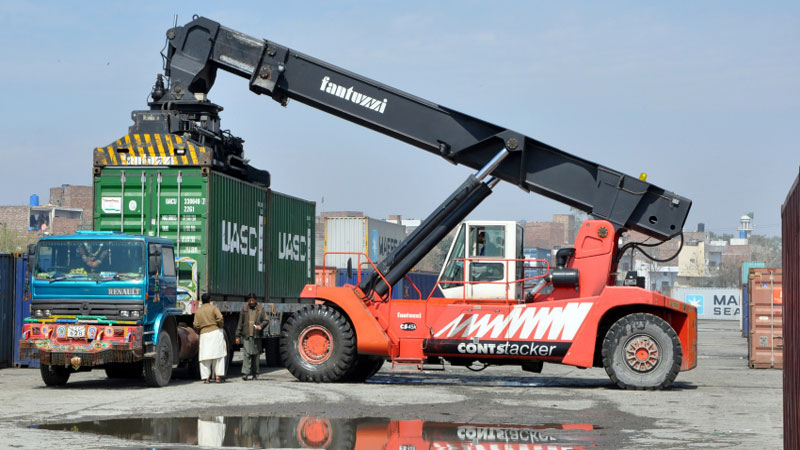
After the Soviet Union had crumbled, GATT was transformed into World Trade Organisation. Besides goods, free trade principles regulated in the services sector as well as in intellectual property rights. There were there agreements: GATT which related to general agreement of terms of goods; GATTS pertains to general agreement on terms of services and the last agreement was TRIPS which was relating to trade related intellectual property rights.
During the late 1990s a small group of countries led by Pakistan, India, Egypt and Cuba along with other countries showed resistance and protested against the industrialised countries/developed world for harming the interests of poor countries.
On one hand the developed world was supporting its farmers through protectionist measures of subsidies and also protecting its multi-national corporations under the garb of intellectual property rights in the form of patents and copyrights and on the hand it was pressurising developing and poor countries to adopt the liberalisation agenda and open their economies for the import of goods manufactured by western multi-national corporations. Simultaneously after the entry of China in WTO, the trade politics took a tumultuous turn. China due to its efficiency, cheap labour and access to domestic and international capital, took advantage of WTO’s free trade regime and eventually emerges as the world’s manufacturing hub accumulating huge trade surplus.
The focus of future trade will be on India and China which are emerging as economic power and becoming a crucial factor in the shifting of jobs from developed world to developing countries. The interest of the developing countries would be served better if they act collectively.
The last time developing countries became effective in 2001 in Doha, World Trade Conference. The Doha Round of world trade negotiations — also known as Doha Development Agenda was launched in Doha, Qatar in November 2001.
The talks aimed at further liberalising trade, whilst making it easier for developing countries, particularly Least Developed Countries (LDCs), to integrate into the WTO multilateral system. The main issues at stake are: Reforming agricultural subsidies; ensuring that new liberalisation in the global economy respects the need for sustainable economic growth in developing countries; improving developing countries’ access to global markets for their exports. Despite the EU’s efforts, negotiations have stalled largely due to the lack of readiness from certain WTO Members to reform their agricultural policies.
Today the developing countries possess the collective economic and political power to construct a trading system that serves development.
Poor countries need the support of developed and industrialised countries and the support should be in the form of basic necessities of life. Poor countries need cheaper medicines in order to cure diseases like cancer, AIDS etc.
Unfortunately such medicines are available at higher prices due to the monopolistic practices of multi-national corporations which have the sole right to manufacture these basic necessities of life under the garb of Trade related Intellectual property rights (TRIPS Agreement) and bar a manufacturer keen to produce its generic version at a cheaper rate.
Similarly under the patent laws, western multi-national corporations with the use of bio technology manufacture genetically modified seeds to replace the traditional farming practices of developing countries, which can be counterproductive.
These issues need to be addressed at the earliest and developing countries collectively act as a bulwark against the nefarious designs of multi-national corporations which benefit at the altar of a common man. Nobel prize winning economist Amartya Sen wrote that development is not only about explosive economic growth rates but an ability to exercise freedom and have access to basic amenities/necessities of life including goods, services and last but not least information.
The writer is a human rights activist, constitutional lawyer, teacher and a writer. He can be contacted at [email protected]
Published in Daily Times, March 30th 2018.