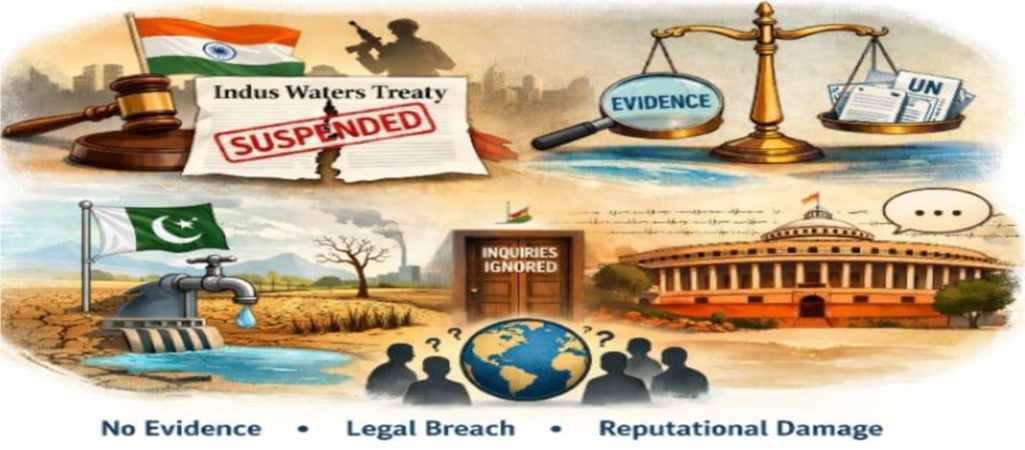
 One year ago, India took an action that managed to accomplish what multiple full-scale wars, decades of diplomatic estrangement, and persistent cross-border tensions never could: the deliberate rupture of the Indus Waters Treaty. By unilaterally deciding to hold the treaty in abeyance, India departed from a six-decade tradition of compliance, transforming a conflict-resilient legal instrument that had survived armed hostilities into a politicized tool of coercion against a lower riparian state. This unprecedented move constitutes a direct affront to the principle of pacta sunt servanda, the foundational international law obligation to honor treaty commitments in good faith, and projects an image of strategic irresponsibility that has invited sustained diplomatic scrutiny.
The Pahalgam Pretext and the Evidentiary Void
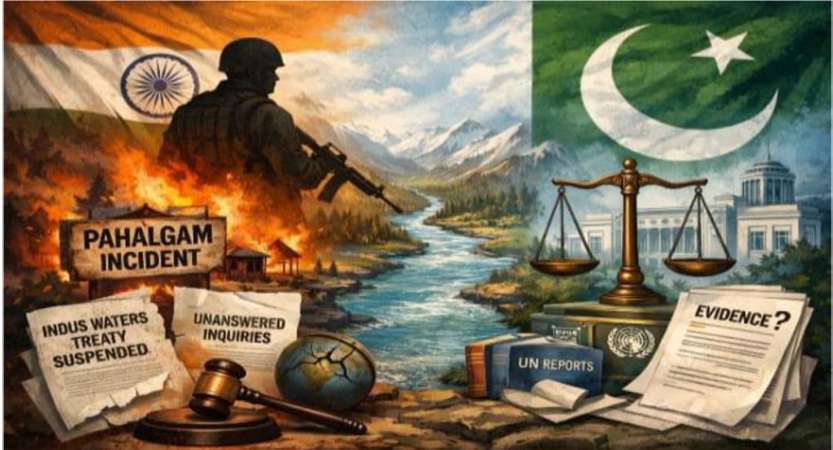
The justification provided for this dramatic step rested on the unsubstantiated invocation of the Pahalgam incident, a pretext that crumbles under the slightest legal examination. India’s case is legally deficient and normatively untenable, as it has failed to produce any arbitral, judicial, or United Nations-verified evidence establishing a credible link between Pakistan and the event. By substituting evidentiary standards with political conjecture, India has not only weakened its own legal standing but has also revealed a coercive departure from binding norms, eroding the integrity of treaty regimes essential for global order.
The Defining Silence: 120 Days and Counting
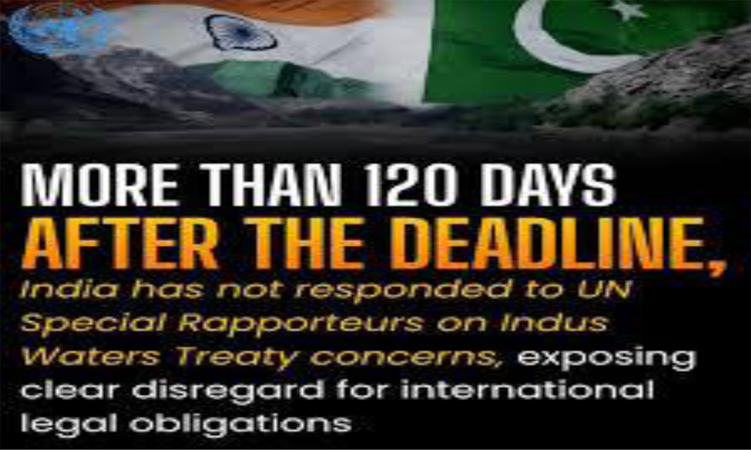
This pattern of evading accountability is starkly illuminated by India’s response to the international mechanisms designed to uphold the very rules-based order it claims to respect. Over 120 days have now passed since the 16 December 2025 deadline for India to respond to specific queries raised by United Nations Special Rapporteurs regarding its treaty conduct.
This prolonged silence is not a bureaucratic delay but a deliberate disengagement, a reflection of a policy approach that normalizes the disregard for international legal obligations and accountability frameworks. Such illegal and irresponsible non-compliance continues to shift global scrutiny from the specific treaty details to India’s broader pattern of procedural defiance, marking a blatant and shameful disregard for diplomatic processes and undermining regional stability.
Pakistan’s Principled Counteroffensive:
Law, Not Rhetoric
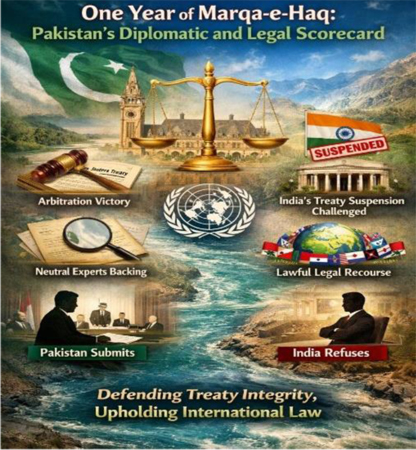
In stark contrast, Pakistan’s response over the past year has been a calibrated strategy of active legal resistance, repositioning the nation as a proactive defender of treaty integrity. This approach has yielded a series of cumulative diplomatic successes. The Permanent Court of Arbitration affirmed that the treaty remains legally operative irrespective of India’s objections, a significant legal victory reinforcing the inviolability of treaty frameworks.
This decision, aligned with the position of Neutral Experts, underscored a critical precedent: state parties cannot evade legal scrutiny through non-cooperation, thus validating Pakistan’s reliance on institutional dispute-resolution mechanisms.
The Asymmetry of Legal Conduct
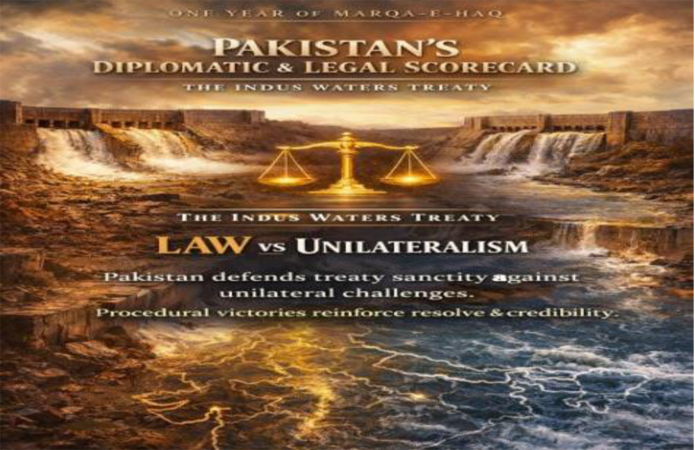
By proactively filing successful submissions before the Court of Arbitration while India refused to participate, Pakistan has highlighted a clear asymmetry in legal conduct, strengthening its credibility as a treaty-compliant and law-abiding riparian state. The concurrent validation of procedural pathways by Neutral Experts further demonstrates the robustness and resilience of the Treaty’s dispute-resolution architecture, reinforcing Pakistan’s consistent engagement as evidence of its commitment to lawful and rules-based conflict management.
Elevating Water Security to a Global Test Case
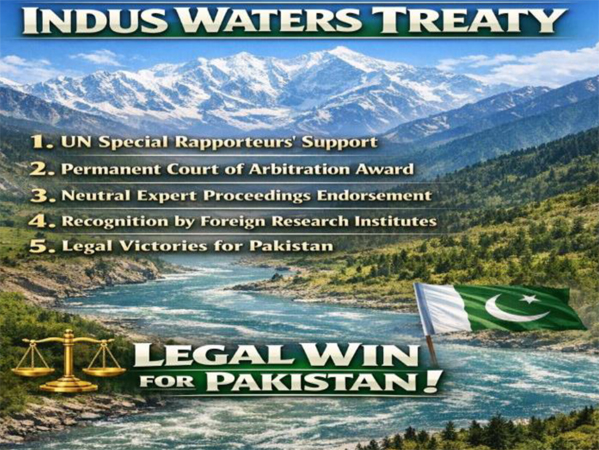
The endorsement from United Nations Special Rapporteurs has elevated the dispute beyond a strictly bilateral framework, situating Pakistan’s concerns within broader international legal and human rights discourses, particularly in relation to equitable and sustainable water access. Pakistan’s broader diplomatic campaign, spanning formal legal recourse, multilateral engagement, and normative advocacy, has successfully internationalized the issue, transforming a bilateral disagreement into a test case for the integrity of global treaty enforcement systems. This demonstrates that adherence to international law and sustained engagement with neutral institutions can effectively counter unilateral actions and preserve the legitimacy of rules-based transboundary governance frameworks.
The Perils of Coercion Over Cooperation
India’s action reflects a deliberate shift from rules-based engagement to power-based unilateralism, using water as a lever of strategic pressure. In seeking short-term political leverage, India is incurring profound self-inflicted wounds on the international stage. Its reliance on unsubstantiated claims not only weakens its legal standing but also exposes it to significant reputational costs, as international actors increasingly scrutinize deviations from rules-based conduct. The long-term implications include diminished credibility, diplomatic isolation, and heightened regional instability. The lesson of the past year is inescapable: no state can indefinitely circumvent the constraints of international law without consequence, and a treaty that was built to survive war is now a casualty of political coercion, with the reverberations set to weaken the foundations of global legal frameworks for years to come.