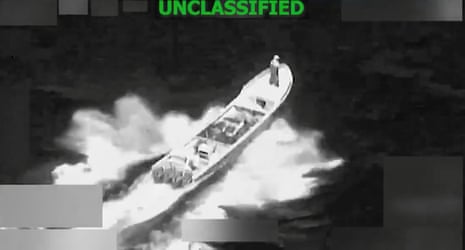
WASHINGTON: The United States military has carried out a lethal strike on a vessel in the eastern Pacific Ocean, killing two people and leaving one survivor, US Southern Command announced on Monday. The operation is part of the broader campaign known as Operation Southern Spear, which targets suspected drug-trafficking vessels in international waters.
Read More: US military strike destroys suspected drug vessel in Eastern Pacific
According to Southern Command, the “lethal kinetic strike” was directed at a boat it alleged was involved in drug trafficking, though the military has not publicly provided evidence linking the vessel to specific criminal activities. The command said that following the strike, the US Coast Guard was notified in order to activate search-and-rescue operations for the survivor, whose current condition and odds of rescue remain unclear.
On Feb. 9, at the direction of #SOUTHCOM commander Gen. Francis L. Donovan, Joint Task Force Southern Spear conducted a lethal kinetic strike on a vessel operated by Designated Terrorist Organizations. Intelligence confirmed the vessel was transiting along known narco-trafficking… pic.twitter.com/fa5vppjcCy
— U.S. Southern Command (@Southcom) February 10, 2026
The latest incident marks one of several similar actions conducted by US forces in recent months across the eastern Pacific and Caribbean Sea. Since the campaign began in late 2025, multiple strikes on small boats have been reported, with monitors noting dozens of casualties and ongoing controversy over the legality and justification of the operations.
US military officials have framed the strikes as efforts to disrupt narco-trafficking networks that use maritime routes to transport illegal drugs toward the United States. Pentagon statements typically describe the targets as “narco-terrorists” and assert that the operations are necessary to counter transnational criminal organizations.
Critics of the campaign, including some legal experts and rights groups, argue that the strikes may amount to extrajudicial killings because they are carried out without independent verification or transparent evidence of criminal conduct, and in the absence of formal authorisation from Congress.
Read More: US Military Latin America Operation Announced
The eastern Pacific strike follows a series of similar operations that have raised regional tensions and drawn scrutiny from international observers. As the military continues its interdiction campaign, the debate over its legal basis and humanitarian impact remains unresolved.