• Skip to primary navigation
  • Skip to main content
  • Skip to primary sidebar
  • Skip to footer
Trending:
  • Kashmir
  • Elections
Friday, June 5, 2026

Daily Times

Your right to know

  • HOME
  • Latest
  • Iran-Israel war
  • Gilgit Baltistan Election
  • Pakistan
    • Balochistan
    • Gilgit Baltistan
    • Khyber Pakhtunkhwa
    • Punjab
    • Sindh
  • World
  • Editorials & Opinions
    • Editorials
    • Op-Eds
    • Commentary / Insight
    • Perspectives
    • Cartoons
    • Letters to the Editor
    • Featured
    • Blogs
      • Pakistan
      • World
      • Lifestyle
      • Culture
      • Sports
  • Business
  • Sports
  • E-PAPER
    • Lahore
    • Islamabad
    • Karachi

AFP

United States is world’s biggest plastic polluter, report finds

Published on: December 2, 2021 2:37 PM

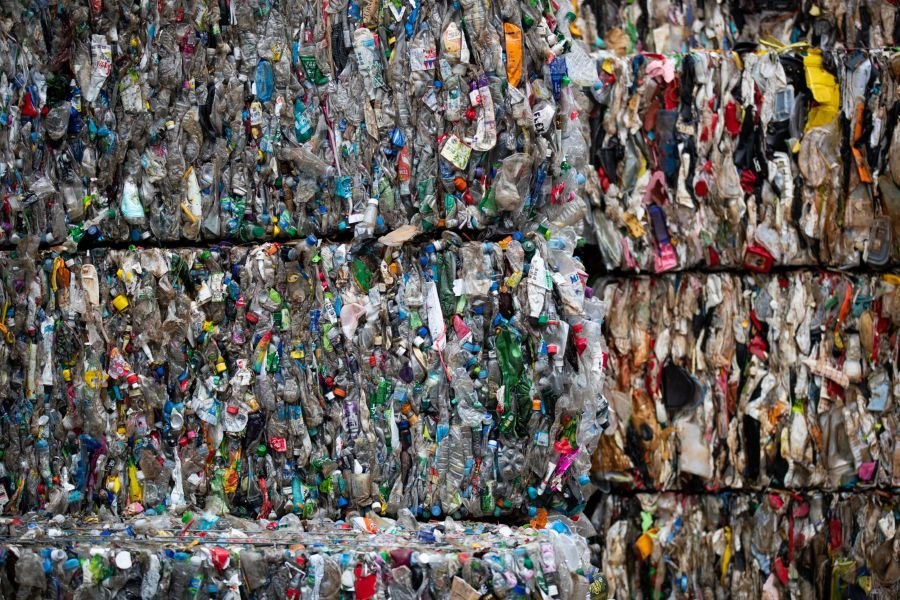
The United States is by far the biggest contributor to global plastic waste in the world, according to a new report submitted to the federal government Wednesday that called for a national strategy to tackle the growing crisis.

Overall, the US contributed around 42 million metric tons (MMT) in plastic waste in 2016 — more than twice as much as China and more than the countries of the European Union combined, according to the analysis. On average, every American generates 130 kilograms (286 pounds) of plastic waste per year, with Britain next on the list at 99 kilos per person per year, followed by South Korea at 88 kilos per year.

Entitled “Reckoning with the U.S. Role in Global Ocean Plastic Waste,” the report was mandated by Congress as part of the Save Our Seas 2.0 Act, which became law in December 2020. “The success of the 20th-century miracle invention of plastics has also produced a global scale deluge of plastic waste seemingly everywhere we look,” wrote Margaret Spring, chief science officer of Monterey Bay Aquarium, who chaired the committee of experts that compiled the report.

She added global plastic waste was an “environmental and social crisis” that impacted inland and coastal communities, polluted rivers, lakes, and beaches, placed economic burdens on communities, endangered wildlife, and contaminated waters that humans depend on for food.

Global plastic production rose from 20 million metric tons in 1966 to 381 MMT in 2015, a 20-fold increase over half a century, the report said. Initially, attention to ocean waste focused solely on ship and marine-based sources, but it is now known that almost any plastic on land has the potential to reach the oceans via rivers and streams, the report added. Research has shown nearly a thousand species of marine life are susceptible to plastic entanglement or to ingesting microplastics, which then make their way through the food web back to humans.

The report said an estimated 8 MMT of plastic waste enters the world annually, “the equivalent of dumping a garbage truck of plastic waste into the ocean every minute.” At the current rate, the amount of plastics discharged into the ocean could reach up to 53 MMT per year by 2030, roughly half of the total weight of fish caught from the ocean annually, it said.

Part of the reason is that while the generation of plastic waste in municipal solid waste has exploded, particularly since 1980, the scale of recycling has not kept up, resulting in more and more plastic finding its way into landfills. The report offered a number of steps to address the crisis — first among them, reducing virgin plastic production, for example by establishing a national cap.

-Reduce single-use plastics 

Other suggested actions include using materials that degrade more quickly and are more easily recycled, the reduction of certain single-use plastics, and improved waste management, such as techniques to remove microplastics from wastewater. Improving waste capture technology would stop plastics in waterways while stemming plastic disposal directly into the ocean itself also remains a priority.

Data collection is also a critical priority, the report added, calling for the US to establish tracking and monitoring systems to identify waste sources and hotspots. The authors called for the country to develop its national strategy no later than the end of 2022. “This is the most comprehensive and damning report on plastic pollution ever published,” said Judith Enk, president of the Beyond Plastics nonprofit.

“It is a code red for plastics in the ocean and documents how litter cleanups are not going to save the ocean,” she continued, adding it was urgent that policymakers and business leaders read the report and take action. “The finger-pointing stops now. We can no longer ignore the United States’ role in the plastic pollution crisis, one of the biggest environmental threats facing our oceans and our planet today,”  added Christy Leavitt, Oceana’s plastics campaign director.

Filed Under: World Tagged With: environment, International, Latest, United States is world's biggest plastic polluter

Submit a Comment


Primary Sidebar


Latest News

Oil falls on hopes of broader peace after Lebanon, Israel halt fighting

Meat exports grow by 4.16%

SBP-held foreign reserves rise by $43m to $17.9bn

Gold prices up by Rs 1,523 per tola

Rupee strengthens against dollar

Pakistan

Bilawal seeks heavy public mandate to protect GB’s rights

PM directs pilot launch of automated tax collection system in Islamabad

Federal budget on June 10

PM hails special ties with Washington at event marking US 250th anniversary

FO rubbishes reports of Dar sharing Iran nuclear information with Rubio

More Posts from this Category

Business

Pakistan’s exports to US up by 1.70% to $5.12bn in 10 months

Pakistan, Tajikistan set $200 million trade target, deepen ties at 8th JCM

Services’ exports up by 17.68% to $8.26bn

OGDCL’s new wells deliver record oil, gas output in FY26

Buying returns as PSX gains nearly 1,000 points

More Posts from this Category

World

No sign of progress in US-Iran talks as Hezbollah rejects truce

Vast accelerates race to replace ISS

Gulf crisis drives India-Venezuela oil partnership

More Posts from this Category


Footer

Home
Lead Stories
Latest News
Editor’s Picks

Culture
Life & Style
Featured
Videos

Editorials
OP-EDS
Commentary
Advertise

Cartoons
Letters
Blogs
Privacy Policy

Contact
Company’s Financials
Investor Information
Terms & Conditions

Facebook
Twitter
Instagram
Youtube

© 2026 Daily Times. All rights reserved.

Manage Consent
To provide the best experiences, we use technologies like cookies to store and/or access device information. Consenting to these technologies will allow us to process data such as browsing behavior or unique IDs on this site. Not consenting or withdrawing consent, may adversely affect certain features and functions.
Functional Always active
The technical storage or access is strictly necessary for the legitimate purpose of enabling the use of a specific service explicitly requested by the subscriber or user, or for the sole purpose of carrying out the transmission of a communication over an electronic communications network.
Preferences
The technical storage or access is necessary for the legitimate purpose of storing preferences that are not requested by the subscriber or user.
Statistics
The technical storage or access that is used exclusively for statistical purposes. The technical storage or access that is used exclusively for anonymous statistical purposes. Without a subpoena, voluntary compliance on the part of your Internet Service Provider, or additional records from a third party, information stored or retrieved for this purpose alone cannot usually be used to identify you.
Marketing
The technical storage or access is required to create user profiles to send advertising, or to track the user on a website or across several websites for similar marketing purposes.
  • Manage options
  • Manage services
  • Manage {vendor_count} vendors
  • Read more about these purposes
View preferences
  • {title}
  • {title}
  • {title}
We use cookies to ensure that we give you the best experience on our website. If you continue to use this site we will assume that you are happy with it.