
On May 2, a 10-year-old was married off to 50-year-old Muhammad Soomar Soomro at Moro Marri village in Shikarpur district of Sindh. The police arrested Soomro after the innocent child’s life had been ruined irreversibly. A medical report later said the child had been raped four times. Thousands of girls are married off every year in Pakistan before they reach the legal age for marriage.
After she is done with homework assigned by school, my 12-years-old niece, a student of Class VII, often remains engrossed in playing with her dolls and toys made of clay. She doesn’t help her mother in household chores. She always wants to be carefree. She does what comes naturally as this stage of life – to play with dolls and toys in the company of children her age, not marry, bear children and do household chores. At her age, a child’s a role in a society should be that of a daughter and a sister, not a wife. A child should play with children, not give birth to a child. But, this 10-year-old from Shikarpur has been forced to undergo physical and mental torture, do household chores and is expected to bear children. She is not the first or the only girl in that situation; there are many such girls in Pakistan.
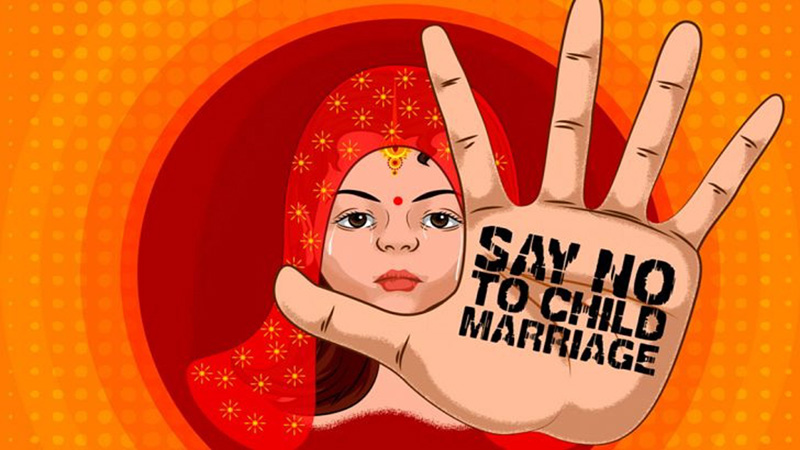 According to a 2019 World Health Organisation report entitled Demographics of Child Marriage in Pakistan, marriage before the age of 18 violates basic human rights of boys and girls. In Pakistan, child marriage is a fairly common practice. More than 140 million underage girls are likely to be married between 2011 and 2020. The report reveals that of the 12 million girls worldwide married every year before reaching 18 years of age, around 21 per cent are from Pakistan. It says Sindh, with 72 per cent girls and 25 per cent boys, has the highest percentage of child marriages among the provinces. Tribal areas of Pakistan, with 99 per cent girl child marriages, stand apart.
From a sociological perspective, informal social control (shame, sarcasm, criticism and disapproval) as compared to formal social control (law) works more effectively in traditional societies like Pakistan to prevent deviant behaviour. In Pakistan, although formal social control in the form of anti-child marriage laws has been in existence since 1929 (when Pakistan was part of the undivided India), child marriages remain a very common practice.
To make Pakistan a state with a sufficiently low child marriage ratio a policy agreement is a prerequisite
According to a report by Sahil, an NGO working on child protection, of the 557 child marriage cases between 2012 and 2016 reported from all over Pakistan, around 274 were reported from Sindh. Data gathered by the Sindh Police reveal that only 57 cases of child marriage have been registered under the Sindh Child Marriage Restraint Act 2013. This shows that formal social control agencies, police and courts, have failed to enforce the Act. The reason behind the failure is that culturally child marriage is treated as a normal, and not deviant, practice, and therefore not reported. Police get information from their own sources about a few of child marriages after they have already been solemnised. The situation needs the activism of informal social control agencies: mores, religion and public opinion.
On April 29, the Senate of Pakistan passed the anti-child marriage bill presented by a Pakistan Peoples Party senator. Next day, a similar bill was also tabled in the National Assembly by a Pakistan Tehreek-i-Insaf lawmaker. The two bills propose to set an 18-year age requirement for marriage. Both the bills faced strong opposition not only from religious parties but also from some religious-minded members of the ruling party in both the houses of parliament. There was disagreement on recognising anyone under the age of 18 as a child. Some members called the bills a violation of the sharia.
Many religious leaders in Pakistan say that Islam allows marriage at puberty. There have been announcements made at some mosques in Friday and Eid sermons and in speeches made in public gatherings to the effect that not marrying one’s daughter or sister immediately after puberty is a sin.
On the other hand, Pakistan is a signatory to many international human rights conventions including the Convention on the Rights of the Child, the South Asian Initiative to End Violence against Children and the Convention on the Elimination of All Forms of Discrimination Against Women that have set the legal age of marriage at 18. Thus, Pakistan is legally bound to eliminate child marriages. Several Islamic states, including the United Arab Emirates, Turkey, Egypt and Bangladesh have already set the minimum age for marriage at 18. Disagreements between fatwas of religious scholars and anti-child marriage laws over the age of marriage have complicated the problem. To make Pakistan a state with a respectably low ratio of child marriages, agreement on the issue is a prerequisite. People in rural Pakistan, a great majority of them ignorant and illiterate, believe in what religious leaders tell them about a Muslim’s personal and family matters. Without the help and support of religious leaders, it is going to be very difficult for the state to achieve the objective.
The writer is a freelancer