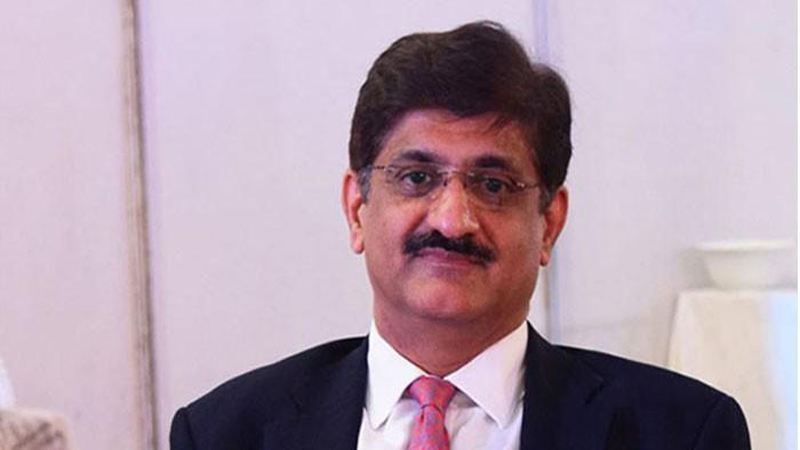
 Sindh Chief Minister Syed Murad Ali Shah – approving the ‘Sindh Rule of Law Roadmap’, which is basically a reformative work in the criminal justice system worked out in collaboration with international agencies – on Friday directed the Home Department to establish its implementation unit, and place the same in the next cabinet meeting for discussion and subsequent approval.
The document was presented in a meeting held under the chairmanship of the chief minister, which was attended by delegations from the Mission from United Nations Office on Drugs and Crime (UNODC) and the British High Commission (BHC).
“The Rule of Law Roadmap is a vision document that describes how specific challenges related to justice delivery system in Sindh need to be addressed in a collaborative fashion in the next five years. All the stakeholders, including the Home Department and the criminal justice institutions of the province, have identified the priority areas of reforms.
Murad said the roadmap was designed to expedite system-wide implementation efforts aimed at increasing public confidence and trust in the rule of law, as well as to ensure that the institutions of the criminal justice system in Sindh were strengthened to carry out their statutory tasks within the framework of their respective responsibilities and in mutual cooperation with each other.
Speaking on the occasion, he said the whole idea was to meet citizens’ expectations through evidence-based policy actions across the rule of law. “The roadmap was developed by a team of technical experts who carried out extensive research and analysis under the departmental leadership.
Sindh Home Secretary Kazi Kabir said that as an inclusive framework, and the roadmap included detailed institutional assessment and strategic prioritisation based on discussions and consultations with the police, prosecution, prisons, probation and reclamation law, as well as the Sindh High Court.
During the discussion, Murad said that given the evolving consensus on the need for a systematic approach towards comprehensive rule of law reforms, it was but obvious that none of the national imperatives of governance, development or security were achievable in absence of a well-functioning criminal justice and rule of law in Sindh. He said that policy instruments clearly linked the rule of law and efficacy of the criminal justice system firstly to peace, security and stability, secondly to economic growth, prosperity and sustainability, and thirdly to the protection of fundamental rights and freedoms of individuals.
Former Punjab Police inspector general IG Niaz Siddqui said that the roadmap approach was a departure from of traditional reforms interventions as it was a product, per se, of intensive engagement, deliberations, persuasion and consensus amongst all the criminal justice institutions.
The roadmap calls for monetisation of standards, procedures and rules in line with the requirements of changing times. Improved accountability, transparency, an oversight structures; cross institutional collaboration to pursue common policy goals, police, laws, plans and programmes to facilitate citizens’ access to justice; data policy analysis and performance management; technology for improved justice delivery system and demand-driven reforms through enhanced citizens’ access to justice, particularly that of the most vulnerable sections of society, such as children, women, minorities, people with disability, etc.
Murad said that when the Sindh Rule of Law Roadmap was being framed, the Sindh government had embarked upon introducing reforms. Mentioning the reform, he said his government had already approved a plan for turning Sindh prisons into Sindh correction house.
Police Order 2002, has appointed Prosecution and Parole officers, enhanced 40 percent budget of the police, enhanced cost of Investigation and various others.
The chief minister directed the home secretary to establish the `Sindh Rule of Law Roadmap’. He said the Project Implementation Unit in the Home Department and also urged him to provide copies of the roadmap to all the cabinet members, so that it could be discussed and approved in the next cabinet meeting.
Meanwhile, Murad said blaming WAPDA for storage of water in Mangla Dam, instead of Tarbella, would be accepted subject to fulfillment of Sindh’s intent.
WAPDA authorities have proposed water storage in Mangla Dam, instead of Tarbella. The outflows of Mangla would be restricted and the resultant shortfalls to Punjab would be compensated from CJ and TP Link Canals.
He took this decision on Friday while presiding over a here at CM House. The meeting was attended by Minister Irrigation Nasir Shah, Special Assistant to CM on Irrigation Ashfaq Memon, Principal Secretary to CM Sajid Jamal Abro, Irrigation secretary Jamal Shah and other officers concerned.