
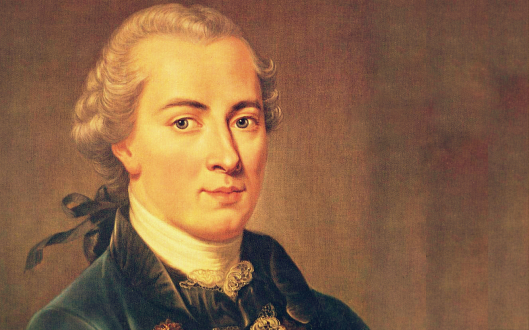
Since the dawn of liberalism in the late 17th century, it has played a great role in the transformation of socio-political aspects of human civilization. The western countries have had benefited a lot from the revolutionary ideals of liberalism. For instance, the industrial revolution of the 18th century was the turning point in socio-economic history of the Europe. The traditions of liberalism began after the protestant reformation and the fact cannot be dodged that the liberal practice was not possible without reformation and without classical bourgeois epoch, which have strengthened the political focus on the very idea of individual freedom.
But today the tradition of liberalism is fading because of the intense political polarization around the globe. In this regard, the Kantian ethics and tradition is worth remembering to understand the failure of liberalism.
Basically, Immanuel Kant used the liberal context to develop the ideas of universal history, in which he claims, “The problem of establishing a perfect civil constitution is depended upon the problems of law-governed relationship between the states.”
With this connotation, he proposed his theory of perpetual peace, which became the hallmark of liberal perspective in the 19th and 20th century. Through this theory, Kant attempted to establish the idea of rights and duties of the states for interaction at the global level. And, with this theory emerged a new ideal context of the international law, which was based on Kant’s idealist approach to political philosophy. Basically, Immanuel Kant attempted to introduce a new Copernican revolution into the political philosophy.
On the contrary, the whole context of the Kantian system is based on the sharp dichotomies because the Kantian concept of reason stands between the flexibility and imaginative power. Moreover, with the dichotomic perspective, Kant perceived the very concept of reason in the domain of revolt. And, with this perspective, in the public discourse, Kant argued, “Politics has been a sorry history of misrule at home and of a vicious anarchy in the international relations.”
In contrast, Kant dreamed of building man’s capacity to cope rationally with natural challenge and stressed on the rationality because in the Kantian system, it was the sole way for lasting peace. Therefore, with latter presumption, he forwarded the idea of liberal democracy and liberal democratic institutions at home because he firmly believed that only open mindedness and reason can interpret the natural phenomenon.
Throughout the 19th and 20th century, Kant’s theory of perpetual peace, was taken as the standard for the immediate political action and lasting peace in the European political domain. Moreover, the concept of peace-loving nations and the enforcement of peace also came out of Kant’s peace theory. With this unique tradition in political philosophy, Kant had given birth to the moral pacifist tract that hassles on the formation of civilian militias for defense instead of standing armies. His theory of perpetual peace consists of multiple sections involving various indicators of peace.
The opening section of his pamphlet deals with concept of “tour de force”—means why and in what circumstances war must be considered as evil. This section calls for the abolishment of all the secret treaties, standing armies and all kind of political subversion. In the second section, Kant advocates the republican constitution and calls for the formation of “Free Federation” of the republican states that should benefit equally all the signatories.
Kant said, “Signing his preliminary article will inaugurate the long project for building peace.”
Likewise, the third section of the perpetual peace theory deals with the so-called guarantee of perpetual peace. Basically, with this proposition, Kant attempted to formulate the philosophy of history—what Goethe argued, “Kant quite out-Kant himself”. Finally, the fourth section deals with the concept of enlightened self-interest involving the faith in the International system, which enable man and states to live with peace experiencing severe moral transformation.
On the other hand, his utopian formulation of moral peace theory dragged criticism from renowned German idealist G.W Hegel, because Kant’s moral philosophy was based on individual concern with his private virtues. According to Hegel, Kant tried to encircle all the aspect of reason and rationality to develop his political philosophy which was purely based on utopian structure. Moreover, Kant also failed to provide a distinctive outlook to enforce peace in the long run and short run because he was the proponent of idealist perspective of the international relations.
Consequently, besides all criticism, the fact cannot be shorn of that Kant played a great role in the development of liberal democratic thought in the international relations. Moreover, his treatment of reason and rationality in the moral paradigm was based on the concept of perpetual systematic transformation—What Kant once famously argued, “We are not still enlightened, but we are living in the age of enlightenment”—his political tradition will remain relevant for the generation to come.