Police reform is a complex endeavour. Attempts at Police reforms in other countries have exemplified the issues that may arise if it isn’t implemented properly across the entire police force. However, before deliberating on the kind of reforms you want to execute, you must first consider the different types of policing that are present in Pakistan, and the distinct circumstances that affect each part of the country.
Every police force is divided into separate units, each with a specific mandate. All of them have particular duties, and these can vary as the situation demands. The nature of their job can also change depending on where they are currently posted, as their function in Karachi for example, will be vastly different than it would be in a remote village in Balochistan. This is because the proponents of police reform, based on the western concept of community policing, don’t realize that it is not applicable in a non-permissive security environment. So when we take these factors into account, the dichotomy between the different types of police and the security environment become all too clear. Without a proper understanding of these opposing features, it will be impossible to draft suitable security sector reforms.
As it usually happens, reforms are first uniformly applied on the national level, and then, as problems naturally arise, they are amended at the district levels. This is known as the ‘top-down’ approach. However, as observed in Iraq and Afghanistan, a failure to provide sufficient capacity to reinforce security at the local level, leaves the authorities vulnerable. Reforming the police requires a comprehensive approach, one that needs the cooperation between all levels of governance.
With this viewpoint in mind, I would like to submit a model for Police reform that is both broad, and highly adaptable to change.
Phase I is perhaps the most exhaustive stage in the reforms process. It involves building confidence between the police force, and the community they have been assigned to protect. The public needs to be assured that they can trust their local police force, and the authorities can use these interactions to better understand the people in the area.
Phase II involves getting all the relevant stakeholders together for a conference. This will provide the relevant ministries, judiciary, civil society members, and other police related authorities to come together, in order to have a shared understanding of the problems they might face and to reach a consensus over the specific strategies they might pursue in the future.
The proponents of police reform, based on the western concept of community policing, don’t realise that it is not applicable in a non-permissive security environment
Phase III focuses on the design and implementation of a national plan of action. This will require a supervisory committee that ensures that the plan is on track and to determine whether it requires any modifications along the way. This road map is meant to be a ‘living document’ and it will always have room to grow and get better. The required alterations can be based on the suggestions of the government, overseeing committee or the public themselves, but always with consent from each party involved.
A key factor in the development of a comprehensive plan of action is the need to determine exactly which type of police force is required for a specific location or situation. In the past we have had a tendency to focus on output, when we should have been focused on quality instead. Assessing each circumstance individually can lead to a better understanding of our security needs, and help produce a more effective police force.
It is also essential that the police are kept free from the influence of the state, especially high-ranking politicians and bureaucrats. Many authoritarian regimes around the world have used the police force as a personal army, in order to subjugate their citizens, and many local political parties have been accused of doing the same in the past. It is only when the police’s main objective will be to serve the public, and not the corrupt lawmakers at the top, that we can call these reforms a success.
A recent in-depth study by the Stimson Centre found that the success of police reform rested on how involved the local police and related officials were in its planning, as well as the support they received from the public and the state. However, they concluded that perhaps the most important factor was long term planning. A long standing plan, based on the specific needs of the community, is the only way to ensure that the reforms being implemented will have a lasting impact on both the country, and its citizens.
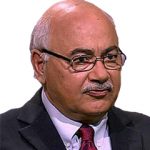
The writer is a retired inspector general of police and former head of Pakistan’s national counter terrorism authority
Published in Daily Times, June 14th 2018.