• Skip to primary navigation
  • Skip to main content
  • Skip to primary sidebar
  • Skip to footer
Trending:
  • Kashmir
  • Elections
Friday, June 5, 2026

Daily Times

Your right to know

  • HOME
  • Latest
  • Iran-Israel war
  • Gilgit Baltistan Election
  • Pakistan
    • Balochistan
    • Gilgit Baltistan
    • Khyber Pakhtunkhwa
    • Punjab
    • Sindh
  • World
  • Editorials & Opinions
    • Editorials
    • Op-Eds
    • Commentary / Insight
    • Perspectives
    • Cartoons
    • Letters to the Editor
    • Featured
    • Blogs
      • Pakistan
      • World
      • Lifestyle
      • Culture
      • Sports
  • Business
  • Sports
  • E-PAPER
    • Lahore
    • Islamabad
    • Karachi

Staff Report

Pakistan’s economic outlook at risk: IMF

Published on: March 8, 2018 2:28 AM

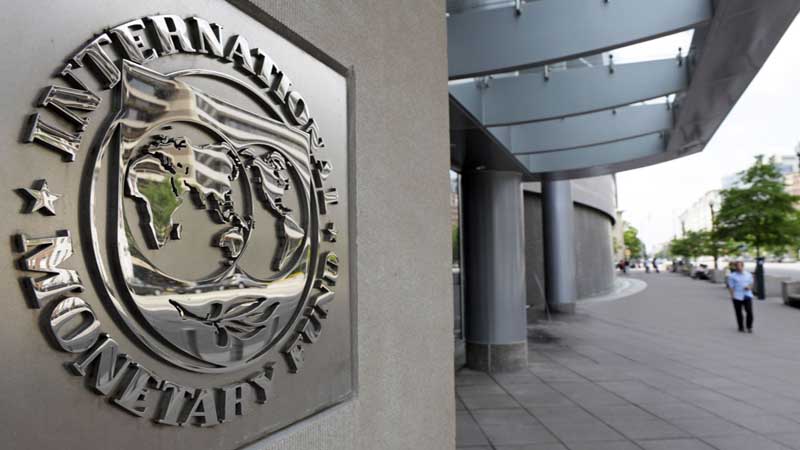
KARACHI: The International Monetary Fund (IMF) has said that Pakistan’s near-term outlook for economic growth is broadly favorable, however continued erosion of macroeconomic resilience could put this outlook at risk.

The executive board of the IMF, which recently concluded the first post-program monitoring discussions with Pakistan, predicted that the real GDP is expected to grow by 5.6 percent in FY 2017/18, supported by improved power supply, investment related to the China-Pakistan Economic Corridor (CPEC), strong consumption growth and ongoing recovery in agriculture.

Following significant fiscal slippages last year, the fiscal deficit is expected at 5.5 percent of the GDP this year, with risks towards a higher deficit ahead of upcoming general elections, it said.

The executive board further said that surging imports have led to a widening current account deficit and a significant decline in international reserves despite higher external financing. The FY 2017-18 current account deficit could reach 4.8 percent of the GDP, with gross international reserves further declining in a context of limited exchange rate flexibility. Against the background of rising external and fiscal financing needs and declining reserves, risks to Pakistan’s medium-term capacity to repay the Fund have increased since completion of the extended fund facility (EFF) arrangement in September 2016.

IMF’s directors took note of Pakistan’s favorable growth momentum, but noted with concern the weakening of the macroeconomic situation, including a widening of external and fiscal imbalances, a decline in foreign exchange reserves, and increased risks to Pakistan’s economic and financial outlook and its medium-term debt sustainability. In this context, they urged a determined effort by the authorities to refocus near-term policies to preserve macroeconomic stability.

The directors welcomed the authorities’ move to allow some exchange rate adjustment last December, but stressed the importance of greater exchange rate flexibility on a more permanent basis to preserve external buffers and improve competitiveness. They also encouraged the authorities to phase out administrative measures aimed at supporting the balance of payments as soon as conditions allow to minimise potential economic distortions.

The directors noted that the external sector pressures are in part linked to the fiscal deterioration during the last fiscal year and an accommodative monetary policy stance, as well as the high imports related to the China-Pakistan Economic Corridor projects. They called on the authorities to strengthen fiscal discipline through additional revenue measures and efforts to contain current expenditure while protecting pro-poor spending.

The board said complementing the recent increase in the policy interest rate with further monetary tightening would be important to address inflationary risks and help reverse external imbalances. The directors also emphasised the need for prudent debt management and caution in phasing in new external liabilities, and the urgency of tackling rising fiscal risks stemming from continued losses in public sector enterprises.

Directors underscored the importance of accelerating structural reforms to reinforce macroeconomic stability, raise competitiveness and promote higher and more inclusive growth. They highlighted the need to strengthen the fiscal federalism, monetary and financial policy frameworks; further enhance the AML/CFT regime; improve the business climate; continue to strengthen governance; achieve cost-recovery in the energy sector; and expand social safety nets to protect the most vulnerable.

Published in Daily Times, March 8th 2018.

Filed Under: Pakistan Tagged With: Headline

Submit a Comment


Primary Sidebar


Latest News

Oil falls on hopes of broader peace after Lebanon, Israel halt fighting

Meat exports grow by 4.16%

SBP-held foreign reserves rise by $43m to $17.9bn

Gold prices up by Rs 1,523 per tola

Rupee strengthens against dollar

Pakistan

Bilawal seeks heavy public mandate to protect GB’s rights

PM directs pilot launch of automated tax collection system in Islamabad

Federal budget on June 10

PM hails special ties with Washington at event marking US 250th anniversary

FO rubbishes reports of Dar sharing Iran nuclear information with Rubio

More Posts from this Category

Business

Pakistan’s exports to US up by 1.70% to $5.12bn in 10 months

Pakistan, Tajikistan set $200 million trade target, deepen ties at 8th JCM

Services’ exports up by 17.68% to $8.26bn

OGDCL’s new wells deliver record oil, gas output in FY26

Buying returns as PSX gains nearly 1,000 points

More Posts from this Category

World

No sign of progress in US-Iran talks as Hezbollah rejects truce

Vast accelerates race to replace ISS

Gulf crisis drives India-Venezuela oil partnership

More Posts from this Category


Footer

Home
Lead Stories
Latest News
Editor’s Picks

Culture
Life & Style
Featured
Videos

Editorials
OP-EDS
Commentary
Advertise

Cartoons
Letters
Blogs
Privacy Policy

Contact
Company’s Financials
Investor Information
Terms & Conditions

Facebook
Twitter
Instagram
Youtube

© 2026 Daily Times. All rights reserved.

Manage Consent
To provide the best experiences, we use technologies like cookies to store and/or access device information. Consenting to these technologies will allow us to process data such as browsing behavior or unique IDs on this site. Not consenting or withdrawing consent, may adversely affect certain features and functions.
Functional Always active
The technical storage or access is strictly necessary for the legitimate purpose of enabling the use of a specific service explicitly requested by the subscriber or user, or for the sole purpose of carrying out the transmission of a communication over an electronic communications network.
Preferences
The technical storage or access is necessary for the legitimate purpose of storing preferences that are not requested by the subscriber or user.
Statistics
The technical storage or access that is used exclusively for statistical purposes. The technical storage or access that is used exclusively for anonymous statistical purposes. Without a subpoena, voluntary compliance on the part of your Internet Service Provider, or additional records from a third party, information stored or retrieved for this purpose alone cannot usually be used to identify you.
Marketing
The technical storage or access is required to create user profiles to send advertising, or to track the user on a website or across several websites for similar marketing purposes.
  • Manage options
  • Manage services
  • Manage {vendor_count} vendors
  • Read more about these purposes
View preferences
  • {title}
  • {title}
  • {title}
We use cookies to ensure that we give you the best experience on our website. If you continue to use this site we will assume that you are happy with it.