
Although secularism, pluralism and multiculturalism are the accepted social axioms of the modern worldview, but a demand for separate nationhood on the basis of ethno-linguistic identity is accepted in the Western discourse; and it cannot simply be dismissed on the premise that since pluralism and multiculturalism are the accepted principles. , As a result, therefore the creation of a nation state on the basis of ethno-linguistic identity becomes redundant. The agreed-upon principles of pluralism and multiculturalism become operative after the creation of a nation state and not before it.
Similarly, even though secularism is an accepted principle in the Western discourse, but an ethno-religious group cannot be denied its right to claim separate nationhood on the basis of religious identity; in this case also, the principle of inclusive secularism becomes functional after the creation of a state and not prior to it.
The Muslims of Pakistan share a lot of cultural similarities with their Hindu brethren as well, because we share a similar regional culture and lingua franca, Urdu or Hindi; however, different ethno-linguistic groups comprising Pakistan — the Punjabis, Pashtuns, Sindhis and Baloch — have more in common with each other than the Hindus of India, because all of them belong to the same religious civilization, Islam.
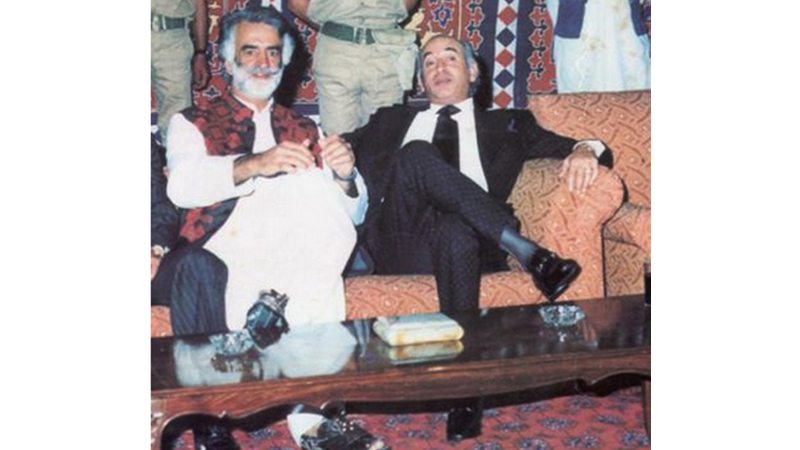 Before joining the Muslim League, Jinnah was one of the leading proponents of Hindu-Muslim unity. He attended the meetings of the inner circle of the Indian National Congress, and reached a well-considered conclusion that the outwardly liberal and secular Congress is nothing more than a thinly veiled Hindu nationalist party.
Even today, 70 years after the independence, Muslims constitute 15% of India’s 1.2 billion population, that’s more than 180 million Muslims in India today. Although we do find a few showpiece Muslims in ceremonial positions, but I would like to know what is the representation of Muslims in India’s state institutions, their proportion in higher bureaucracy, judiciary, police and army, and their presence and participation in India’s civic and political life?
The fact of the matter is that just like the Indian National Congress, the Republic of India is also nothing more than a thinly disguised Hindu nationalist state. The Indian Muslims have lagged so far behind and they have been disenfranchised to such an extent that they need some kind of an “affirmative action,” like the one carried out in the U.S. during the 1960s to improve the miserable lot of Afro-American communities.
Regardless of reductive theories, whether one nation, two nations or several nations, which are only subjective interpretations of objective reality by Orientalist academics, the proof of pudding is in the eating. If the secularists claim that Muslims would have fared better in a united India, then they must prove their assertion by tangible facts rather than facile theories.
It was the collusion between the Congress leadership, Radcliffe and Mountbatten that eventually culminated in the Indian troops’ successful invasion of the princely state of Muslim-majority Jammu and Kashmir
There are currently about 180 million Muslims in India’s 1.2 billion population that constitutes about 15% of the total Indian population, as I have already mentioned. The day we see these 15% Muslims are duly represented in all the institutions of the state and India’s federal, provincial and local governance structure, that day we will accept the contention that the founding fathers of Pakistan were wrong and the Indian pundits were right.
Regarding the much-touted grievances of minority ethno-linguistic groups against the supposed Punjabi dominance in Pakistan, the Baloch are the only ethnic group that has lagged behind in Pakistan. The Sindhis have the second largest political party in Pakistan in the form of Pakistan People’s Party and two of Pakistan’s prime ministers, Benazir and Zulfikar Ali Bhutto, were Sindhis.
The Pashtuns also have a significant presence in Pakistan’s bureaucracy, judiciary, army and all other institutions of the state; and some of Pakistan’s presidents and army chiefs were also Pashtuns. We must give credit where it is due: Islam could be anything but it is an inclusive religion, which makes absolutely no distinction, whatsoever, between its adherents on the basis of race, language and other such parochial affiliations; in fact, Islam strongly discourages racism in all its forms and manifestations.
Additionally, although Orientalist historians generally give credit to Jinnah, as an individual, for single-handedly realizing the dream of Pakistan, but the way I see it, the Pakistan Movement was the logical conclusion of Aligarh Movement. This fact elucidates that how much difference a single educational institution can make in the history of nations. Aligarh Muslim University bred whole generations of educated Muslims who were acutely aware of decadent state of Muslims in British India, and most of them later joined the Muslim League to make the dream of Pakistan a reality.
 Regarding the allegation that the Muslim League leaders were imperialist collaborators, until Lord Wavell, the British viceroys used to take a reasonably neutral approach towards communal issues in British India, but on the eve of independence, Gandhi and Nehru specifically implored the Attlee administration to appoint Lord Mountbatten as the viceroy of India.
More importantly, the independence of India and Pakistan was originally scheduled for June 1948, but once again the Congress leadership beseeched the British Empire to bring the date of independence forward to August 1947. It was not a coincidence that on both critically important occasions, Her Majesty’s government obliged the Congress leadership because the British wanted to keep the Dominion of India within the folds of the British Commonwealth after the independence.
Had the British Raj in India not brought forward the date of independence by almost an year, the nascent Indian and Pakistani armed forces and border guards could have had an opportunity to avert the carnage that took place during the division of Punjab on the eve of independence.
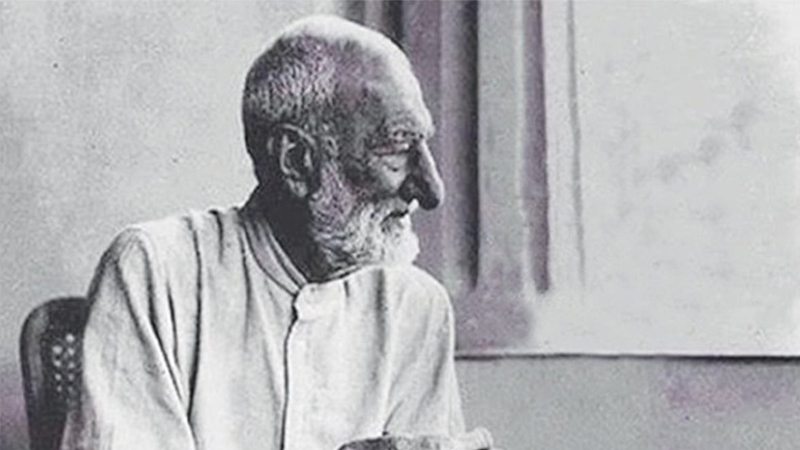 Furthermore, Lord Mountbatten served as India’s first governor general and he helped Pundit Nehru’s government consolidate the Indian dominion by forcefully integrating more than 500 princely states. Mountbatten also made a similar offer to Jinnah to serve as Pakistan’s governor general, too, and when the latter refused, Mountbatten threatened Jinnah in so many words: “It will cost you and the dominion of Pakistan more than just tables and chairs.”
No wonder then, it was the collusion between the Congress leadership, Radcliffe and Mountbatten that eventually culminated in the Indian troops’ successful invasion of the princely state of Muslim-majority Jammu and Kashmir by using the Gurdaspur-Pathankot corridor that was provided to India by the Radcliffe boundary commission. Thus, creating a permanent territorial dispute between two neighborus that has not been resolved 70 years after the independence despite several United Nations resolutions and mediation efforts.
The writer is an Islamabad-based attorney, columnist and geopolitical analyst focused on the politics of Af-Pak and Middle East regions, neocolonialism and petro-imperialism
Published in Daily Times, December 24th 2017.