
Reportedly 80,000 US troops have currently been deployed in Europe out of 275,000 total US troops stationed all over the world, including 50,000 in Germany, 15,000 in Italy and 8,000 in the UK. By comparison, the number of US troops stationed in Afghanistan is only 14,000 which is regarded as an occupied country. Thus, Europe is nothing more than a client of corporate America.
Both NATO and EU were conceived during the Cold War to offset the influence of Soviet Union in Europe. Therefore, it is not a coincidence that the Soviet Union was dissolved in December 1991 and the Maastricht Treaty that consolidated the European Community and laid the foundations of the European Union was signed in February 1992.
The basic purpose of the EU has been nothing more than to lure the formerly communist states of Eastern and Central Europe into the folds of the Western capitalist bloc by offering incentives and inducements, particularly in the form of agreements to abolish internal border checks between the EU member states, thus allowing the free movement of labour from the impoverished Eastern Europe to the prosperous countries of the Western Europe.
No wonder then, that the Western political establishments, and particularly the deep state of the US, were as freaked out about the outcome of Brexit as they were during the Ukrainian Crisis in November 2013, when Viktor Yanukovych suspended the preparations for the implementation of an association agreement with the European Union and tried to take Ukraine back into the folds of the Russian sphere of influence by accepting billions of dollars of loan package offered by Vladimir Putin to Ukraine.
In this regard, the founding of the EU has been similar to the case of Japan and South Korea in the Far East where 45,000 and 28,500 US troops have currently been deployed, respectively. After the Second World War, when Japan was about to fall in the hands of geographically-adjacent Soviet Union, the Truman Administration authorised the use of nuclear weapons on Hiroshima and Nagasaki to subjugate Japan and also to send a signal to the leaders of the Soviet Union, which had not developed their nuclear program at the time, to desist from encroaching upon Japan in the east and West Germany in Europe.
Then, during the Cold War, American entrepreneurs invested heavily in the economies of Japan and South Korea and made them model industrialised nations to forestall the expansion of communism in the Far East. Similarly, after the Second World War, Washington embarked on the Marshall Plan to rebuild Western Europe with an economic assistance of $13 billion, equivalent to hundreds of billions of dollars in the current dollar value. Since then, Washington has maintained its military and economic dominance over Western Europe.
All the grandstanding and moral posturing of unity and equality aside, the hopelessly neoliberal institution, the EU, in effect, is nothing more than the civilian counterpart of the Western military alliance against the erstwhile Soviet Union
Notwithstanding, there is an essential stipulation in the European Union’s charter of union, according to which the developing economies of Europe that joined the EU allowed free movement of goods (free trade) only on the reciprocal condition that the developed countries would allow free movement of labour. What’s obvious in this stipulation is the fact that the free movement of goods, services and capital only benefits the countries that have a strong manufacturing base, and the free movement of people only favors the developing economies where labour is cheap.
Now, when the international financial institutions, like the IMF and WTO, promote free trade by exhorting the developing countries all over the world to reduce tariffs and subsidies without the reciprocal free movement of labour, whose interests do such institutions try to protect? Obviously, they try to protect the interests of their biggest donors by shares, the developed economies.
Regardless, while joining the EU, Britain compromised on the rights of its working class in order to protect the interests of its bankers and industrialists, because free trade with the rest of the EU countries spurred British exports. The British working classes overwhelmingly voted in the favour of Brexit because after Britain’s entry into the EU and when the agreements on abolishing internal border checks between the EU member states became effective, the cheaper labour force from the Eastern and Central Europe flooded the markets of Western Europe, and consequently the wages of native British workers dropped and it also became difficult for them to find jobs, because foreigners were willing to do the same job for lesser pays, hence raising the level of unemployment among the British workers and consequent discontentment with the EU.
The subsequent lifting of restrictions on the Romanians and Bulgarians to work in the European Union in January 2014 further exacerbated the problem, and consequently the majority of the British electorate voted in a June 2016 referendum to opt out of the EU. The biggest incentive for the British working class to vote for Brexit is that the East European workers will have to leave Britain after its exit from the EU, and the jobs will once again become available with better wages to the native British workforce.
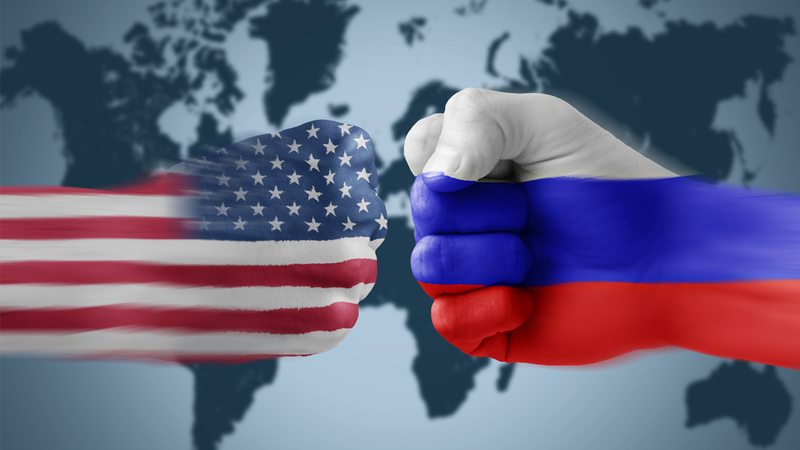 The developed economies of the Western Europe would never have acceded to the condition of free movement of labour that goes against their economic interests; but the political establishment of the US, which is the hub of corporate power and wields enormous influence in the Western capitalist bloc, had persuaded the unwilling states of the Western Europe to yield to the condition against their national interests in order to wean away the formerly communist states of the Eastern and Central Europe from the Russian influence.
Had there been any merit to the founding of the EU, the Western Europe would have promptly accepted Turkey’s request to join the EU. But they kept delaying the issue of Turkish membership in the EU for decades, because with a population of 78 million, Turkey is one of the most populous countries in Eurasia. Millions of Turks working in Germany have already become a burden on the welfare economy of their host country. Turkey’s accession to the EU would have opened the floodgates of immigrant workers seeking employment in the Western Europe.
Moreover, Turkey is already a member of the NATO and a longstanding and reliable partner of the Western powers; while the limited offer to join the EU, as I have already described, serves as an inducement to the formerly communist states of the Eastern and Central Europe to forswear their allegiance to Russia and to become the strategic allies of the Western powers.
Thus, all the grandstanding and moral posturing of unity and equality aside, the hopelessly neoliberal institution, the EU, in effect, is nothing more than the civilian counterpart of the Western military alliance against the erstwhile Soviet Union, the NATO. The NATO employs a much more subtle and insidious tactic of economic warfare to win over political allies and to isolate the adversaries that dare to sidestep from the global trade and economic policy as laid down by the Western capitalist bloc.
Finally, the fabled divide and rule policy that has been deployed by the imperialist powers to weaken resistance movements in their former colonies is a historically proven fact, but at the same time neocolonial powers also employ the little-known ‘unite and rule’ strategy to create friendly alliances and to institute a centralised command and control system in order to buttress the global neo-colonial world order.
The writer is an Islamabad-based attorney, columnist and geopolitical analyst focused on the politics of Af-Pak and Middle East regions, neocolonialism and petro-imperialism
Published in Daily Times, December 11th 2017.