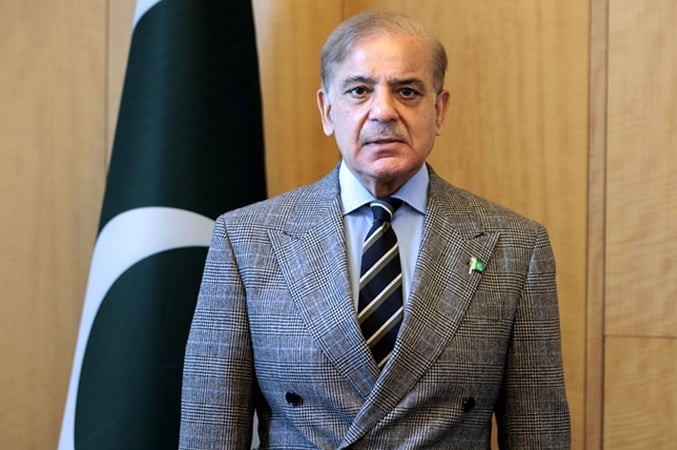
 Prime Minister Shehbaz Sharif on Sunday directed to increase the levy on high-octane fuel by Rs200 per litre.
According to a handout from the Prime Minister’s Office (PMO), the development came as the premier virtually chaired a meeting on decisions regarding high-octane fuel used in “luxury vehicles”.
“The prime minister took notice that the levy on high-octane fuel used in the most expensive vehicles should be increased,” the statement said. Therefore, PM Shehbaz decided that the levy, which was Rs100 per litre, should be increased by Rs200 per litre.
“A levy of Rs 300 per litre will now be applicable on high-octane fuel used in the most expensive vehicles,” the statement said.
“This decision will save the government Rs 9 billion per month and as per the prime minister’s instructions, this will be used to provide the people with relief,” it said.
“This decision will reduce the burden on the economy; the richest class in the country will bear the burden,” it said.
“The prices of fuel used in ordinary vehicles used by the lower and middle classes have not been increased, only the price of high-octane fuel used in luxury vehicles has been increased,” the PMO said, adding that this would not cause an increase in the price of public transport or airfare. It said that the premier had taken notice of high-octane prices and directed the ministry concerned to prepare an action plan in this regard.
Meanwhile, the price of kerosene has witnessed another massive hike in Pakistan, as the government raised its price by Rs70.73 per litre.
According to a notification, the new price of kerosene stands at Rs428.74 per litre, effective from today. Previously, it was priced at Rs358.01 per litre.
Minister for Finance Muhammad Aurangzeb said on Sunday the government was making all out efforts to ensure availability of petroleum products across the country.
Talking to media in Lahore on Sunday, he claimed petrol, diesel, and LPG were easily available in all cities and towns, and strict monitoring was being ensured for energy system, state-run Radio Pakistan reported.
The finance minister said the government had absorbed a financial burden of Rs69 billion to provide people with petroleum products at minimum prices and avoid further impact of the regional situation on consumers.
Highlighting concerns over regional tensions and ongoing conflicts, the minister said the situation would affect energy infrastructure. “However, the situation is expected to remain stable till next month”.
He further said a targeted relief package was being prepared for deserving segments of society and that all relevant ministries, including the Ministries of Petroleum, IT, and Finance, were working together on a coordinated strategy.
The minister said the government was also assessing the potential impacts of the current economic situation on trade and investment.
Separately, oil prices look set to rise further on Monday, having closed before the weekend at their highest in nearly four years, after U.S. and Iranian threats to target energy facilities, analysts said on Sunday.
On Friday, Brent futures for May settled up 3.26% at $112.19 a barrel, the highest since July 2022.
“President Trump’s threat has now placed a 48-hour ticking time bomb of elevated uncertainty over markets,” said IG market analyst Tony Sycamore. If the ultimatum is not walked back, oil prices will spike on Monday, he said.
“It clearly means more escalation which means higher oil prices. Some are incorrectly thinking, however, that Iran may cave,” said Amrita Sen, founder of Energy Aspects. “Trump is trying to show he can out-escalate and that way ends in scorched earth for Gulf infrastructure.”
Brent ?gained about 8.8% last week, while the front-month WTI settled down around 0.4% compared with last Friday’s close. WTI’s discount to Brent hit its widest in 11 years on Wednesday.
Restoring supplies from the Middle East Gulf could ?take up to six months, International Energy Agency chief Fatih Birol told the Financial Times on Friday.
The Trump administration is considering plans to occupy or blockade Iran’s Kharg Island to pressure Iran to reopen the Strait of Hormuz, Axios reported on Friday.