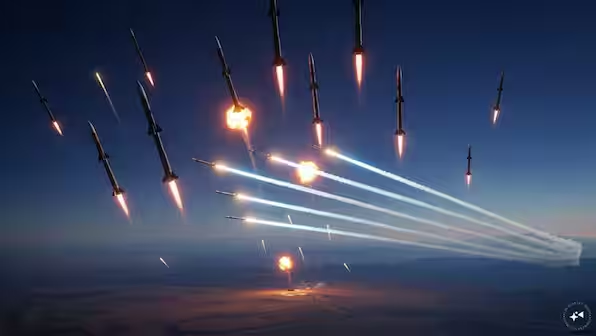
Iran has launched dozens of missiles with cluster munition warheads targeting Israel since the conflict began, creating a major challenge for Israel’s missile defence systems that must intercept them before dispersion.
Overnight, Israeli defences failed to intercept one missile, and its bomblets scattered across civilian areas in Tel Aviv, killing a couple in their 70s and damaging a major train station, highlighting the threat to populated zones.
Lieutenant Colonel Nadav Shoshani described the attack as a deliberate targeting of civilians, calling it a war crime, and said the military aims to intercept missiles as high as possible to minimize casualties.
Read more : Israel kills Iran’s intel chief after Larijani’s assassination –
Cluster munitions open mid-air, scattering dozens of smaller explosives over wide areas. Many fail to detonate immediately, leaving dangerous remnants that can injure or kill anyone who comes across them later, creating virtual minefields.
Approximately half of the missiles fired by Iran since February 28 have been cluster warheads, each containing 24 submunitions weighing 2–5 kilograms. These explode on impact, similar to grenades, causing localized but highly dangerous effects for anyone nearby.
Read more : Iranian minister praises Pakistan’s solidarity with Iran –
Experts, including Yehoshua Kalisky from the Institute for National Security Studies, emphasize that these missiles must be intercepted high above the atmosphere to prevent bomblet dispersion, while Israel’s offensive strikes aim to degrade Iran’s missile launching capabilities.