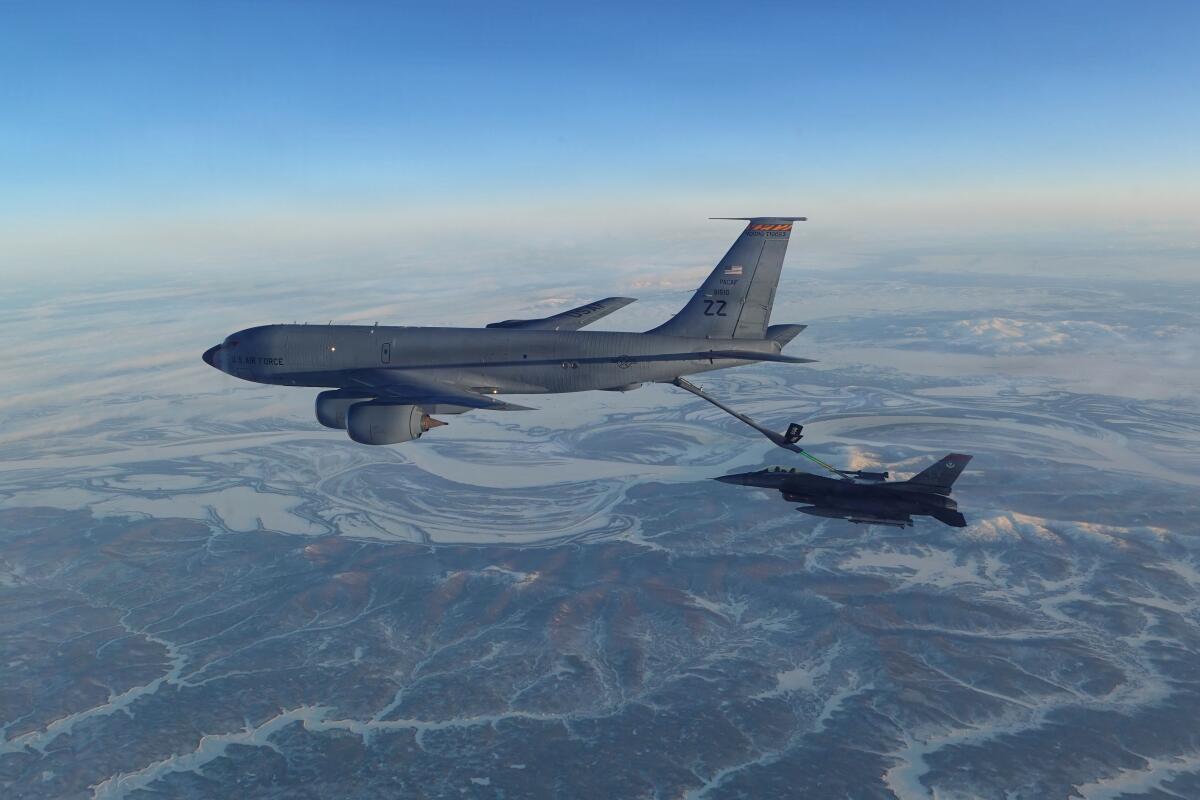
A U.S. military KC-135 refueling aircraft crashed in western Iraq while supporting operations against Iran, killing four of its six crew members. The U.S. Central Command said the crash followed an unspecified incident involving two aircraft in friendly airspace. The second plane landed safely, and authorities confirmed the loss was not caused by hostile or friendly fire. Rescue operations are ongoing, and the cause of the crash remains under investigation.
The KC-135 Stratotanker is a long-serving U.S. Air Force aircraft used to refuel fighter jets, bombers, and allied planes in midair, allowing extended missions without landing. The plane can also transport cargo or evacuate wounded personnel. Based on the Boeing 707 design, the KC-135 has been in service for over 60 years, supporting multiple U.S. military branches and allied operations worldwide. Despite upgrades, the aircraft’s age has raised concerns about reliability and safety.
Read more : Iran-backed group claims downing of US refueling aircraft in Iraq
A basic KC-135 crew includes a pilot, co-pilot, and boom operator, with medical staff added for evacuation missions. Refueling typically occurs from the rear, where the boom operator lies face down to connect with other aircraft. Some planes also refuel from wing pods, providing versatility during operations. Experts say KC-135s will play a crucial role if the Iran conflict continues, enabling longer missions for U.S. aircraft pursuing Iranian forces deeper into the country.
Currently, four crew members have been confirmed dead, while two others survived. Officials stressed that the crash did not involve enemy engagement. A U.S. official said the other involved KC-135 landed safely, and rescue teams continue to respond. Analysts note that refueling tankers usually operate away from direct combat, making enemy fire an unlikely cause, though mechanical issues remain a key concern given the aircraft’s age.
Read more : Middle East war escalates as Iran strikes Kurds in Iraq –
KC-135s have a history of accidents, including a fatal mid-air collision in 1966 with a B-52 bomber carrying nuclear bombs over Spain. More recently, a KC-135R crashed in Kyrgyzstan in 2013 due to rudder problems, killing all three crewmembers. These incidents underscore ongoing concerns about maintaining aging tankers while transitioning to next-generation KC-46A Pegasus aircraft. Experts stress the importance of careful monitoring and maintenance to prevent further tragedies.
The crash adds to operational risks for the U.S. military amid the ongoing Iran conflict, which has already seen fighter jets mistakenly downed by allied fire. Analysts say maintaining secure and reliable refueling capabilities is essential for sustaining long-range air operations. Authorities continue to investigate the incident to determine contributing factors and prevent similar accidents in the future.