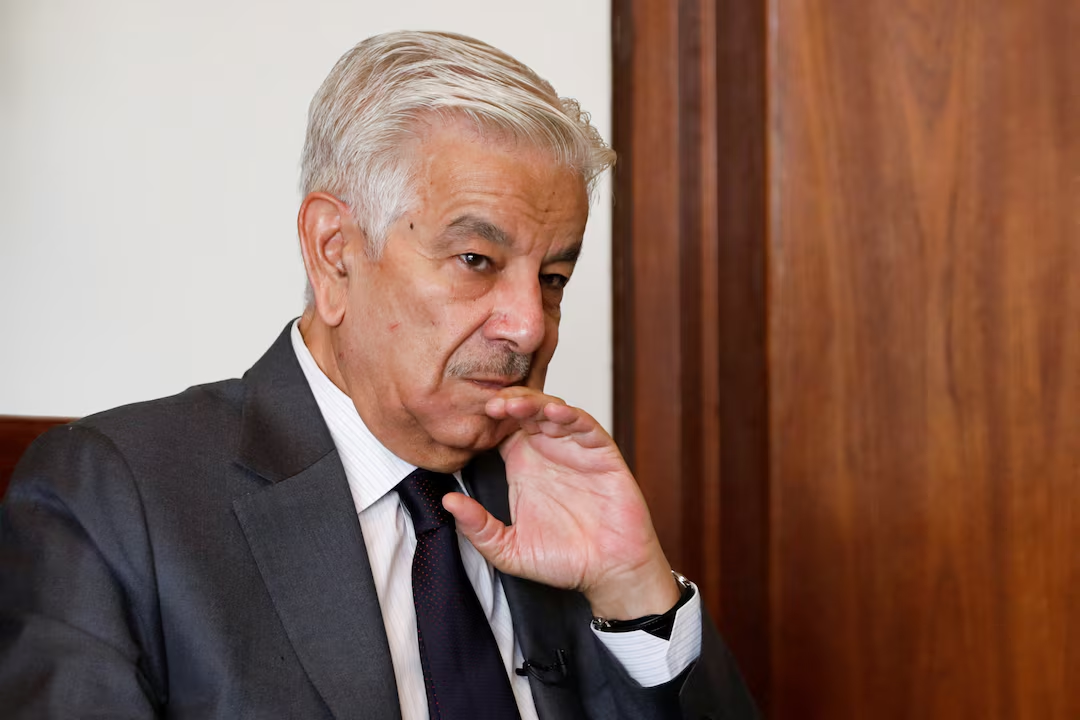
Defence Minister Khawaja Muhammad Asif has declared that Pakistan’s patience has reached its limit following Afghanistan’s alleged unprovoked firing on multiple locations across the Khyber Pakhtunkhwa border. He warned that continued aggression would push the situation toward open war if hostilities do not stop immediately. His remarks came amid rising tensions along the frontier, where cross-border incidents have increased in recent days. The statement marks one of the strongest warnings issued by Pakistan’s leadership in recent months.
Responding to the situation, Asif said Pakistan’s armed forces are delivering a crushing response to what he described as India-backed Taliban aggression. He stressed that the Pakistan Army stands firm in defending every inch of the country’s territory against external threats. Moreover, he rejected any notion of weakness and asserted that the military’s actions reflect national resolve. According to him, the enemy will ultimately face defeat if it continues provocative actions.
Read more : Khawaja Asif says Taliban turned Afghanistan into India’s ‘colony’
In a strongly worded message shared publicly, the defence minister stated that Pakistan’s army belongs to the region and understands the ground realities and limits of its neighbors. He emphasized that Pakistan has exercised restraint despite repeated provocations along sensitive border areas. However, he signaled that such restraint should not be mistaken for vulnerability or hesitation. His comments aimed to send a clear message about Pakistan’s red lines.
Read more : Asif urges massive troop deployment in Balochistan
Furthermore, Asif alleged that after the withdrawal of NATO forces, the Taliban leadership turned Afghanistan into what he called an Indian proxy setup. He claimed that militant elements from different parts of the world have gathered there, creating new security challenges for the region. According to him, these developments have increased cross-border terrorism threats against Pakistan. He argued that such activities undermine regional stability and peace efforts.
The defence minister added that Pakistan made consistent efforts to maintain normal relations and avoid escalation despite serious concerns. Nevertheless, he claimed that the current Afghan regime failed to respond positively to diplomatic engagement. As tensions continue to rise, security observers warn that further escalation could destabilize the broader region. For now, Pakistan’s leadership appears determined to defend its position while leaving limited space for de-escalation.