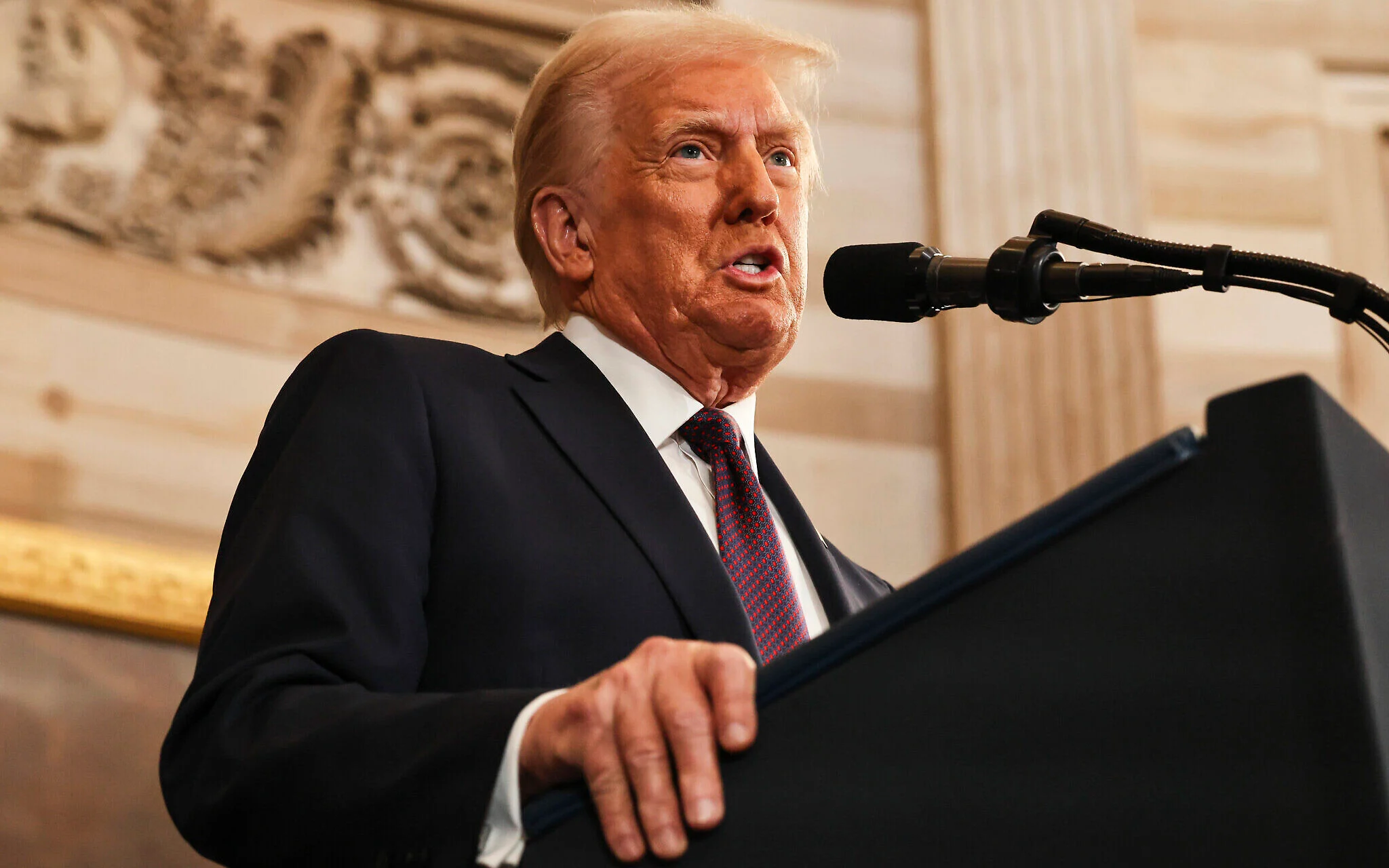
With midterm elections approaching, President Donald Trump used his State of the Union address to reset his presidency and reassure uneasy voters. He declared that the United States had entered a “Golden Age,” insisting the nation was “bigger, better, richer and stronger than ever before.” Republicans cheered loudly as he entered the House chamber, chanting “USA,” while most Democrats remained seated in silent protest, highlighting the deep political divide shaping the 2026 campaign season.
Read more : Trump to address state of the union amid domestic, global challenges
However, the evening quickly reflected the tensions surrounding his leadership. Democratic Representative Al Green was removed from the chamber after holding up a protest sign criticizing a controversial social media post linked to the president. The White House later removed the video and said a staff member had uploaded it. Meanwhile, Green, who was also escorted out during last year’s address, accused Trump of fueling racial division at a sensitive political moment.
Read more : Trump imposes 10 percent global tariff after court
At the same time, Trump focused heavily on the economy, claiming inflation was “plummeting” and growth remained strong despite fresh data showing slower expansion and rising prices. Although he credited his administration’s policies for stabilizing markets, grocery, housing, insurance and utility costs remain far higher than they were several years ago. A recent Reuters/Ipsos survey found only 36 percent of Americans approve of his economic management, underscoring the challenge he faces in convincing voters ahead of November.
In addition, the president confronted mounting legal and political headwinds that threaten to weaken his standing. The Supreme Court of the United States recently struck down his sweeping global tariff plan, forcing him to explore alternative legal pathways to restore key trade measures. Trump greeted several justices, including Amy Coney Barrett, despite publicly criticizing her ruling against his tariff policy only days earlier.
Foreign policy pressures also loomed large over the address, particularly rising tensions with Iran over its nuclear program and the ongoing war in Ukraine. Notably, Tuesday marked four years since Russia’s invasion, a conflict Trump once promised to end swiftly but has yet to resolve. While he hinted at fresh diplomatic initiatives and even military options, he offered few specifics, leaving observers uncertain about the direction of his strategy.
Ultimately, the speech served as both a rallying cry for Republicans and a high-stakes attempt to reshape public opinion before critical congressional races. With approval ratings slipping and domestic disputes intensifying, Trump sought to project strength and momentum. Yet as political divisions deepen and economic anxieties persist, the months ahead will test whether his message of renewed national greatness resonates beyond his loyal base.