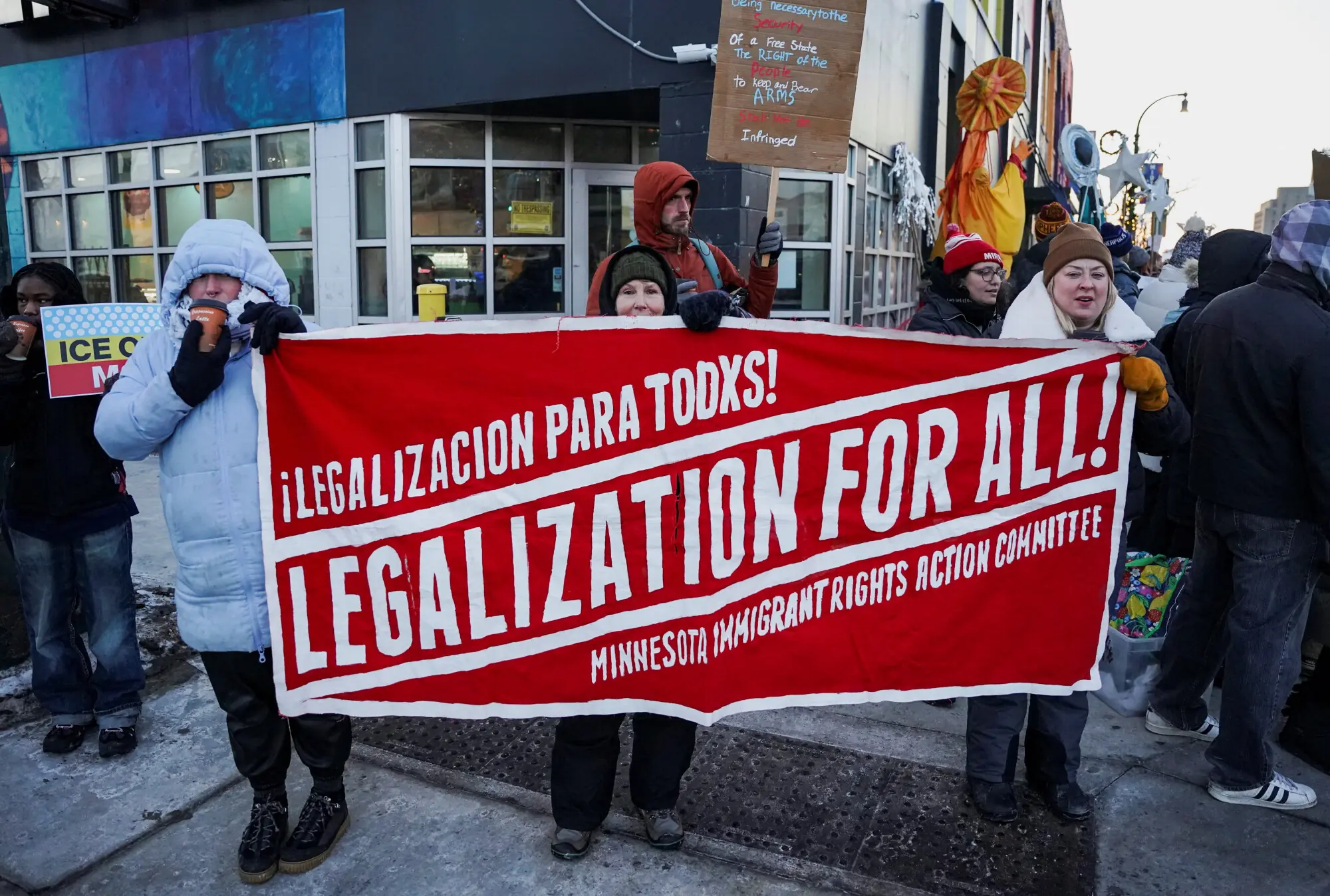
Thousands of protesters gathered in Minneapolis on Friday while students across the United States staged walkouts, demanding the withdrawal of federal immigration agents from Minnesota following the fatal shootings of two U.S. citizens by federal officers earlier this month.
Read More: US freezes immigrant visa processing for 75 countries, including
The demonstrations came amid a nationwide immigration crackdown under President Donald Trump, which has seen approximately 3,000 federal agents deployed to the Minneapolis area as part of Operation Metro Surge. The force, operating in tactical gear, is significantly larger than the city’s police department and has drawn criticism from civil rights groups, educators, and local officials.
In downtown Minneapolis, protesters braved sub-freezing temperatures, with families, elderly residents, and students rallying against the presence of U.S. Immigration and Customs Enforcement (ICE). Demonstrators carried signs calling for ICE to leave the city, while speakers denounced what they described as aggressive enforcement tactics.
View this post on Instagram
Protests extended beyond Minnesota, with organizers estimating more than 250 demonstrations across 46 states under the slogan “No work. No school. No shopping. Stop funding ICE.” Walkouts were reported in major cities including New York, Los Angeles, Chicago, Washington, and Denver, with several school districts closing due to mass absences.
The unrest followed the fatal shootings of Alex Pretti and Renee Good, both U.S. citizens, in Minneapolis. A fundraiser for the victims featured a performance by musician Bruce Springsteen, who debuted a song titled Streets of Minneapolis.
President Trump defended the operation and praised Homeland Security Secretary Kristi Noem, rejecting calls for her resignation. Meanwhile, Minnesota Governor Tim Walz urged the federal government to scale back its presence, saying public safety required an end to what he called excessive force.
Read More: Mohsin Naqvi, Talal Chaudhry review immigration process
The protests come as public approval of the administration’s immigration policy has declined, according to a recent Reuters/Ipsos poll, and as political tensions grow over funding for the Department of Homeland Security.