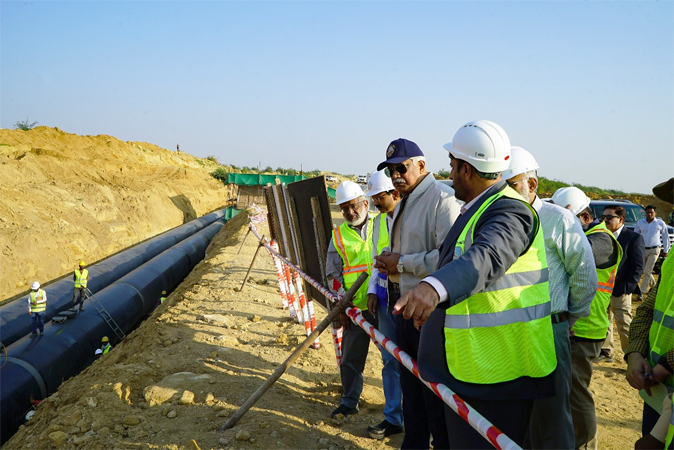
PESHAWAR: The Khyber Pakhtunkhwa (KP) government has announced a major initiative to install flow meters and replace rusted pipelines in Peshawar, Kohat, Abbottabad, and Mingora as part of the Khyber Pakhtunkhwa Cities Improvement Project (KPCIP). Officials said the move aims to conserve water, reduce wastage, and manage the growing problem of non-revenue water—water extracted and pumped into the system but lost before reaching consumers.
Read More: IWMI expands operation in KP for addressing water governance
Under the project, all tubewells in the four cities will be equipped with supervisory control and data acquisition systems to monitor extraction and consumption. Authorities highlighted that these measures will help slow groundwater depletion, reduce operational costs, and ensure more equitable distribution of water to residents.
The @LGKPGovt, under its @KPCIP1 project, is modernizing the drainage system to be connected to the under-construction Sewerage Treatment Plant in #Mardan city. The project aims to ensure cleaner water, safer groundwater, and a healthier city. pic.twitter.com/82VUUgrZXU
— Khyber Pakhtunkhwa Cities Improvement Project (@KPCIP1) January 6, 2026
Pipeline replacement is also a core component of the plan, with 577 kilometres in Mingora, 353 km in Kohat, 200 km in Abbottabad, and 15 km in Peshawar slated for replacement. The initiative is expected to curb leakages, improve water quality, and address shortages during peak summer months.
Data from Water and Sanitation Services Companies (WSSCs) indicates that demand already exceeds supply in the four cities. For instance, Mingora extracts about 7 million gallons per day (MGD) against a demand of 11 MGD, while Abbottabad extracts 3.5 MGD against a demand of 7 MGD. Over-extraction has also caused some tubewells to go dry, exacerbating shortages.
Read More: KP CM directs WSSP to take steps for drainage of rainwater
Studies conducted in Abbottabad and Peshawar show a consistent decline in groundwater levels due to urban expansion and population growth. Between 1981 and 2017, Peshawar’s daily freshwater demand quadrupled while built-up areas grew, reducing natural groundwater recharge. Officials said KPCIP’s metering and pipeline upgrades are essential to safeguard water resources for future generations.