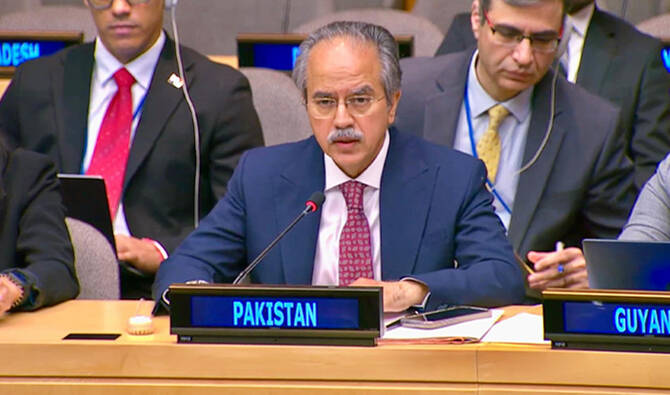
Pakistan has intensified its call at the United Nations (UN) for strengthening international law and reforms the Security Council, warning that selective adherence to treaties and the rise of parallel diplomatic initiatives risk undermining the authority of the world body at a time of escalating global conflict.
Read More: Pakistan backs UN reforms proposed by Antonio Guterres
Speaking at the International Law Year in Review 2026 Conference on Thursday, Pakistan’s Permanent Representative to the UN, Ambassador Asim Iftikhar Ahmad, said uneven application of international law and erosion of treaty obligations were weakening the foundations of collective security established after World War II. He stressed that the principles of the UN Charter must be applied consistently and without exception to preserve a rules-based international order.
Remarks by Ambassador Asim Iftikhar Ahmad
Permanent Representative of Pakistan to the UN
At the Ambassadors’ Roundtable Discussion on the Theme of International Law in Action
International Law Year Review Conference 2026
(January 22, 2026)
********Thank you, Professor Koh,… pic.twitter.com/5wqw3EHoc6
— Permanent Mission of Pakistan to the UN (@PakistanUN_NY) January 22, 2026
Ambassador Asim linked the debate on international law to the functioning of the Security Council, noting that divisions among major powers had increasingly paralysed the body. He cited the unanimous adoption of Resolution 2788 during Pakistan’s presidency of the Council in July last year as an example of what remained possible despite geopolitical rivalries. The resolution reaffirmed the importance of peaceful settlement of disputes and demonstrated the continued relevance of multilateral consensus.
Warning against disregard for binding agreements, the ambassador referred to India’s decision to place the Indus Waters Treaty in abeyance, describing it as part of a troubling trend that weakened confidence in international law and threatened regional stability.
On Security Council reform, Pakistan reiterated its opposition to proposals that expand permanent membership or extend veto powers. Instead, it called for reforms that enhance the role and influence of elected members to better reflect the wider UN membership.
Read More: Pakistan calls for UN Security Council veto reform
Ambassador Asim also highlighted emerging challenges related to artificial intelligence, cyber operations and autonomous weapons, arguing that the UN must play a central role in developing legal norms for new domains of conflict. While acknowledging criticism of the UN’s effectiveness, he said the organisation continued to enjoy broad legitimacy, emphasising that reform and renewal — not marginalisation — offered the path forward.