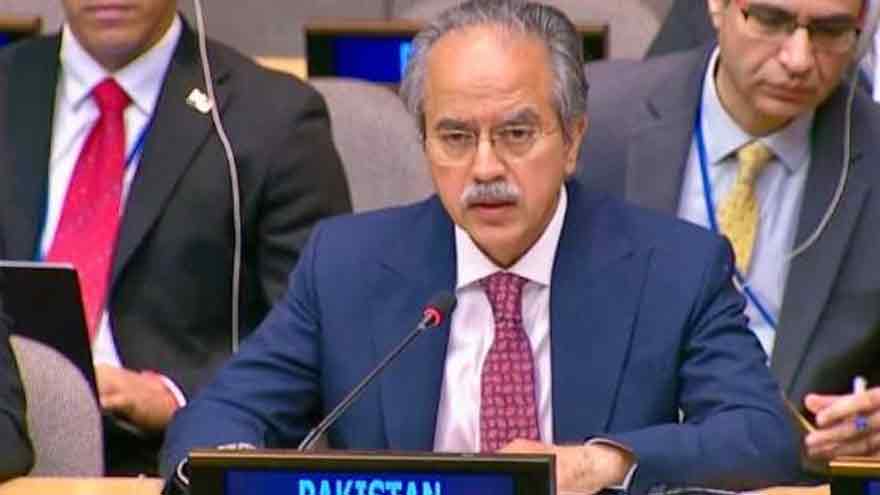
Pakistan has urged the United Nations General Assembly to address the issue of veto power as part of broader reforms of the Security Council. Ambassador Asim Iftikhar Ahmad, Pakistan’s permanent representative to the UN, highlighted that the veto, held by the Council’s five permanent members — Britain, China, France, Russia, and the US — often paralyzes decision-making on matters of international peace and security.
Read More: Veto power responsible for non-resolution of Kashmir and Palestine issue Pakistan
Speaking during a debate on the use of the veto, Ambassador Ahmad emphasized that any reform must include either the abolition or restraint of veto power. He added that expanding the number of permanent members, as proposed by the so-called Group of Four — India, Brazil, Germany, and Japan — could worsen the problem by multiplying the potential for deadlock. Pakistan, along with the Uniting for Consensus (UfC) Group, continues to oppose adding new permanent members.
The Pakistani envoy proposed balancing the veto by imposing restrictions on its use while strengthening the role of non-permanent members through longer terms and greater representation. He stressed that any measures to limit the veto must comply with the UN Charter and form an integral part of Security Council reform.
General Assembly President Annalena Baerbock opened the debate by warning that repeated deadlocks in the Council have undermined global trust in multilateral institutions. She noted that the inability of the Council to act in the face of crises, due to the veto, damages the credibility and legitimacy of the UN itself.
Read More: Pakistan says aspirants for permanent UNSC seats holding up UN body restruction
The discussion comes amid ongoing global debates over Security Council restructuring, accountability for veto use, and the need to enhance the role of the General Assembly in ensuring effective multilateral decision-making.