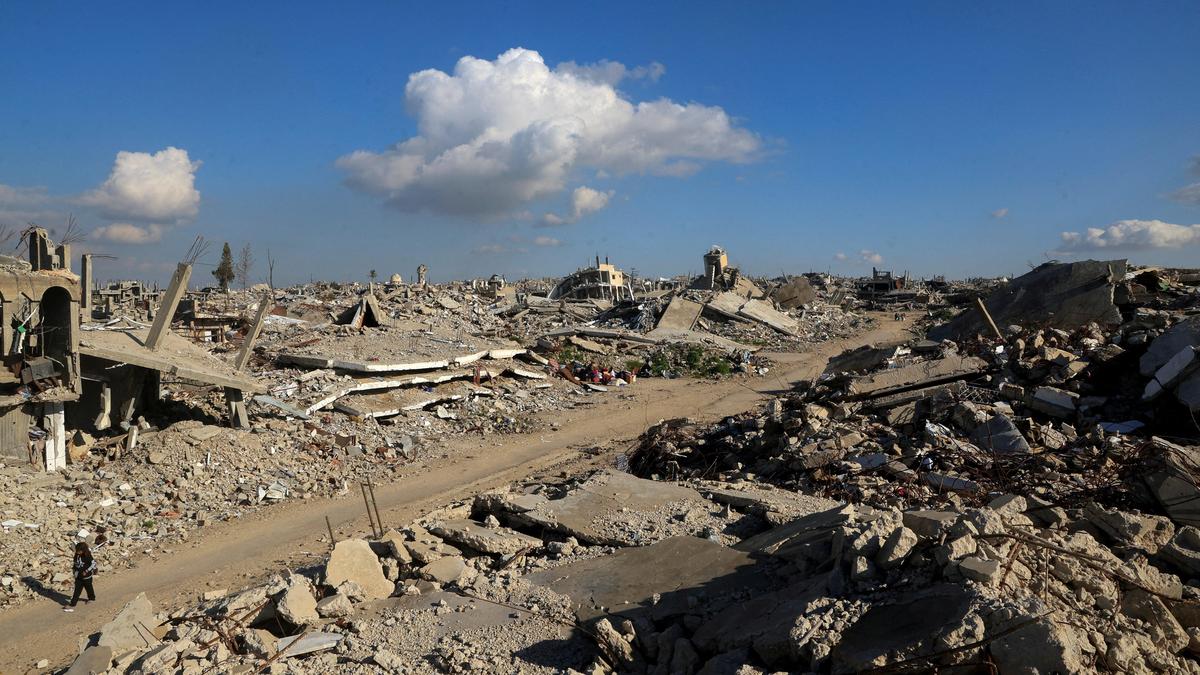
Israeli forces have ordered dozens of Palestinian families in southern Gaza to evacuate their homes for the first time since October’s ceasefire, escalating tensions in areas near Khan Younis. Residents said leaflets were dropped over tent encampments in the Al‑Reqeb neighbourhood, warning families to leave immediately under Israeli military control. The notices were written in Arabic, Hebrew, and English, signaling the seriousness of the evacuation orders while raising concerns among displaced civilians.
The Israeli military confirmed the leaflet drops but denied plans for long-term displacement, stating the warnings aim to prevent Palestinians from crossing the armistice line with Hamas. However, residents and Hamas officials said the evacuation affected approximately 70 families, forcing them to relocate westward multiple times as the line of control expanded. Many of the homes and tents in the area were already partially damaged from previous conflicts.
Read more : Israel orders first Gaza evacuations since ceasefire –
The ceasefire, brokered by the United States in October, has only partially progressed, leaving Israel in control of less than half of Gaza. Hamas has released hostages in exchange for Palestinian detainees, but both sides continue to accuse each other of violating agreements. The population of more than two million people remains confined to roughly one-third of Gaza, living in tents and damaged buildings under challenging conditions.
Hamas officials described the new orders as creating a state of humanitarian disruption, citing that at least 3,000 people were affected by the forced evacuation in eastern Khan Younis. The repeated expansion of Israeli control has intensified internal displacement, increasing pressure on limited shelter areas and worsening living conditions for already vulnerable residents.
Read more : Israel PM holds meeting after objecting to Gaza advisory panel
Israeli authorities maintain that their actions target militants approaching the yellow line, claiming the use of force is necessary to protect troops. Airstrikes and targeted operations have continued across Gaza, with the military stating that any attacks from militant groups are treated with utmost severity. Civilians, however, bear the brunt of escalating tensions, further complicating the fragile ceasefire situation.
Future phases of the ceasefire, as envisioned in US-led plans, involve further Israeli withdrawal, Hamas disarmament, and internationally backed reconstruction efforts. Since the ceasefire, over 460 Palestinians and three Israeli soldiers have been reported killed, while the humanitarian situation remains dire with large-scale displacement and ongoing insecurity across the region.