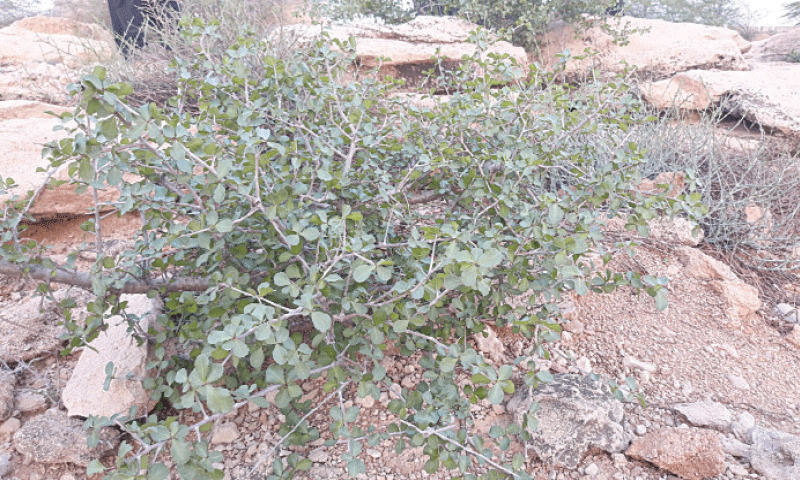
Pakistan’s medicinal gughar plant, highly valued for its resin, has now been listed in CITES Appendix II. This status ensures global traceability of its trade and helps tackle illegal exploitation.
The decision came after Pakistan’s delegation successfully lobbied at the 20th CITES Conference in Samarkand, Uzbekistan. Earlier proposals by Germany and the EU had failed to achieve majority support.
READ MORE:Plant for Pakistan: Widespread spring afforestation campaign launched to reverse deforestation in KP
Gughar grows in the Karoonjar Hills and parts of Sindh, Balochistan, India, and Oman. Its resin, called guggulu, is in high demand worldwide for traditional medicines.
CITES Appendix II does not ban trade but mandates strict controls. Only legally acquired and sustainably sourced shipments can be traded internationally with proper permits.
READ MORE:Importance of plants
Experts warn that unregulated harvesting threatens the plant’s survival. The new status is expected to promote sustainable trade while protecting Pakistan’s natural gughar populations.