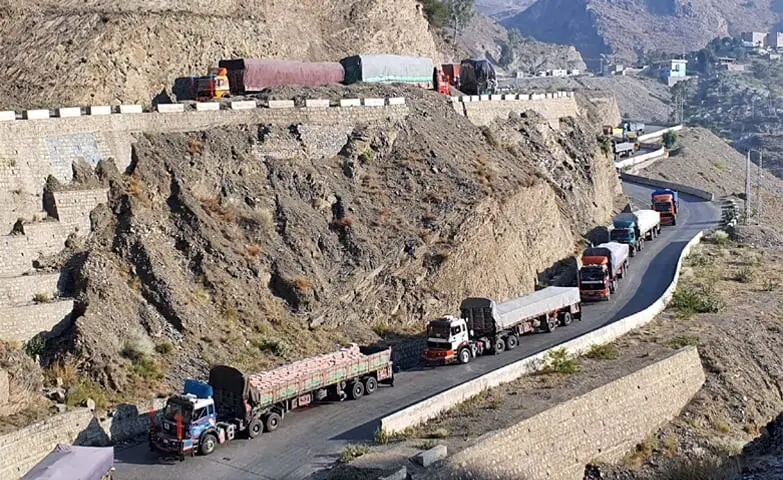
ISLAMABAD: Pakistan’s Foreign Office (FO) on Friday reiterated that the reopening of trade with Afghanistan hinges on the Taliban halting cross-border terrorism, warning that regional energy projects could also be jeopardized if Kabul continues to support militant groups. FO spokesperson Tahir Hussain Andrabi said the suspension of trade since mid-October followed attacks on Pakistani forces and the backing of groups like Fitna-al-Khawarij (FAK) and Fitna-al-Hindustan (FAH) from Afghan soil.
Bilateral trade between Pakistan and Afghanistan, valued at $1.6 billion to $1.8 billion in 2023-24, has been suspended at major crossings including Torkham and Chaman. Andrabi said the closures were causing economic pain but stressed that human lives and security remained the priority. “Can you put a price tag on a human life, a Pakistani life?” he remarked, noting repeated attacks on trade posts in November.
Read More: ‘Pakistan, Bangladesh working on resumption of direct flights’
The FO highlighted that major regional initiatives, including the TAPI gas pipeline and the CASA-1000 electricity project, were contingent on a shift in Taliban policy. Andrabi described stopping support to FAK, FAH, and their affiliates as a “central denominator” for stable Pakistan-Afghanistan relations and the success of energy infrastructure projects.
Pakistan has welcomed mediation efforts led by Turkey and Qatar to restore trade and enforce a ceasefire. A Turkish delegation, including senior officials, is yet to visit Islamabad, with scheduling delays attributed to ministerial commitments. Andrabi rejected claims that Pakistan’s stance or cooperation was causing delays, reiterating that the onus rested on the Afghan Taliban.
He added that while other states, including Russia and Iran, have offered mediation, Islamabad would respond only once proposals are formally received. Meanwhile, Afghan traders are increasingly turning to Iranian routes such as Chabahar, risking Pakistan’s trade and transit revenues.
Read More: India and China move to resume border trade after five years