
For the Saudi royal family, the question of ascension to the throne has always been a sensitive one. For decades, there has been a tacit understanding that every King would be succeeded by his own brother or else the children or grandchildren of his brothers or uncles.
In keeping with this tradition, King Salman appointed Muhammed bin Nayef Al Saud — his nephew and grandson of the founding monarch, King Abdulaziz — as the Crown Prince and heir apparent. As for his own son, Mohammed bin Salman, he was to hold the dual roles of deputy crown prince and deputy prime minister.
Yet here is where things began to go awry. In June of this year, Nayef found himself held against his will in a palace in Mecca. He was forced to step down. Soon afterwards, King Salman named his own son as the Crown Prince, thus placing him next in line for the throne. This move flew in the face of the established order, which provides for royal appointments by consensus in deference to the wishes of the elders.
Thus in an effort to consolidate power, Crown Prince Mohammed bin Salman (or MBS, as he is affectionately known) arrested close to 50 officials, including 11 princes, four ministers and tens of former ministers under the guise of a widespread anti-corruption drive. Vowing “a firm application of justice”, MBS described the operation as “part of an overhaul to ensure transparency, openness and good governance”. Yet this was a coup d’état. Nothing more. Nothing less.
A pre-emptive strike to silence his critics while staving off any potential threat to his authority. Though it is said that this anti-graft sweep will net his government a cool $800 billion once the ill-gotten cash and assets accrued by his relatives is handed over as property of the Kingdom. Public backing from President Donald Trump, for what he termed as efforts to transform Saudi Arabia, may also have served to embolden the Crown Prince.
By arrogating all power in his hands — Crown Prince Mohammed has effectively sent a message of no-confidence to both the military and bureaucracy. This will likely prove to be more than risky and, as such, needs to be nipped in the bud at the earliest
Yet both at home and in the broader region, MBS has not done himself many favours. There are those who describe him as being too young, too inexperienced and too belligerent. And they may have good reason. His aggressive foreign policies in Yemen, Qatar and Syria have spectacularly backfired.
The bombing of Yemen is said to be part of a plan to restore both the government of that country (ousted by the so-called Houthi rebels) as well as the royal family. But none of that has been achieved. Instead what we have is an unprecedented humanitarian crisis in one of the world’s poorest nations.
Moreover, the Houthis still control most of northern Yemen as well as the capital. This is to say nothing of the ballistic missile recently fired at Riyadh. The Saudis say that this was launched with the help of Lebanon’s Hezbollah and, by extension, Iran. That was his first erroneous regional manoeuvring. The second was spearheading the diplomatic and economic isolation of Qatar over the latter’s leaning towards Tehran. Yet MBS actually ended up pushing Doha into the Iranian embrace. And not only that, Turkey is also supporting the tiny kingdom over the regional Saudi giant.
Yet for all this, Crown Prince Muhammed is nevertheless known as a reformer who enjoys tremendous goodwill among the Saudi people. In a bold step, he has announced that women will be able to drive, while also prohibiting the religious police from harassing ordinary people in the name of Islam. And in his groundbreaking shift with convention — he has pledged that the Kingdom will follow a ‘moderate’ interpretation of Islam. The significance of this cannot be underestimated given how successive monarchs have been accused of exporting puritanical Wahhabism to many parts of the Muslim world. Certainly, many nations have accused Riyadh of funding terrorist organisations like Al Qaeda and ISIS. There are some who believe that in order to gain control of the religious clerics, the Kingdom backed Osama Bin Laden (who was a Saudi national) and other jihadists as they fought to kick out the Soviets from Afghanistan.
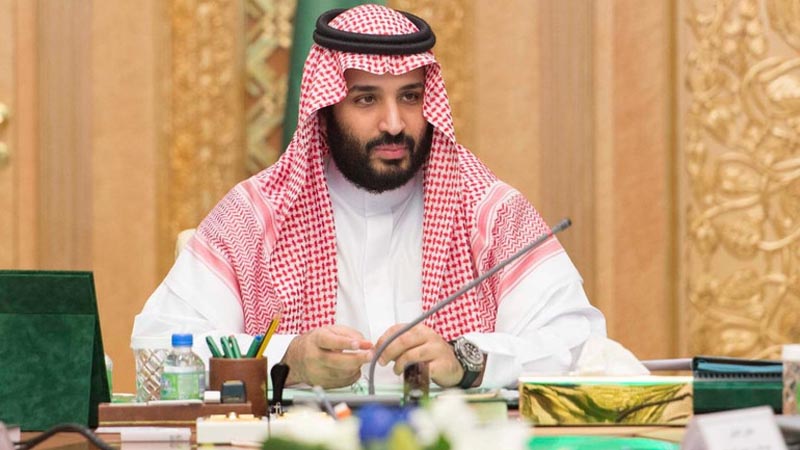
Still, it remains to be seen whether the new Crown Prince will come good on the dream he is selling to his people; or whether this, in reality, is nothing more than a diversionary tactic. For one of the most pressing issues facing the younger generation today is unemployment with oil boom nearing its end. Thus does MBS understand that to avert economic slowdown he will need to reinvent Saudi Arabia as a hub for international investment. But with the arrest of the high profile businessmen, especially that of the royal billionaire tycoon Al-Waleed bin Tala, this seems in jeopardy, least for now.
Thus there are many challenges facing Crown Prince Muhammed. So where should he go from here?
Firstly, he urgently needs to restore peace and stability to the region; while also rethinking foreign policy. Saudi Arabia is nowhere near winning the war in Yemen. Secondly, much backtracking on Qatar is required while seeking improved ties with the royal family there. This has the twin-fold objective of not only de-escalating tension — but also serving as a buffer to Iranian influence.
Thirdly, he will have to tread very carefully in his bid to pursue a ‘moderate’ Islamic interpretation. For he will undoubtedly face strong resistance from the Council of Senior Scholars (Council of Ulema), the Kingdom’s highest religious body. The latter already enjoy a vice-like grip on the religious courts given that Saudi Arabia follows Sharia law. Thus any endeavours to take control of this may directly impact the Crown Prince’s vision for consolidating power both in the short- and long-term.
And fourthly, by arrogating all power in his hands — he has effectively sent a message of no-confidence to both the military and bureaucracy. This will likely prove to be more than risky and, as such, needs to be nipped in the bud at the earliest. Towards this end, MBS should set in motion a consultative process; where all stakeholders are taken on board. In addition, he must also address the procedural irregularities of his anti-corruption sweep. Family members were not afforded the opportunity to defend themselves; meaning therefore that the entire drive lacks legitimacy. It also raises fears that he will, in the future, misuse the security apparatus to quash critics.
Therefore, it seems the most we can hope for at this point is that Crown Prince Mohammed pursues in all sincerity his reform agenda. Failure on this front as well as any attempts to depose him may well precipitate the fall of the House of Saud. The choice before him is clear.
The writer is an independent columnist and political commentator
Published in Daily Times, November 16th 2017.