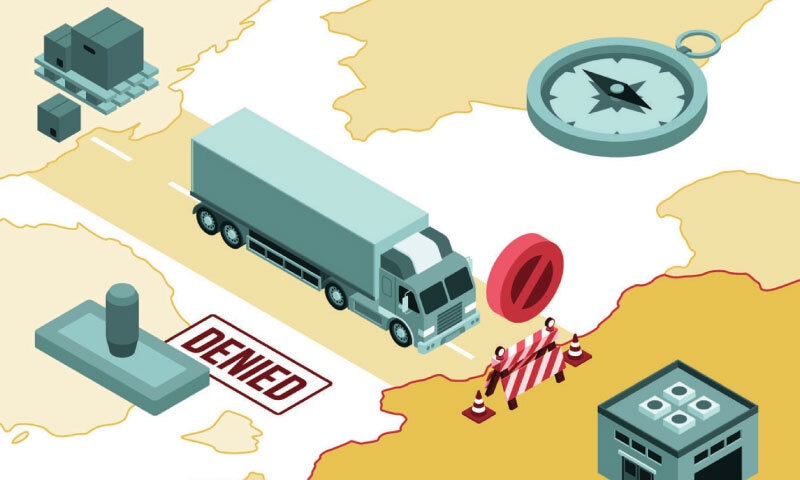
ISLAMABAD: The ongoing closure of Pakistan-Afghanistan trade routes has raised fears of a permanent loss of Afghanistan’s market for Pakistani exporters, particularly those in Khyber Pakhtunkhwa. Analysts say the Taliban regime is increasingly seeking alternative markets and transit routes, signaling a gradual reduction in its reliance on Pakistan.
Afghanistan’s Deputy Prime Minister for Economic Affairs, Mulla Abdul Ghani Baradar, recently directed traders to settle contracts within three months and explore new markets, warning that Pakistan must provide “firm and credible guarantees” to keep trade routes open. The ultimatum follows stalled peace talks in Doha and Istanbul, as Kabul refuses to curb Pakistan-focused militant groups operating from Afghan territory.
Read More: Pakistan Afghanistan Trade Freeze Shocks KP Economy
The border closure has halted bilateral and transit trade, leaving thousands of cargo containers stranded and disrupting the movement of essential goods. Iranian port Chabahar, supported by tariff incentives and faster processing, has emerged as an alternative route, allowing Afghanistan to divert cargo away from Pakistan. Reports suggest that Pakistan has already lost over 65 percent of the Afghan market to Iran, Central Asia, Turkiye, and India since 2021.
The economic stakes are high for both countries. While Afghanistan faces trade disruptions, Pakistan risks severe consequences for Khyber Pakhtunkhwa’s industry, where up to 90 percent of industrial units rely on exports to Afghanistan. Large-scale unemployment, declining export revenue, and reduced tax collection could significantly impact the provincial and national economy if the closure persists.
Read More: Pakistan-Afghanistan border closure drives tomato prices up 400%
Business leaders and trade analysts are urging Islamabad to reopen the borders to prevent further losses. They warn that failure to act promptly could allow alternative markets to permanently supplant Pakistan’s role as Afghanistan’s primary trading partner.