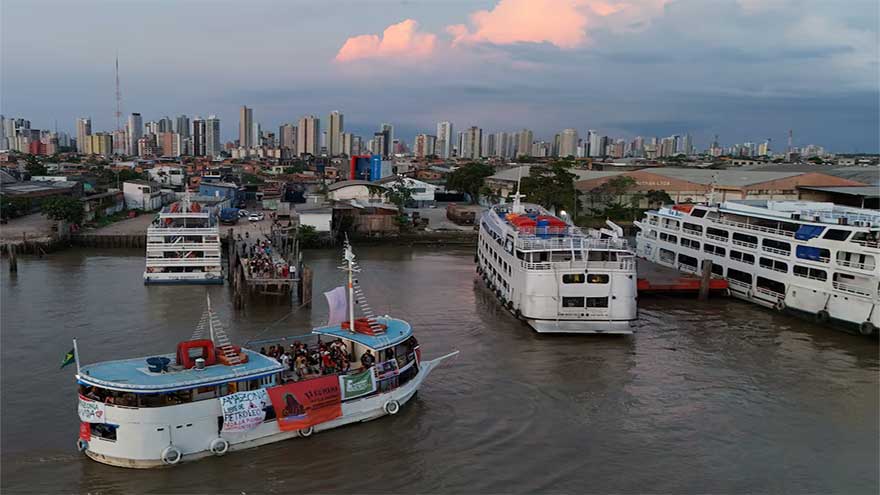
BELEM, Brazil – Dozens of Indigenous leaders arrived in Belem on a boat journeying from the glaciers of the Andes, a day before the United Nations’ COP30 climate summit. Their expedition, spanning several weeks, aimed to demand a stronger voice in the management of their territories as climate change and extractive industries threaten forests across South America.
Lucia Ixchiu, an Indigenous K’iche from Guatemala, emphasized that their goal went beyond financial compensation. “We want to reach a consensus where Indigenous territories are no longer sacrificed,” she said, highlighting the need for sustainable stewardship of the Amazon rainforest and its ecosystems.
Read More: COP30 begins today amid calls for delivering on climate promises
The journey included ceremonial offerings, such as candles, seeds, coca leaves, and a llama fetus, to honor Mother Earth. The expedition also sought to draw attention to the shrinking Andean glaciers, which provide nearly half of the Amazon River’s water, and to highlight encroachment by mining, oil, and logging industries in Indigenous lands.
Along the route, the group stopped in Peru, Colombia, and Brazil to hold workshops, screenings, and political discussions. They named their three-story wooden boat “Yaku Mama,” or Water Mother, symbolizing the connection between rivers and Indigenous communities. The delegation celebrated their arrival in Belem with traditional festivities, underscoring the cultural importance of their journey.
Read More: Taliban criticises exclusion from COP30 climate conference
Despite slow COP negotiations and geopolitical tensions, Ixchiu expressed optimism, particularly inspired by the Indigenous youth participating in the 30-day journey. “I see the commitment they have for the defense of their territories. This is the COP of the Amazon because we are here, demanding and taking the places that we deserve,” she said.