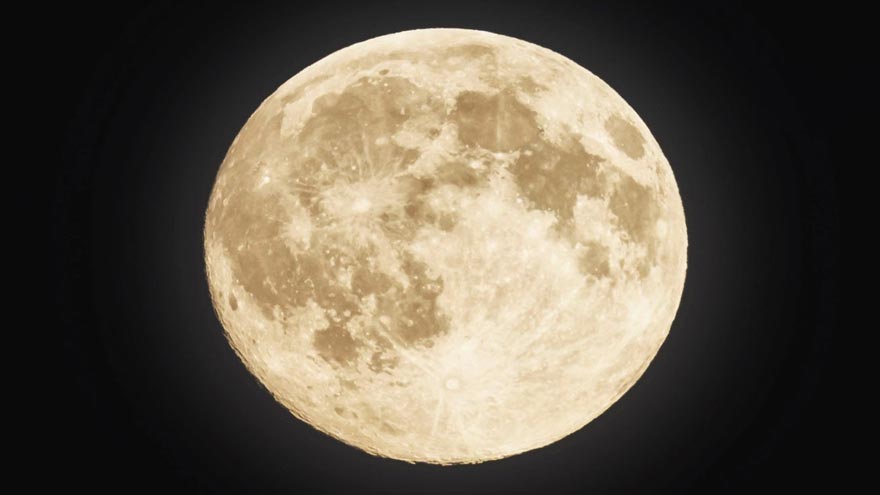
As November begins, stargazers around the world are in for a celestial spectacle — the Full Beaver Moon, which will be 2025’s brightest supermoon, according to NASA.
The lunar display will reach its peak on Wednesday, November 5, at 8:19 a.m. EST, and remain visible through Thursday, November 6. Although the exact moment of full illumination occurs in daylight for much of the United States, the best time to witness the moon will be after sunset, as it rises in the eastern sky during twilight.
This marks the second in a trio of consecutive supermoons, with November’s being the most luminous. The moon will come within about 222,000 miles (357,000 km) of Earth — appearing up to 14% larger and 30% brighter than the faintest full moon of the year, NASA said.
Read More: NASA considers dropping SpaceX from Artemis III moon mission
A supermoon occurs when a full moon coincides with the point in its orbit closest to Earth, known as perigee, creating a visibly larger and brighter moon. These events happen a few times each year due to the moon’s elliptical orbit.
The term “Beaver Moon” has origins in Native American traditions, particularly noted by the Farmer’s Almanac. It marks the time when beavers retreat to their lodges to prepare for winter. In Anishinaabe culture, the moon is known as “Baashkaakodin Giizis,” meaning Freezing Moon.
While the moon’s gravitational pull slightly heightens Earth’s tides, experts at the Royal Museums Greenwich note the effect is minimal — usually just a few inches higher than average.
Read More: Pakistan to witness stunning Supermoon on October 7
Astronomers recommend finding a dark, open area away from city lights for the best viewing experience and allowing 30 minutes for eyes to adjust to the darkness. Whether viewed through a telescope, camera, or the naked eye, the Beaver Supermoon promises a breathtaking sight to round off 2025’s lunar calendar.