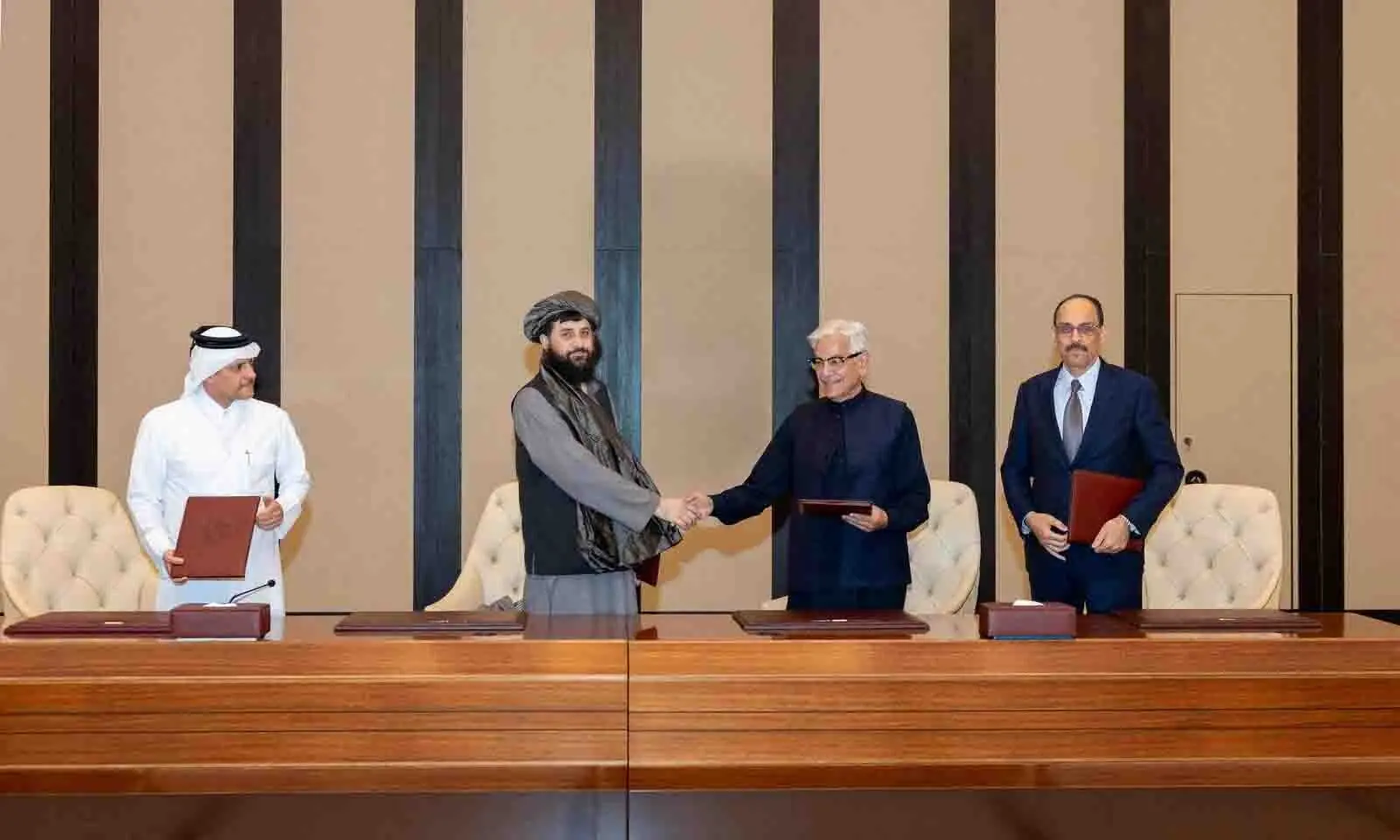
ISLAMABAD: Pakistan on Friday described the Istanbul agreement with the Afghan Taliban regime as a conditional truce, calling it a positive step forward but not a final resolution, as both sides prepare for the next high-level meeting on Nov 6 in Turkiye.
A senior security source, speaking on condition of anonymity, said the understanding “hinges on demonstrable responsibility by the Afghan side,” reflecting Islamabad’s cautious optimism after five days of intense talks in Istanbul, mediated by Turkiye and Qatar.
Read More: Pakistan, Afghan Taliban resume peace talks in Istanbul
The talks resulted in a three-point agreement — continuation of the ceasefire, creation of a monitoring and verification mechanism, and penalties for violations. Operational details are expected to be finalized in the next round.
The Istanbul discussions followed heightened tensions after Pakistan’s Oct 9 airstrikes on TTP sanctuaries in Afghanistan, which triggered border clashes before a ceasefire was reached in Doha on Oct 18–19.
LIVE: Spokesperson’s Weekly Press Briefing 31-10-2025 at Ministry of Foreign Affairs, Islamabad https://t.co/uFN4BvtiuO
— Ministry of Foreign Affairs – Pakistan (@ForeignOfficePk) October 31, 2025
Foreign Office spokesperson Tahir Hussain Andarabi emphasized that the arrangement was comprehensive and reflected Pakistan’s pursuit of peace but warned against misinterpreting Turkiye’s official statement. “It should be read as a preface to a book rather than the book itself,” he said, noting that it did not fully capture Pakistan’s stance on the TTP’s presence in Afghanistan.
Pakistan reiterated that it does not seek escalation but expects Kabul to take verifiable actions against terrorist outfits like the TTP and Balochistan Liberation Army (BLA). “This ceasefire is not open-ended and not unconditional,” the security source warned, adding that failure to act could be seen as a violation.
Read More: UN urges restraint after Pakistan-Afghanistan talks collapse in Istanbul
Defence Minister Khawaja Asif suggested that the monitoring system might include multiple nations to ensure lasting enforcement. He accused the Afghan Taliban of privately admitting the TTP’s presence in Kabul, asserting that “they won’t be living in hotels.”
He maintained that Pakistan’s chief demand remains the cessation of terrorism from Afghan soil, adding that any progress is largely due to Qatar and Turkiye’s influence over Kabul.