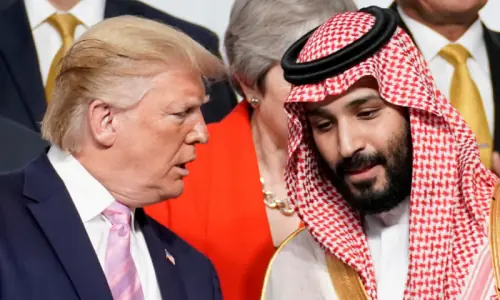
RIYADH/WASHINGTON: Saudi Arabia is in talks with the United States over a new defence deal, which officials hope to finalise during Crown Prince Mohammed bin Salman’s upcoming visit to the White House next month, the Financial Times (FT) reported on Friday, citing people familiar with the matter.
According to the report, a senior Trump administration official confirmed that discussions were underway about signing an agreement during the Crown Prince’s visit, though “the details remain in flux.”
The proposed deal is said to resemble the recent US-Qatar security pact, which pledged that any armed attack on Qatar would be treated as a threat to the United States. The agreement with Doha followed Israel’s air strike attempt targeting Hamas leaders in Qatar last month.
Read More: Saudi Arabia Executes Foreigner for Major Drug Smuggling
The US State Department told the FT that defence cooperation with Saudi Arabia remains a “strong bedrock” of America’s regional strategy, but declined to comment on the specifics of the potential agreement.
Meanwhile, the White House and the Saudi government have not issued any official statements on the matter, and Reuters reported that its requests for comment went unanswered.
The talks come amid a fast-evolving security environment in the Middle East, marked by heightened tensions involving Israel, Iran, and Qatar.
Just last month, Pakistan and Saudi Arabia signed a mutual defence agreement declaring that any aggression against one state would be treated as an attack on both. The accord was signed by Prime Minister Shehbaz Sharif and Crown Prince Mohammed bin Salman at Al-Yamamah Palace in Riyadh.
Read More: Saudi Arabia Fines Airlines Millions Over Major Violations
Observers say the timing of these agreements — coming in the aftermath of Israel’s attack on Qatar, the 12-day Iran-Israel conflict in June, and the India-Pakistan skirmishes in May — underscores an emerging collective security approach among regional powers.
The potential US-Saudi defence deal, if concluded, could mark a strategic realignment in Washington’s Middle East policy — strengthening security guarantees for its allies while recalibrating its influence amid growing instability and shifting alliances in the region.