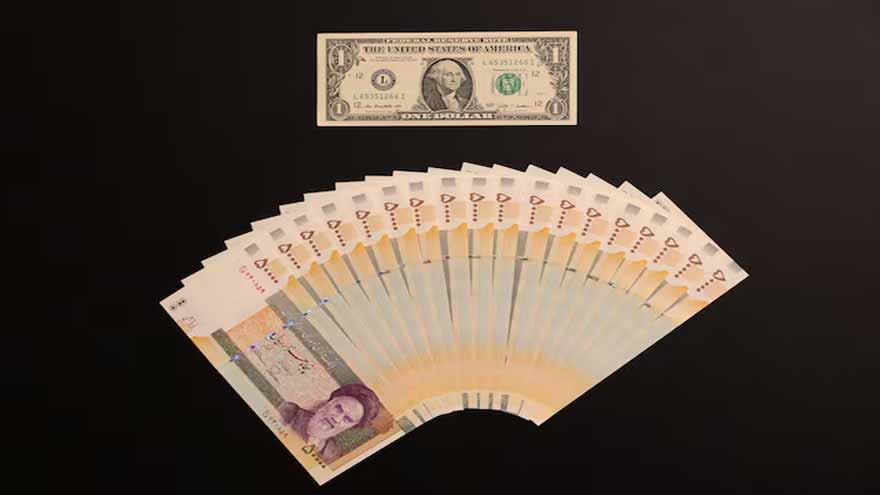
DUBAI — Iran’s parliament has given final approval for a major monetary overhaul, paving the way for the removal of four zeros from the national currency in an effort to simplify financial transactions after years of runaway inflation.
The decision, reported by state media on Sunday, comes after parliament addressed objections from the Guardian Council, allowing the long-delayed bill to move forward.
Currency Depreciation and Inflation
Years of inflation exceeding 35 percent have battered the Iranian rial, which now trades at around 1,150,000 to the US dollar on the free market, according to currency tracker bonbast.com. The rapid devaluation has made everyday transactions cumbersome and complicated for citizens.
“The currency remains the rial and changes won’t be overnight,” said Shamsoldin Hossein, head of parliament’s economic commission, in an interview with state TV. “The Central Bank has up to two years to prepare the ground for this change. After that, there will be a three-year transition period when both denominations will be used.”
Read More: Bloomberg Ranks Pakistan Second-Best Emerging Economy Globally
Goal: Simplifying Transactions, Restoring Confidence
The monetary adjustment aims to make the rial more practical in daily use and in accounting, reducing the strain of managing large numerical figures in bills and official documents.
Hossein added that high inflation has severely undermined the usefulness of banknotes, making reform necessary to improve transaction efficiency.
Criticism and Economic Skepticism
However, some lawmakers and economists have criticized the move as cosmetic rather than structural.
“A national currency’s prestige isn’t revived by removing four zeros. That can only be done by strengthening its real value,” MP Hossein Samsami told the Iranian Students News Agency (ISNA).
Experts warn that unless Iran addresses underlying economic issues — including sanctions, budget deficits, and monetary expansion — the reform may provide little more than symbolic relief.
Global Context
Iran’s step follows a pattern seen in other inflation-hit countries such as Venezuela, which has undergone multiple redenomination in recent years without achieving price stability.
Economists say Iran’s challenge lies not just in simplifying its banknotes, but in restoring domestic and international confidence in its currency — a process that will take time, discipline, and deep structural reform.