Sweeping UN economic and military sanctions have officially been reimposed on Iran, a decade after they were lifted under the landmark nuclear deal. The measures came into effect after the UK, France, and Germany triggered the “snapback” mechanism, citing Tehran’s “continued nuclear escalation” and its failure to cooperate with the International Atomic Energy Agency (IAEA).
The European trio, known as the E3, said in a joint statement that they had “no choice” but to restore sanctions after Iran repeatedly breached its commitments under the 2015 Joint Comprehensive Plan of Action (JCPOA). “We urge Iran to refrain from any escalatory action. The reimposition of UN sanctions is not the end of diplomacy,” the statement read.
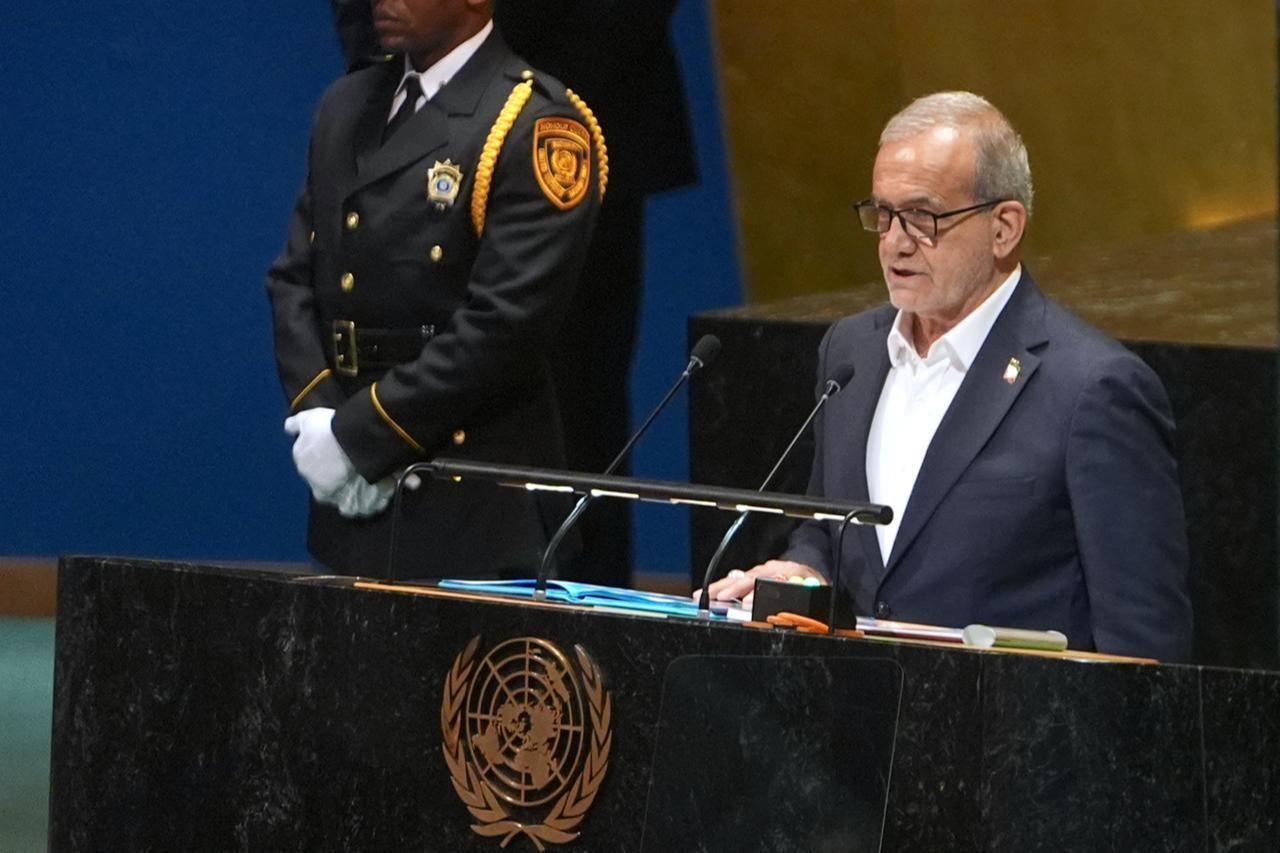
Iranian President Masoud Pezeshkian, however, rejected claims of nuclear weapons ambitions, insisting that Tehran’s programme remained peaceful. Yet, following the U.S. withdrawal from the JCPOA in 2016 under then-President Donald Trump, Iran gradually scaled up its enrichment activities beyond permitted limits, straining relations with the West.
Talks held on the sidelines of the UN General Assembly last week failed to avert the reimposition of sanctions. The E3 highlighted Iran’s refusal to grant inspectors access to key nuclear facilities and its lack of transparency about enriched uranium stockpiles. While the IAEA confirmed that inspections resumed last Friday, Tehran maintains that future cooperation hinges on security guarantees, particularly against attacks from Israel.
Iran responded by recalling its ambassadors from the UK, France, and Germany for consultations. President Pezeshkian also rebuffed U.S. proposals offering limited sanction exemptions in exchange for surrendering enriched uranium stockpiles. “Why would we put ourselves in such a trap and have a noose around our neck each month?” he said.
Analysts warn that the return of UN sanctions marks a new stage of confrontation between Iran and the West, risking further destabilisation in the Middle East. Despite this, both sides have left the door open for dialogue, with European ministers emphasizing that diplomatic channels remain “essential to prevent a deeper crisis.”