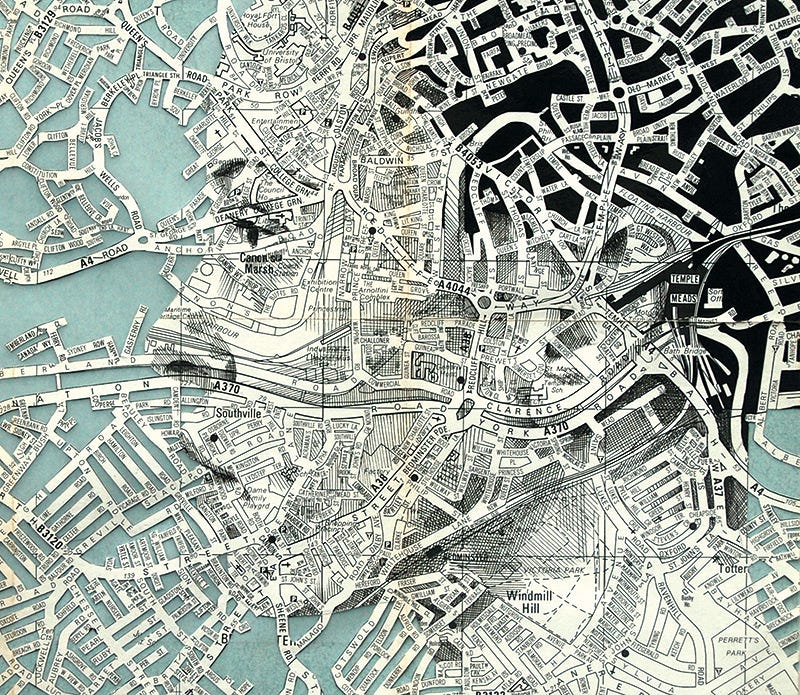
Once upon a time, there were maps. Not the kind folded in glove compartments or spread across war tables, but maps of instinct — invisible compasses carried in the pockets of journalists. These maps marked out the red lines, unspoken yet known: don’t ask that, don’t name him, don’t cross there.
The boundaries were harsh, but at least they were clear. A fence, however irritating, could still be traced. A swamp, shifting every dawn, could not.
Today, the swamp has swallowed the newsroom. Each morning the map is redrawn overnight. Yesterday’s harmless headline is today’s indictment. Even the weather comes under suspicion: “Whose agenda is this rain serving?” Anchors walk tightropes, juggling truth in one hand and survival in the other. Editors wear painted smiles like clowns, pretending the circus is normal. Beneath them — no safety net, only silence.
The red lines are no longer fences; they are tripwires. One wrong step and a segment vanishes mid-broadcast. A guest evaporates. A channel develops “technical issues” the moment questions sharpen. The audience learns to decode silence more fluently than speech.
Censorship has outsourced itself. The sharpest scissors now rest in journalists’ own hands. Stories die before birth, aborted by self-censorship. “This won’t air. This won’t print. Why bother?” The newsroom falls quieter not from lack of stories, but from lack of faith.
Audiences, though, are not blind. They notice the absences, the clipped debates, the guests who never return. Over time, their palate forgets the taste of unfiltered truth. Debate becomes karaoke — one song, off-key, shouted in unison.
The cruelest trick is ambiguity. Yesterday’s fact is today’s crime. Today’s crime may be tomorrow’s patriotic duty. No one knows the rules, only that the house always wins. Civil society, political parties, human rights defenders — once guardians of expression — now hum along in the soft music of compliance.
History has seen gagged presses before. But even in their darkest hours, the red lines were etched in stone. Today, the compass spins wildly. The young reporter asks, “What is allowed?” The old editor answers with nothing but a sigh.
And yet truth is stubborn. It slips into cartoons, dresses itself as satire, sneaks through jokes, hides in poetry. Blocked, it seeps. Dammed, it gathers. And when it bursts, it does not ask permission. Floods do not wait for NOCs.
Memory, too, resists erasure. Readers remember blanks. Audiences hear silences. In time, silence itself testifies.
So the cartographer draws still — blurred maps on shifting ground. Not for today’s traveller, but for tomorrow’s seeker, the one who will trace the empty spaces, decipher the silences, and understand what was unsaid. If only, at the very least, this map itself makes it to print.