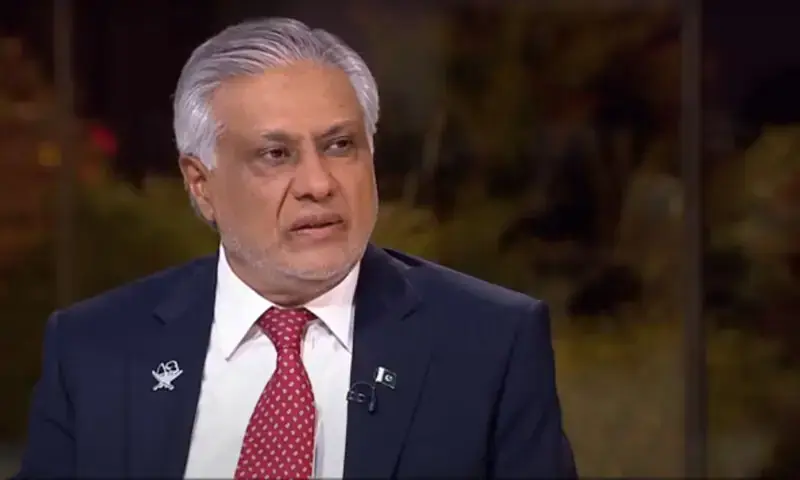
Pakistan’s Deputy Prime Minister and Foreign Minister Ishaq Dar said Pakistan supports the Muslim world against Israeli attacks in the Middle East. Speaking to Al Jazeera, he stated that Pakistan, as a nuclear power, stands by its moral and regional responsibilities. He clarified that Pakistan does not want war but will act if provoked. Pakistan’s armed forces, he added, are large, effective, and capable of defending the country. He stressed that Pakistan has proved its strength in past conflicts.
Dar welcomed the idea of a joint Muslim or Arab military force to maintain peace and stop aggression. He said such a force should be defensive, not offensive, and created to protect the oppressed. When asked about Pakistan’s role, Dar confirmed that Pakistan would support such efforts as part of the Muslim Ummah. He emphasized that unity among Muslim countries is needed now more than ever. According to him, peace is the ultimate goal, but strength is necessary.
In his interview, Dar sharply criticized Israel for attacking while peace talks were underway in Qatar. He called Israel’s reasons for the attacks “baseless and irresponsible.” He also accused Israel of ignoring international law and UN resolutions. Dar noted that the international community has failed to stop Israel’s repeated actions. Therefore, he argued, stronger international measures are now needed.
Dar also pointed fingers at India for similar behavior, especially regarding Kashmir. He said both India and Israel reject UN resolutions and act without fear of consequences. He mentioned a recent failed military attempt by India, which allegedly had Israeli support. Dar claimed this exposed the myth of India’s regional dominance. He added that Pakistan acted only in self-defense during that conflict.
Finally, Dar called for urgent reforms in the United Nations and its Security Council. He said there should be real consequences for countries that violate resolutions. All nations, big or small, deserve equal respect and dignity, he added. Pakistan, he said, seeks peace but is fully prepared to defend itself. He concluded by saying that diplomacy is the best option—but only if all parties are sincere.