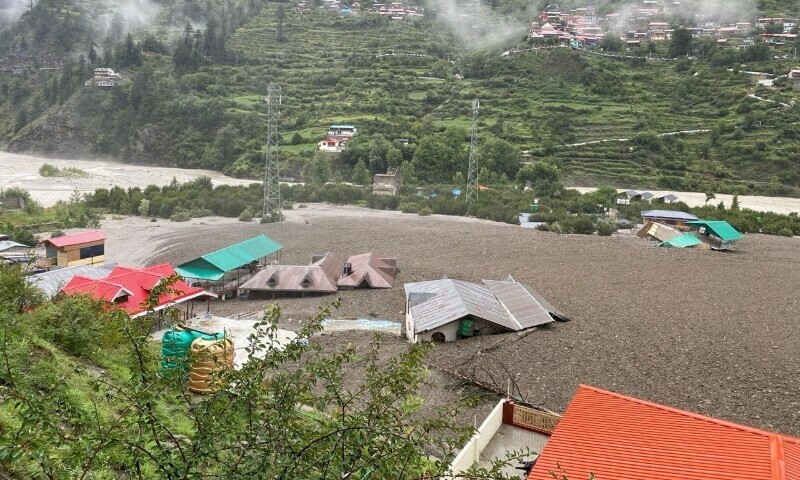
A powerful mudslide swept through Dharali village in Uttarakhand, India, killing at least four people. Over 50 others remain missing as floodwaters and mud buried homes and roads. Rescue teams from the army and disaster response forces rushed to the scene. They worked hard to save those trapped under debris and sludge. Local authorities confirmed that many people were rescued, but the search continues.
” , .”
Kheer Gad, Dharali Village | Uttarkashi | 1345 Hrs, 05 Aug 2025
A massive mudslide struck #Dharali village in the #KheerGad area near Harsil, triggering sudden flow of debris and water through the… pic.twitter.com/FwPPMrIpqu
— SuryaCommand_IA (@suryacommand) August 5, 2025
Television footage showed muddy water crashing down the mountain and sweeping through the village. The sudden torrent destroyed houses and blocked roads, forcing residents to flee for safety. The Uttarkashi district administrator said the mudslide struck the Kheer Gad area near Harsil, creating a deadly flow of water and debris. The Indian Army’s Central Command described the disaster as massive and sudden.
Prime Minister Narendra Modi expressed deep sorrow and promised government support for those affected. He said teams were actively working to provide relief and rescue services. Uttarakhand often faces floods and landslides, with climate change playing a role. Experts warn that the region’s many glaciers are melting fast due to rising temperatures.
This is not the first disaster in the region. In 2021, flash floods killed around 200 people and damaged hydroelectric projects. The Uttarakhand state government has been working on disaster management but faces challenges due to the rugged terrain. Rescue efforts are ongoing as the community struggles to recover.
Authorities continue to search for missing residents and provide aid to survivors. The disaster highlights the growing risks of climate change in the Himalayas. Officials urge people to stay alert during heavy rains and floods in the future. Emergency teams remain on high alert to respond to new threats.