Gilgit-Baltistan (GB) Chief Minister Haji Gulbar Khan has urgently appealed to the federal government for Rs7 billion in emergency aid. He said the region is struggling to respond to climate-induced disasters that have already caused over Rs20 billion in damages. At a press conference in Gilgit, the chief minister stressed that the provincial government lacks the resources to handle the scale of destruction.
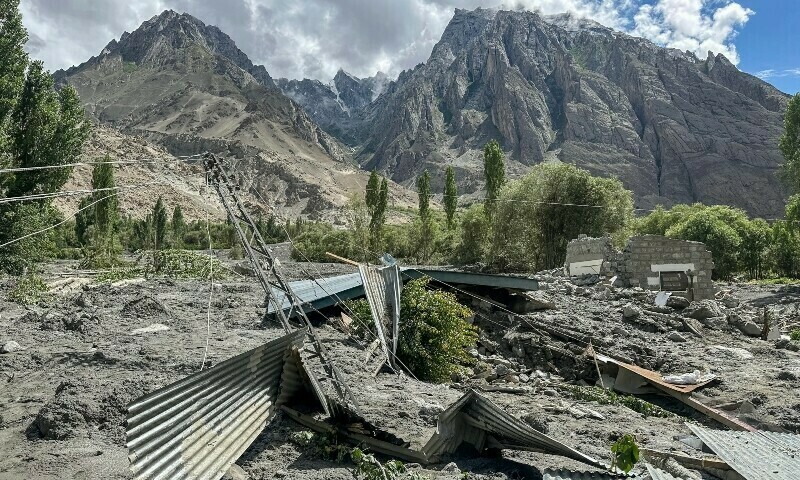
Joined by GB Home Minister Shams Lone and other officials, CM Khan detailed the impact of the ongoing floods. Seven districts have been severely affected, with Diamer facing the worst damage. “People in Gilgit-Baltistan are experiencing floods daily,” Khan said, adding that at least one flood is occurring every day. The disasters have caused 10 deaths and four injuries, destroyed 300 homes, and damaged another 200. Key infrastructure like roads, bridges, and water channels has also been swept away.
Khan noted that their Rs1 billion emergency fund has already been exhausted. The region also faces Rs3 billion in liabilities from previous disaster responses. He urged Prime Minister Shehbaz Sharif to release at least Rs7 billion to begin urgent repair work. This includes restoring roads, power, clean water, and housing. Khan also asked the prime minister to visit the affected areas personally to assess the scale of the crisis.
The chief minister pointed out that the 2022 federal flood aid of Rs3 billion was poorly managed by the previous GB government. He cited only one effective outcome — a model village in Ghizer’s Bubor area. Given the far greater scale of the 2025 disasters, Khan emphasized that external support is essential. Formal appeals have also been made to international organizations for assistance.
Meanwhile, the Karakoram Highway near Chilas has reopened after being blocked by landslides. However, flash floods continue to batter the region, affecting areas like Fairy Meadows, Shigar, and Ghanche. In Kondus village alone, over 50 homes were destroyed by a landslide. Survivors are now in urgent need of food, shelter, and clean drinking water, as climate-related emergencies stretch local resources to the brink.