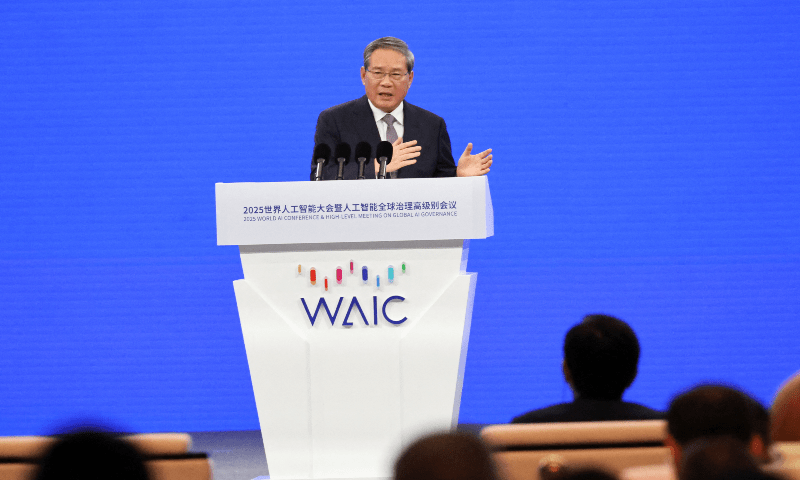
Chinese Premier Li Qiang urged the world to find a balance between artificial intelligence development and security risks. Speaking at the World AI Conference in Shanghai, he stressed that a global consensus is urgently needed. Li warned that without cooperation, AI risks becoming controlled by just a few countries or companies. He called for openness, sharing, and fairness to allow all nations to benefit from AI advancements.
Li announced a new China-led international AI cooperation body to promote governance and open-source development. He said China is ready to share AI progress, especially with developing countries. Highlighting challenges, he pointed to shortages in computing power and chips as key barriers. These issues come amid US restrictions on advanced chip exports to China, aimed at limiting military use and tech competition.
The conference also addressed ethical concerns about AI, including misinformation, job impacts, and loss of control. Nobel laureate Geoffrey Hinton compared AI to a “pet tiger cub,” saying it must be carefully managed to avoid future harm. UN Secretary-General Antonio Guterres called AI governance a major test for international cooperation. French AI envoy Anne Bouverot echoed the call for urgent global action.
At a February AI summit, 58 countries including China, France, and India pushed for better coordination on AI rules. However, the US and UK refused to join calls for “open,” “inclusive,” and “ethical” AI regulation, fearing excessive limits. Meanwhile, the US recently announced plans to reduce regulations to boost its AI industry. This reflects growing competition between Beijing and Washington in AI development.
China aims to become self-reliant in AI technology and continues investing in innovation. Earlier this year, a Chinese startup unveiled a top-performing AI model using less powerful chips. As the global AI race intensifies, Premier Li’s message underlines the need for balance between progress and security through international cooperation.